

Why Your Website Project Needs A Strategic Brief (And Why Most Fail Without One)
Building a website without a clear brief is like constructing a house without blueprints. You might have a general idea of what you want, but the final product will likely differ significantly from your vision. This often leads to costly revisions and frustrating delays. This isn't just a hypothetical scenario; it's the reality many businesses face when they choose to improvise instead of investing in proper planning. Experienced web professionals understand the importance of a strategic brief and how it lays the groundwork for a smooth, efficient, and ultimately successful project.
Imagine asking a contractor to build you a "beautiful, modern house" without providing specifics on size, layout, materials, or budget. The contractor is left to guess, potentially leading to misunderstandings and wasted resources. Similarly, a website brief gives designers and developers the necessary framework. It ensures they understand your goals, target audience, and technical requirements from the beginning. This collaborative approach minimizes miscommunication and keeps the project on track.
A well-structured website design brief is crucial. A key aspect is understanding your business goals and target market. A website brief template should include details about the company, its objectives, and its target audience. The structure of these briefs has changed over time, reflecting evolving technology and consumer needs. As early as 2010, simple outlines of website needs began to appear.
Today, briefs are more comprehensive, including user experience (UX) considerations and technical specifications like responsive design. This shift highlights the growing understanding that 73.1% of visitors leave non-responsive websites, making mobile optimization essential. Learn more about the evolution of website briefs here: https://www.hellobonsai.com/brief-template/web-design
The Dangers of a Missing Brief
Skipping the website brief template often creates a chain reaction of problems. Scope creep, where the project expands beyond its original parameters, is a common issue. This results in budget overruns and missed deadlines. Another consequence is endless revisions. Without a clear vision defined in a brief, clients might request constant changes, frustrating designers, developers, and delaying the project.
A missing brief can also strain client relationships. When expectations aren't clearly defined, misunderstandings and disagreements are more likely. This can damage the trust between the client and the web development team, leading to a negative experience for everyone. A well-defined website brief template mitigates these risks by setting clear expectations, encouraging collaboration, and ensuring everyone is on the same page from the outset.
Why a Website Brief Template is Your Project's Best Friend
A website brief template is a vital communication tool, bridging the gap between your vision and the final product. It serves as a single source of truth, outlining project goals, target audience, design preferences, and technical specifications. This centralized information helps ensure everyone involved understands the project scope, minimizing the chances of miscommunication and costly revisions.
A website brief template also helps you define success metrics. By establishing measurable goals, such as increased website traffic or higher conversion rates, you can track your website's effectiveness and show the return on your investment. This data-driven approach informs future website development and marketing strategies. A robust website brief template is essential for achieving your online objectives, ensuring your website project is built on a solid foundation of planning and collaboration. It's your best insurance for a successful online presence.
The Essential Elements That Make Website Brief Templates Actually Work
A website brief template isn't just a simple form; it's the bedrock of successful web projects. Effective templates capture valuable business insights, not just surface-level design preferences. This section explores the crucial components that separate amateur briefs from the professional ones used by top agencies.
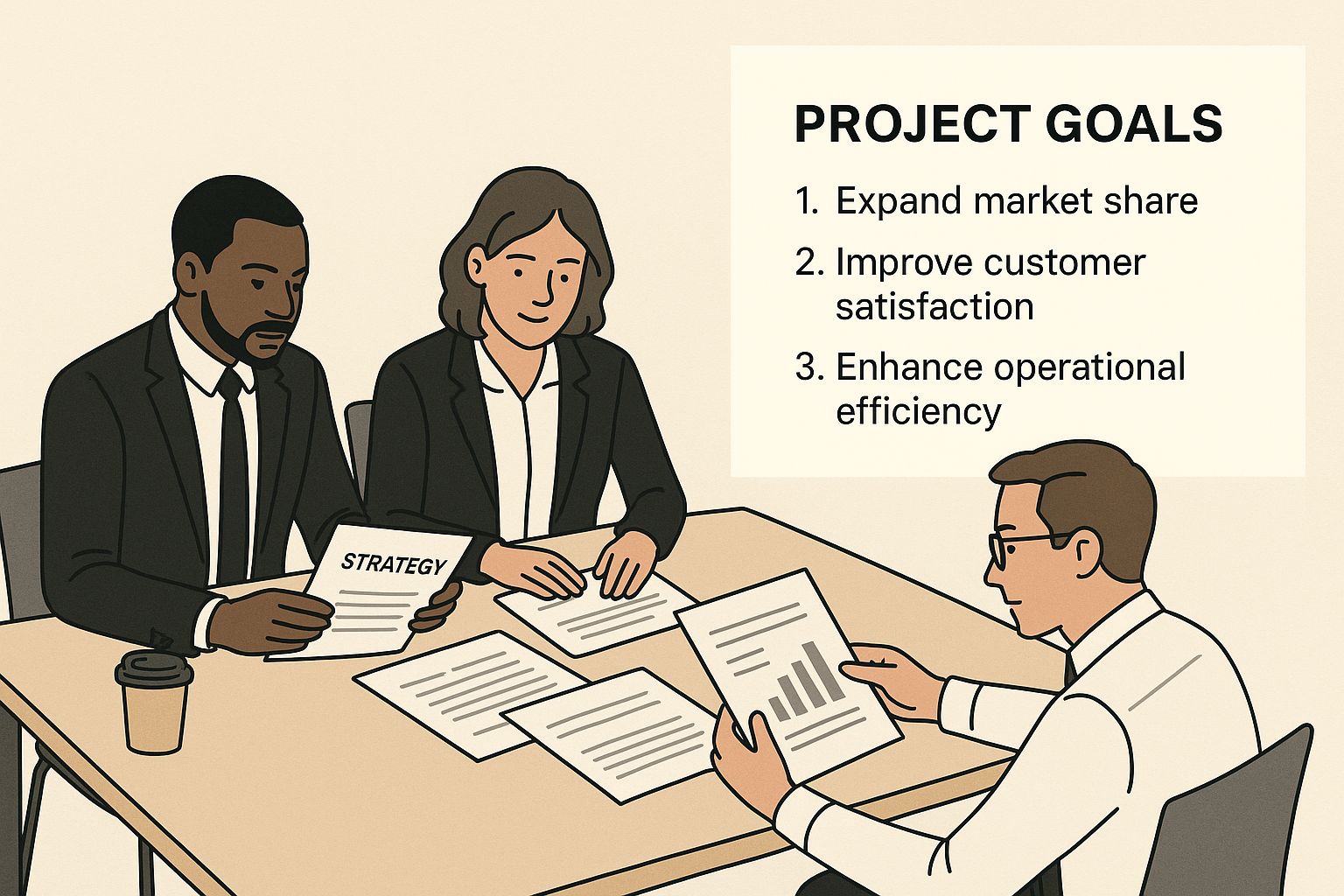
Clearly defined goals are essential for project success. The infographic demonstrates how a detailed brief sets the stage for achieving these goals. Much like a website brief, a well-structured plan is crucial for other areas of your online presence. For example, a strong social media strategy often begins with a link in bio template. Your brief should be more than a checklist; it should be a roadmap.
Defining Project Scope and Objectives
The first vital element is clearly defining the project's scope and objectives. This section outlines the website's purpose, target audience, and desired results. Is the goal lead generation, driving sales, or boosting brand awareness? Clarity on these points ensures everyone involved understands the project's core purpose. Additionally, defining measurable goals, such as increased website traffic or higher conversion rates, is essential for tracking progress and demonstrating success.
Understanding Your Target Audience
A strong website brief template needs to dive deep into the target audience. Understanding user demographics, behaviors, and needs is key. This goes beyond basic demographics to explore user pain points and motivations. What problems are they trying to solve online? What are their online habits and preferences? These insights help designers craft user-centered experiences.
Competitive Analysis and Inspiration
Effective website briefs include a competitive analysis. This helps identify industry best practices and understand what competitors are doing well (and where they fall short). Including examples of websites the client finds inspiring is also valuable. This establishes a shared visual language and helps the design team understand the client’s aesthetic preferences.
Technical Requirements and Functionality
Technical specifications are critical for any web development project. The brief should detail required functionalities, such as e-commerce integration or specific software integrations. This eliminates ambiguity for developers and prevents unforeseen technical issues. It also provides the basis for accurate project timelines and budgeting. For startups navigating the complexities of web development, a specialized guide like this one on website development for startups can be invaluable.
Content Strategy and Planning
Content is crucial for website success. A comprehensive brief should outline the content strategy, including key messages, target keywords, and planned content types. This ensures the website design complements the content strategy and supports SEO goals. Will the site include blog posts, videos, or infographics? Defining this early prevents content-related roadblocks later on.
Budget and Timeline
A well-defined budget and timeline are essential parts of a website brief template. Clear expectations regarding project costs and deadlines prevent misunderstandings and keep the project on track. This allows for informed decision-making throughout the development process.
The table below provides a practical checklist for creating effective website brief templates. It highlights the key sections, their essential elements, purpose, and priority level.
Website Brief Template Checklist
| Section | Key Elements | Purpose | Priority Level |
|---|---|---|---|
| Project Scope and Objectives | Website purpose, Target audience, Desired outcomes, Measurable goals | Define the overall aim and success metrics | High |
| Target Audience | Demographics, Behaviors, Needs, Pain points, Motivations | Understand user characteristics to create user-centered design | High |
| Competitive Analysis and Inspiration | Competitor analysis, Inspirational websites | Identify best practices and establish visual direction | Medium |
| Technical Requirements and Functionality | Required functionalities, Software integrations, E-commerce features | Specify technical needs and prevent development challenges | High |
| Content Strategy and Planning | Key messages, Target keywords, Content types (blog posts, videos, etc.) | Ensure content aligns with design and SEO goals | Medium |
| Budget and Timeline | Project costs, Deadlines | Set clear expectations and manage resources effectively | High |
This checklist helps ensure your website brief covers all the essential areas, leading to a smoother and more successful development process. By focusing on these key elements, you can create a comprehensive brief that sets your project up for success.
Mastering The Art Of Brief Completion For Maximum Impact
Having a great website brief template is just the starting point. Knowing how to effectively use it is what truly determines a project's success. This involves understanding stakeholder insights and translating them into actionable steps. This section outlines a step-by-step process that experienced professionals use to accomplish this.
Conducting Effective Discovery Sessions
Begin with discovery sessions. These sessions aim to uncover all client requirements, including those they might not even realize they have. Use open-ended questions to encourage detailed answers and actively listen to understand their needs. For example, instead of asking "Do you need a contact form?", ask "How do you imagine users interacting with your site?" This encourages clients to consider the user journey and express their needs more effectively.
Facilitating Productive Conversations
Productive conversations go beyond surface-level preferences. They explore the core business needs and user goals. Facilitate these discussions by asking "why" to understand the reasons behind client requests. This can reveal hidden needs and potential obstacles. Encourage stakeholders to share examples of websites they find appealing and explain what they like about them. This helps establish a common visual language.
Validating Assumptions and Managing Priorities
Throughout the process, validate your understanding by summarizing client feedback. This prevents misinterpretations and ensures everyone is aligned. Clients often have conflicting priorities. Successfully managing these requires understanding their business goals. For example, if a client wants a minimalist design and a lot of homepage content, finding a balance that satisfies both needs without compromising user experience is crucial.
Ensuring Nothing Critical Gets Overlooked
A detailed website brief template helps ensure all critical elements are covered. However, using the template effectively is equally important. Organize information into manageable sections, use clear and concise language, and avoid technical jargon. The brief should be a clear roadmap, not a document that requires further interpretation. Attention to detail in web design is crucial. The industry’s global market value reached approximately $41.8 billion in 2022. This growth is fueled by the increasing importance of a strong digital presence for businesses. Studies show that 88% of online consumers won't return after a bad experience. More statistics are available here: https://techjury.net/industry-analysis/website-design-industry-statistics/
Balancing Thoroughness and Efficiency
Mastering brief completion involves finding a balance between gathering enough information and respecting stakeholder’s time. Keep meetings focused and efficient. Use your website brief template as a guide, but be flexible and tailor your approach to each client's specific needs. By following these steps, you can maximize the impact of your template and set your projects up for success. This ensures the brief captures essential information while streamlining the process for everyone involved.
Avoiding The Costly Mistakes That Derail Website Projects
Even seasoned professionals can make mistakes. When it comes to website projects, these errors can damage client relationships, exceed budgets, and cause missed deadlines. This section explores common website brief template-related issues and offers solutions.
The Perils of Scope Creep
One of the most frequent project derailers is scope creep. This occurs when the project’s requirements grow beyond the initial agreement. Like a snowball, small additions can quickly become major delays and cost overruns. A clear and detailed website brief template acts like a contract, setting project boundaries and preventing scope creep.
Unrealistic Expectations: A Recipe for Disaster
Another common mistake is setting unrealistic expectations. Clients may desire complex functionality and a fast turnaround, all within a tight budget. Managing these expectations requires clear communication. Explain the relationship between features, timelines, and costs. A well-defined website brief template establishes realistic goals from the beginning.
Communication Breakdowns: The Silent Killer
Communication breakdowns are a major source of project problems. Misunderstandings and unclear feedback can lead to revisions, delays, and frustration. A website brief template encourages clear communication by acting as a central hub for project information. Regular check-ins and transparent communication further ensure everyone stays aligned.
Addressing Common Stakeholder Behaviors
Understanding stakeholder psychology is crucial for preventing and resolving project conflicts. Some stakeholders hesitate to provide details, fearing limited creative freedom. Others may be overly prescriptive, hindering the design process. Navigating these behaviors requires empathy and strong communication. Encourage clients to share their vision through examples rather than technical specifications. You might be interested in: How to master website maintenance for a small business.

Practical Techniques for Preventing Miscommunication
Practical steps can significantly reduce miscommunication. Encourage detailed client feedback during design reviews. Document decisions and agreements in writing. Use visual aids and prototypes to clarify complex concepts. These measures minimize ambiguity and keep everyone on the same page.
Recovery Strategies When Things Go Wrong
Even with the best planning, problems can arise. Having a process for addressing issues is essential. Acknowledge mistakes, offer solutions, and revise the website brief template as needed. Transparency and proactive communication can rebuild trust and get the project back on track. This involves open discussions, compromise, and a willingness to adapt.
By understanding these common pitfalls and using proactive strategies, you can greatly increase the chance of project success. A well-crafted website brief template is the first step in avoiding costly mistakes. It’s the foundation for a smooth and successful website development process, leading to client satisfaction and long-term project success.
Customizing Your Website Brief Template For Different Project Types
A well-crafted website brief template is essential for any web project. However, a one-size-fits-all approach isn't effective. Different projects have unique needs. Think of it like tailoring a suit: you need the right fit for the best results. This section explores customizing your website brief template for various projects, ensuring it remains a valuable tool.

E-Commerce vs. Corporate Websites
E-commerce and corporate websites have distinct goals. An e-commerce brief emphasizes product details, shopping cart functionality, and secure payment gateways. It needs to specify product categories, inventory management, and shipping logistics. A corporate website focuses on brand identity, showcasing expertise, and lead generation. Therefore, the brief highlights the company's mission, values, and services.
Mobile Apps vs. Traditional Websites
Mobile app briefs differ from traditional website briefs. Both emphasize user experience, but a mobile app brief prioritizes screen size, touch navigation, and platform-specific design. It also considers integration with device features like cameras and GPS. A website brief focuses on responsive design, browser compatibility, and information architecture. This ensures the design is optimized for the intended user experience.
Startups vs. Enterprise Implementations
Startup and enterprise projects also have varying needs. A startup brief prioritizes rapid development, cost-effectiveness, and flexibility. It emphasizes core features and allows for adjustments. An enterprise brief focuses on scalability, security, and integration with existing systems. It requires detailed specifications and testing. This reflects the different stages of business growth.
Adapting to Project Constraints
Project constraints, such as budget, timeline, and team size, influence your brief. A limited budget means prioritizing essential features. A tight timeline requires a streamlined process. Smaller teams might need simplified briefs and frequent communication. Adapting to constraints ensures realistic planning.
Industry-Specific Adaptations
Different industries have unique requirements. A healthcare website brief emphasizes patient privacy and accessibility. A financial website prioritizes security and regulatory compliance. An educational website focuses on learning objectives and user engagement. A retail website prioritizes product displays and sales. These adaptations ensure the website meets industry needs.
To illustrate the variations in brief requirements, let's look at the following table:
Project Type Template Variations
Comparison of website brief template requirements across different project types and industries
| Project Type | Key Sections | Special Considerations | Typical Timeline |
|---|---|---|---|
| E-commerce Website | Product details, Shopping cart, Payment gateways, Shipping logistics | Inventory management, Secure payment processing | 3-6 months |
| Corporate Website | Brand identity, Services, Lead generation, Team/About Us | Content strategy, SEO optimization | 2-4 months |
| Mobile App | Screen size, Touch navigation, Platform guidelines, Device features | User testing on different devices, App store submission process | 4-8 months |
| Traditional Website | Responsive design, Browser compatibility, Information architecture, Content strategy | SEO, Accessibility | 2-5 months |
| Startup Website | Core features, Budget, Timeline, Flexibility | Scalability for future growth | 1-3 months |
| Enterprise Website | Scalability, Security, System integration, Detailed specifications | Rigorous testing, Stakeholder approvals | 6-12 months |
This table summarizes the key differences in brief requirements across various project types. Note the varying timelines and special considerations.
Tailoring Sections For Maximum Effectiveness
Customizing your template involves adjusting section emphasis. For e-commerce, the product details section is paramount. For startups, the budget and timeline sections are critical. Emphasizing relevant sections streamlines the process.
Examples and Specialized Templates
Examples and templates can guide customization. Studying successful briefs provides valuable insights. Pre-built templates for specific industries save time. They ensure critical elements aren't overlooked.
By understanding these strategies, you can create a versatile and effective website brief template. This enhances communication, clarifies expectations, and contributes to project success. The goal is a smooth, efficient development process tailored to each project.
Your Implementation Roadmap For Brief Template Success
Ready to improve your website project planning? Implementing a new website brief template is more than just a new document. It’s about integrating a new way of working. This section offers a practical roadmap to help you successfully incorporate your new brief template and ensure long-term benefits for your projects.
Getting Started: Laying the Foundation
First, get your stakeholders on board. Present the template as a way to solve common project problems, like scope creep and miscommunication. Explain how the template will simplify the process, saving time and resources. This helps everyone understand the template’s value and builds support for its use. For businesses looking to increase website traffic, consider a Business Website QR Code. This can be a great way to connect offline marketing with your online presence.
Next, train your team. Everyone needs to know how to use the template properly. Workshops, detailed guides, and opportunities for practical application are important. This will ensure consistent use and get the most from your new template.
Rolling Out Your New System
Start with a pilot project. Pick a smaller project to test the template and find areas for improvement. This lets you refine the template before using it across the board. Get feedback from the team and stakeholders involved in the pilot project. Their input is critical for optimizing the template.
Gradually integrate the template into more projects. Start with projects similar to the pilot and expand as your team gains confidence. This phased approach makes the transition smoother and minimizes any disruption to your workflow.
Managing Change and Resistance
Expect some resistance. Change is rarely easy. Address any concerns proactively by focusing on the benefits and providing ongoing support. This shows you're committed to the new process.
Create a feedback loop. Regularly collect feedback from your team and stakeholders. This is crucial for continuous improvement and ensures your template adapts to changing needs. Address any implementation challenges quickly and effectively.
Tracking Success and Optimizing Your Template
Set key performance indicators (KPIs). These metrics, such as project completion rates and client satisfaction scores, will show how effective the template is. Track these KPIs and use the data to make your process even better.
Ongoing optimization is essential. Review your website brief template regularly and update it as needed. Keeping it aligned with best practices and reflecting what you’ve learned will maximize its long-term effectiveness.
Building a Culture of Thorough Planning
Using a website brief template successfully takes a shift in how your team thinks about planning. Encourage thorough planning as an investment, not a burden. Integrate the template into your normal workflow and acknowledge those who use it consistently. Check out this article on website project planning for more tips. This approach ensures your projects start with a strong foundation, leading to better results.
By following this roadmap, you can smoothly transition to a more efficient project planning process. Use your website brief template to its full potential and see improved results. Learn more about project success with OneNine's website management and development services. We help businesses build a strong online presence with expert design, development, and ongoing support.


