

The Modern Website Development Lifecycle Explained
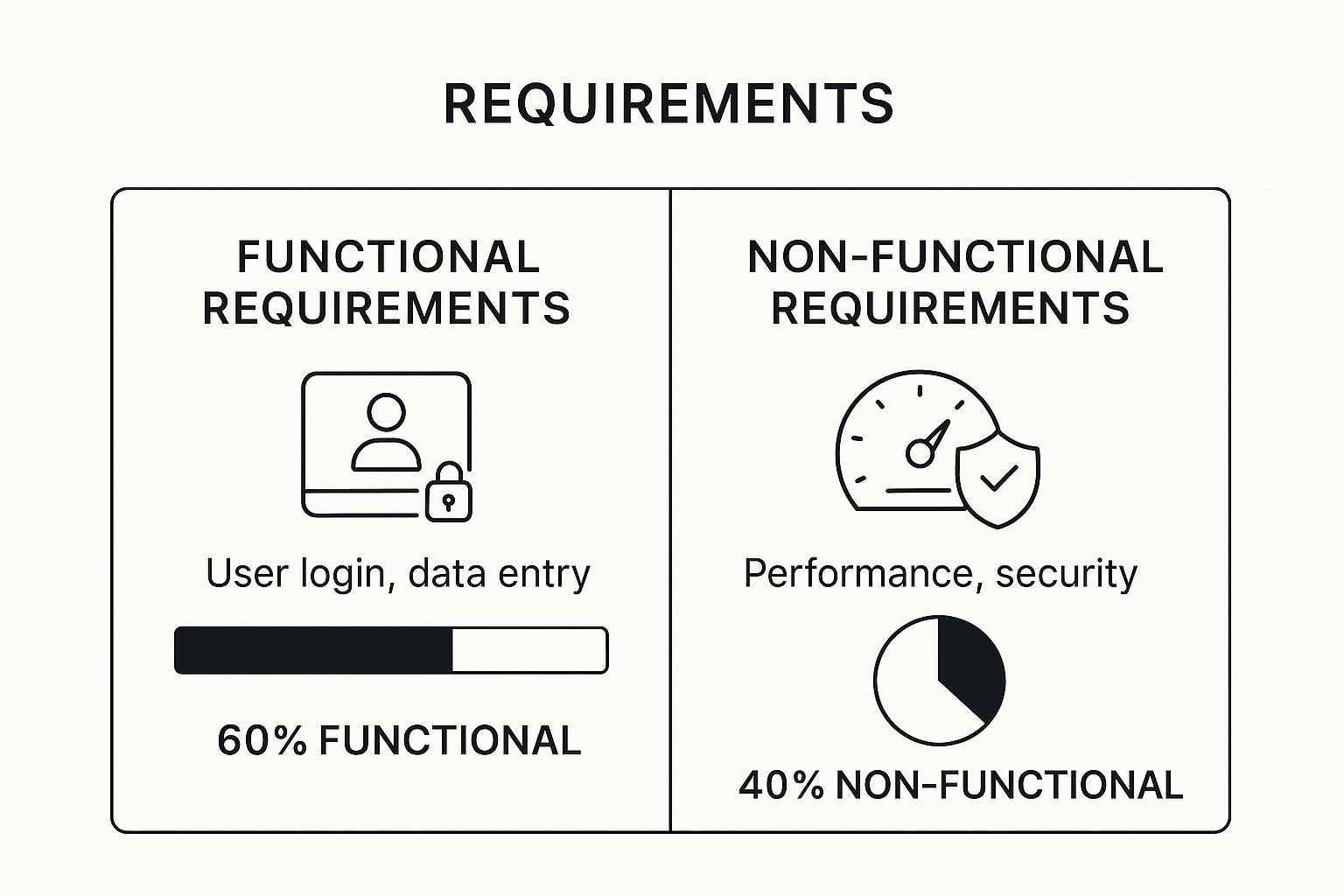
The infographic above illustrates the balance between functional requirements (like user login and data entry) and non-functional requirements (like performance and security). Functional requirements make up about 60% of the development focus, while non-functional requirements account for 40%.
This balance highlights how both aspects are crucial for a successful website. Core functionality is essential, but security and performance are equally important for user satisfaction. This interconnectedness is a key characteristic of the modern website development lifecycle.
The internet started with simple text-based websites in the early 1990s. By 1994, there were over 10,000 sites. You can explore the evolution of web design to learn more.
From Waterfall to Agile: A Shift in Approach
Modern website development emphasizes collaboration and flexibility. The rigid waterfall methodologies of the past have been replaced by agile frameworks. Agile prioritizes iterative development and continuous improvement.
This shift means development stages are no longer strictly sequential. They often overlap, allowing for adjustments and refinements throughout the project.
Why Understanding the Lifecycle Matters
Understanding the entire website development lifecycle is crucial for several reasons. It helps set realistic expectations for timelines and budgets. It also promotes clear communication between stakeholders, ensuring everyone understands project goals and progress.
Perhaps the most significant benefit is reducing the risk of costly rework. Skipping crucial stages, even when facing tight deadlines, usually creates problems later. These problems often require significant time and resources to fix.
Let's look at the evolution of website development approaches in the table below. It highlights the shift in methodologies and the resulting impact on project outcomes.
Evolution of Website Development Approaches
This table contrasts traditional and modern website development methodologies, highlighting key differences in approach and outcomes.
| Development Aspect | Traditional Approach | Modern Approach | Impact on Project Success |
|---|---|---|---|
| Methodology | Waterfall | Agile | Increased flexibility and adaptability |
| Collaboration | Limited | Extensive | Improved communication and stakeholder alignment |
| Feedback | Primarily at the end | Continuous throughout | Reduced rework and improved product quality |
| Timelines | Fixed | Iterative and adaptable | More realistic expectations and better time management |
| Risk Management | Difficult | Proactive | Reduced risk of project failure |
As the table shows, the move towards Agile methodologies brings a range of benefits. These include better collaboration, more frequent feedback, and a more proactive approach to risk management, ultimately leading to a greater chance of project success.
The Interconnected Nature of Website Development Stages
Each stage of the modern website development process builds upon the previous one. This interconnectedness leads to a cohesive and effective final product. Strategic planning informs the design phase. Thorough testing and quality assurance validate the development work before launch. This intricate web of interconnected stages makes the difference between simply building a website and creating a truly impactful online presence.
Stage 1: Discovery and Strategic Planning

The first step in building a successful website is discovery and planning. This stage sets the project's direction, just like a blueprint for a building. It involves defining clear objectives, understanding your target audience, and establishing how you'll measure success. Without this groundwork, even beautiful websites can underperform.
Defining Objectives and Target Audience
Start by identifying your website's purpose. What are you trying to achieve? Do you want to generate leads, drive sales, build brand awareness, or simply provide information? These objectives will guide the entire development process.
Next, understand your target audience. Who are they? What are their needs and challenges? Which devices do they use online? Answering these questions helps you tailor the website's design and features to their specific requirements. This includes understanding their online behavior, what they like, and their demographics.
Conducting Stakeholder Interviews and Competitive Analysis
Gathering insights from key stakeholders within your company is crucial for effective discovery. Stakeholder interviews can reveal valuable information about business goals, user expectations, and technical needs. These discussions should focus on understanding the "why" behind the website, not just the "what."
Competitive analysis is also essential. By analyzing your competitors' websites, you can pinpoint their strengths and weaknesses. This research reveals opportunities to make your website stand out and offer something unique. It also helps set realistic performance benchmarks.
If you're considering outsourcing parts of the development, many qualified web development companies in Singapore are available.
Creating Project Documentation: Sitemaps and User Personas
Creating detailed documentation is a critical aspect of the planning stage. A sitemap outlines the website's structure, showing the hierarchy of pages and how they connect. This ensures clear navigation and a user-friendly experience – like a website's table of contents.
User personas represent your ideal customers. These fictional profiles summarize the essential characteristics, motivations, and goals of your target audience. They help keep the focus on user needs during design and development.
To help you prepare, the following table lists some important planning documents. It describes their purpose, key components, and value to your project.
Essential Website Planning Documents
This table outlines the key planning documents needed during the discovery stage, their purpose, and impact on project success
| Document Type | Purpose | Key Components | Value to Project |
|---|---|---|---|
| Sitemap | Visualize website structure | Page hierarchy, navigation flow | Improved user experience, SEO benefits |
| User Personas | Represent target audience | Demographics, motivations, goals | User-centered design, targeted content |
| Project Brief | Outline project scope | Objectives, timelines, budget | Keeps project focused, manages expectations |
As this table shows, thorough documentation is key to a successful project.
Thorough planning is crucial for any website development project. This stage lays the groundwork for success and minimizes the risk of expensive revisions later. By defining objectives, understanding your target audience, and creating detailed documentation, you build a solid foundation for a website that achieves your business goals and provides a positive user experience.
Stage 2: Creating Compelling Design and User Experience

After laying the strategic groundwork in the discovery phase, the next stage of website development centers around design and user experience (UX). This stage brings the project's abstract ideas to life, transforming them into tangible visuals and interactive elements. It's where the website begins to take shape, evolving from a blueprint into a working prototype.
From Wireframes to Visual Mockups: Building the User Interface
The design process typically starts with wireframes. These are basic outlines that map the layout of essential pages. They show the position of content, navigation, and interactive elements. Wireframes are like an architect's blueprint for a house, focusing primarily on structure and function. They provide a clear visual of the website's organization without delving into the finer aesthetic details.
Next, designers craft visual mockups. These mockups incorporate color palettes, typography, imagery, and other design elements into the wireframes. They offer stakeholders a realistic preview of the final product. This step is where the website's unique personality starts to emerge, showcasing its brand identity. Visual mockups bridge the gap between the initial concept and the finished product, facilitating more concrete design discussions.
Interactive Prototypes: Simulating the User Experience
The design process culminates with interactive prototypes. These clickable models simulate the website's functionality, letting users navigate pages, interact with elements, and experience the user flow. Think of prototypes like test-driving a car before you buy it. This approach allows for early user feedback and design adjustments before the development stage. This iterative process reduces the risk of costly revisions later on.
UX Design: Balancing Art and Functionality
Skilled UX designers carefully balance creative vision with practical user needs. They consider factors like accessibility, ensuring everyone can use the website, regardless of their abilities. They also focus on business objectives, ensuring the design supports the website's overall goals.
For instance, if the website aims to boost online sales, the design should highlight clear calls to action and provide a smooth checkout process. If the goal is to build brand awareness, the design might concentrate on visually appealing content and a memorable brand experience.
Feedback and Usability Testing: Refining the Design
Gathering feedback is vital throughout the entire design process. Effective feedback sessions involve clear communication and a structured approach to avoid endless revisions. Usability testing with real users is especially valuable. Observing how people interact with the prototype provides insights into potential navigation problems, confusing elements, and areas for improvement.
Design Systems: Ensuring Consistency and Efficiency
Modern design systems are key for a consistent user experience and a faster website development process. A design system is a collection of reusable components, style guides, and design principles. It creates a shared vocabulary and ensures a consistent visual language across the website. This consistency not only enhances the user experience but also streamlines development by providing ready-made elements for developers to use.
This stage, centered on design and user experience, is a fundamental part of website development. By carefully crafting the user interface, prioritizing usability, and integrating user feedback, you create a website that's not just visually appealing but also functional, effective, and enjoyable. This sets the stage for a successful development phase, where the design is brought to life through code.
Stage 3: Development That Delivers Performance and Reliability
This stage is where your website truly comes to life. The approved designs transform from static mockups into a dynamic, interactive experience. This involves carefully choosing and implementing the right technologies. A good development team balances innovation with sustainability, building a site that looks great and performs flawlessly.
Choosing the Right Technologies: Frameworks and Content Management Systems
Choosing the right technology stack is critical. This includes selecting the right frameworks (like React, Angular, or Vue.js) for front-end development and the best Content Management System (CMS), such as WordPress, Shopify, or Webflow.
The CMS choice depends on factors like website complexity, the client's technical skills, and the budget. A simple blog might do well with WordPress, while an e-commerce site might need Shopify's features.
Front-End Development: Creating Responsive Experiences
Front-end development focuses on the user interface – what visitors see and interact with. Modern front-end development prioritizes responsive design, ensuring the website adapts to different screens and devices. This involves using HTML, CSS, and JavaScript for a user-friendly experience.
For example, a responsive website automatically adjusts its layout and content to look good on desktops, tablets, and smartphones. This adaptability is vital.
Back-End Development: Securing Data and Enabling Functionality
While front-end development handles the visible aspects, back-end development manages behind-the-scenes functionality. This includes server-side logic, database management, and API integrations. A robust back-end ensures data security, efficient data processing, and smooth operation of complex features.
Consider a website with user logins. The back-end securely stores credentials, verifies logins, and manages user data.
A bit of history: dynamic web design in the early 2000s revolutionized the internet. In 2003, WordPress launched and now powers over 43% of all websites. Learn more about this fascinating evolution.
Version Control and Collaboration: Preventing Code Conflicts
Version control systems like Git are essential for collaborative development. These systems track codebase changes, allowing multiple developers to work simultaneously without overwriting each other's work. They manage code and prevent conflicts. Think of it as Google Docs for code.
Performance Optimization: Ensuring Speedy Loading Times
Website speed is crucial for user experience and search engine rankings. Performance optimization techniques, like image compression, code minification, and caching, ensure fast loading times. A fast website keeps users engaged and reduces bounce rates. See also: How to master website performance metrics.
Quality Assurance: Catching Issues Early
Thorough testing and quality assurance (QA) are vital for finding and fixing bugs before launch. This involves methods like unit testing, integration testing, and user acceptance testing (UAT). This ensures the website functions correctly and meets quality standards. Testing is like a final building inspection before opening to the public.
Addressing Common Development Challenges
Development teams often face challenges like API integration problems and browser compatibility issues. Addressing these requires technical expertise, problem-solving, and a commitment to quality. Ensuring a website works seamlessly across browsers (like Chrome, Firefox, and Safari) is complex but crucial.
This development stage is key. By choosing the right technologies, implementing best practices, and focusing on performance and reliability, you create a website that looks great and functions flawlessly, providing a positive user experience and achieving your business goals.
Stage 4: Content Strategy That Engages and Converts

A beautiful website won't get you far without compelling content. This stage of website development focuses on crafting a content strategy that draws visitors in and keeps them coming back for more. It's about understanding what your users need, aligning that with your business goals, and making sure search engines can find you. Ultimately, it's about creating a story that connects with your target audience.
Balancing User Needs, Business Objectives, and Search Visibility
A truly effective content strategy finds the sweet spot between user needs, business objectives, and search visibility. For example, if you're aiming to generate more leads, your content should attract potential customers with relevant keywords. It should also offer valuable information that addresses their pain points and gently guides them towards conversion. This careful balance is essential for getting the most out of your website.
You might be interested in: How to master content strategy for your website.
Developing Content Plans That Drive Meaningful User Journeys
Well-designed content plans guide users on meaningful journeys. Instead of landing on dead-end pages, visitors should naturally flow from one piece of information to the next. This can involve strategically placing internal links, suggesting related articles, and incorporating clear calls to action. This keeps users engaged and encourages them to explore more of what your website has to offer.
Content Creation and Review Workflows: Preventing Launch Delays
Efficient workflows are essential for smooth content creation. Establish clear roles and responsibilities, set realistic deadlines, and implement a streamlined review process. This structured approach helps avoid bottlenecks and ensures your content is ready to go live on time. It also maintains consistency and quality across all your content.
Content Governance: Maintaining Quality as Your Site Grows
As your website expands, maintaining content quality becomes more challenging. A content governance model sets standards and guidelines for creating, reviewing, and updating content. This ensures consistency, accuracy, and relevance over time, which is especially important for larger websites with multiple contributors.
Content Migration for Redesigns: Preserving Valuable Assets
When redesigning your website, content migration is key. This involves auditing your existing content, identifying valuable assets, and mapping them to the new site structure. You preserve valuable content while reorganizing it for a better user experience. This process also allows you to remove any outdated or irrelevant content.
Optimizing Media for Visual Impact and Loading Speed
Images and videos make your website more visually appealing, but they can also slow down loading times. Optimizing media means compressing files without sacrificing quality. This improves user experience and boosts your search engine rankings, as site speed is a crucial SEO factor.
Accessible and Multilingual Content: Reaching Global Audiences
Accessible content ensures everyone can use and benefit from your website, including users with disabilities. Following accessibility guidelines is crucial for inclusivity. Multilingual content expands your reach to a global audience. This means accurate translation and adaptation to different cultural contexts, broadening your website’s overall impact.
Stage 5: Thorough Testing and Quality Assurance
Before launching your website, rigorous testing is essential. This crucial step transforms a promising design into a reliable and high-performing online presence. Testing ensures your website works seamlessly across different devices, browsers, and user scenarios, setting the stage for a successful launch.
Structured QA Methodologies: Identifying Critical Issues
Structured Quality Assurance (QA) methodologies provide a systematic approach to finding and fixing potential problems. These methodologies often involve detailed test plans covering all aspects of the website, from functionality and performance to security and accessibility. This structured approach ensures comprehensive coverage and minimizes the risk of overlooking critical bugs.
Test Plans: Prioritizing Functionality and Edge Cases
Effective test plans focus on the most important functions while also considering potential edge cases. These are unusual or unexpected scenarios that can cause problems if not addressed. For example, an e-commerce site test plan would prioritize the checkout process, but also consider edge cases like invalid credit card numbers or abandoned carts. This balanced approach builds a robust and reliable website.
Automated and Manual Testing: Creating Thorough Coverage
Testing involves both automated testing tools like Selenium and manual testing. Automated tools efficiently check repetitive tasks like form validation and link functionality. Manual testing allows human testers to explore the website, identify usability issues, and simulate real-world user scenarios. These complementary approaches ensure thorough coverage and identify a wide range of potential issues.
Regression Testing: Maintaining Quality Through Iterations
As your website evolves, regression testing becomes essential. This process ensures new code changes haven't introduced new bugs or broken existing functionality. For instance, if a developer fixes a bug in the website's search function, regression testing verifies that the fix hasn't affected other areas like navigation or the shopping cart.
Usability Testing: Understanding Real User Interactions
Usability testing focuses on how real users interact with the website. By observing users completing tasks and gathering feedback, developers can identify areas for improvement in design or functionality. For example, if users struggle to find contact information, it indicates a navigation problem needing attention.
Security Assessments: Protecting Sensitive Data
Security assessments are crucial for protecting sensitive user data. These assessments identify vulnerabilities and ensure your website is protected against attacks. Testing for common vulnerabilities like SQL injection and cross-site scripting is essential for maintaining user trust and preventing data breaches.
Accessibility Testing: Ensuring Inclusive Design
Accessibility testing ensures compliance with standards like the Web Content Accessibility Guidelines (WCAG). This makes the website usable for people with disabilities, promoting inclusivity and broadening your audience. This includes aspects like providing alternative text for images and ensuring proper keyboard navigation.
By implementing thorough testing and quality assurance during this penultimate stage of website development, you ensure your final product not only meets functional requirements but also provides a secure, reliable, and positive user experience. This careful approach sets the stage for a successful launch and long-term effectiveness.
Stage 6: Strategic Launch and Continuous Optimization
The launch of your website isn't the end; it's just the beginning. This stage focuses on deploying your website effectively and continually improving its performance. It's about ensuring a smooth launch and ongoing success in the competitive online world.
Technical Deployment: Ensuring a Smooth Transition
Deploying a website means moving it from a development environment to a live server. This process requires careful planning and execution, much like the grand opening of a physical store. Everything needs to be perfectly in place. This includes server configuration, content delivery optimization, and setting up necessary integrations. These steps ensure a smooth transition and minimize any downtime.
Launch Checklists: Preventing Common Deployment Issues
Experienced teams use launch checklists to avoid common problems. These checklists cover everything from server configurations to testing every website function. It’s like a pilot's pre-flight checklist, ensuring everything is ready for takeoff. This systematic approach helps prevent broken links, slow loading times, and security vulnerabilities, ensuring a positive user experience from the very first day.
After testing, the launch itself is critical, and quality assurance is paramount. Consider incorporating the best practices found in Software Quality Assurance Best Practices.
Monitoring Systems: Catching Problems Before Users Do
Monitoring systems are essential for detecting issues before they affect users. These systems track website performance metrics like uptime, loading speed, and error rates. Think of them as the website's vital signs. This allows you to address problems proactively and maintain a smooth user experience. For instance, if loading times suddenly increase, you can investigate and fix the problem before users experience significant slowdowns.
Post-Launch Optimization: Transforming Good Websites Into Exceptional Ones
Post-launch optimization is an ongoing process. It involves refining your website based on user data and feedback. This could include performance tuning to improve loading speed, conversion rate optimization to boost sales or leads, and regular maintenance for long-term stability. This ensures your website not only meets initial goals but continues to improve over time, maximizing its impact and return on investment.
Analytics Implementation: Tracking Meaningful Metrics
Website analytics are essential for understanding user interaction. However, it's important to track meaningful metrics, not just vanity numbers. Focus on data that provides actionable insights, such as conversion rates, bounce rates, and time spent on each page. This data-driven approach helps pinpoint areas for improvement and measure the success of optimization efforts. For example, a high bounce rate on a particular page might indicate a content or design issue.
Governance Frameworks: Guiding Ongoing Development
Governance frameworks provide guidelines for ongoing website development and maintenance. They ensure consistency, quality, and alignment with business objectives. Think of them as the rules of the road, keeping everyone on the same page. These frameworks define roles, set standards for content and design, and establish processes for making website changes. This structured approach prevents inconsistencies and maintains quality as the site evolves.
This final stage of website development is a continuous journey of improvement. By focusing on a strategic launch, ongoing optimization, and data-driven decisions, you ensure your website remains a valuable asset, achieves your business goals, and delivers a positive user experience.
Avoiding Critical Mistakes in Website Development Stages
Building a website can be tricky, even for experienced teams. Knowing the common pitfalls and how to avoid them is essential for project success. This section explores those challenges, offering practical advice to help you turn potential problems into opportunities for growth.
Scope Creep: The Budget Bloater
Scope creep, the uncontrolled growth of a project's requirements, is a frequent problem. It's like a snowball effect, adding costs and pushing back deadlines. Imagine starting with a simple landing page idea that somehow morphs into a complex e-commerce site—that's scope creep.
-
Early Detection: Define a clear project scope from the outset and document it in a detailed brief. This acts as a blueprint for your project, preventing uncontrolled expansion.
-
Change Management: Establish a formal change request process. Any changes to the original scope should be documented, evaluated for their impact, and officially approved. This maintains control and keeps things transparent.
-
Communication is Key: Regular communication with stakeholders keeps everyone aligned on the project scope. This prevents misunderstandings and manages expectations.
Communication Breakdowns: Misalignment and Frustration
Clear communication is vital. Breakdowns can lead to confusion, delays, and even project failure. Picture the design team working on a feature that the developers don't know about—wasted time and resources.
-
Regular Check-ins: Schedule regular meetings or status updates to keep everyone informed. This ensures the project progresses smoothly and allows for early identification of any issues.
-
Collaborative Tools: Using project management software like Asana or collaborative platforms like Slack centralizes communication and documents decisions. This creates a single source of truth and keeps everyone aligned.
-
Transparent Feedback: Create a culture of open and honest feedback. Encourage team members to share concerns or suggestions early. This prevents small issues from becoming major roadblocks.
Technical Shortcuts: The Long-Term Cost of Quick Fixes
Taking technical shortcuts might seem like a good idea to meet deadlines, but they often lead to bigger problems down the line. Think of it like using duct tape to fix a leaky roof—a temporary solution that creates more damage later.
-
Prioritize Quality: Focus on building a solid foundation from the beginning. Avoid cutting corners on important elements like code quality and security. Investing in quality upfront saves you time and money in the long run.
-
Technical Debt Management: Acknowledge and address technical debt proactively. Set aside time for refactoring and code improvements. This keeps your codebase manageable and prevents problems from accumulating.
-
Best Practices: Follow industry best practices and coding standards. This improves code quality, reduces errors, and makes your project more sustainable. Check out our guide on How to master website development best practices.
Stakeholder Management: Keeping Everyone Happy
Managing stakeholder expectations is crucial. Conflicting priorities and changing requirements can derail a project. Imagine a client requesting a last-minute design change that affects the launch date—effective stakeholder management can help navigate these situations.
-
Clear Roles and Responsibilities: Define clear roles and responsibilities, making sure there's clear decision-making authority. This prevents confusion and streamlines communication.
-
Proactive Communication: Keep stakeholders informed of progress, challenges, and any potential impact on timelines or budgets. This builds trust and manages expectations effectively.
-
Conflict Resolution: Establish a process for resolving conflicts constructively. This ensures disagreements are handled promptly and professionally.
Crisis Management: Rescuing Troubled Projects
Even with careful planning, projects sometimes face major obstacles. Effective crisis management can save a failing project. Imagine discovering a serious security vulnerability right before launch—a solid crisis management plan can minimize the damage.
-
Contingency Planning: Anticipate potential problems and create contingency plans. This prepares you for unexpected events and reduces their impact.
-
Rapid Response: Establish a clear process for addressing critical issues quickly. This minimizes downtime and prevents the situation from escalating.
-
Post-Mortem Analysis: After a crisis, conduct a thorough review to understand the root causes and learn from the experience. This turns challenges into valuable learning opportunities for future projects.
By understanding and addressing these potential pitfalls, you can dramatically improve the chances of your website development project succeeding. OneNine can help you navigate these challenges and deliver exceptional results. Visit OneNine to learn how we can partner with you.


