

So, what exactly are managed website services? Think of it as putting your website's technical health on autopilot. A dedicated provider takes on all the behind-the-scenes work—security checks, software updates, performance tuning, and backups—so you don't have to. It's about freeing you up to run your business, not your website.
Why Your Website Is More Than Just a Digital Brochure

It’s easy to fall into the "set it and forget it" trap with your website. Many businesses treat it like a static brochure they designed once and then stuffed in a drawer. But that thinking leaves a massive opportunity on the table. Your website is your 24/7 digital storefront, an engine that should be constantly working to find, engage, and win over new customers.
Just like a physical shop, your website needs regular attention to stay in business. If you neglect it, you’re essentially leaving the doors unlocked for hackers, letting slow service drive away customers, and allowing your entire presence to feel dated and out of touch.
Your Digital Property Manager
This is where managed website services come in. It’s like hiring a dedicated property manager for your digital space. Instead of worrying about fixing security leaks, making sure the power stays on (server uptime), or keeping the user experience smooth (fast load times), you have an expert team handling it all. They take a proactive approach to make sure your digital storefront is always secure, fast, and open for business.
Let’s be honest, most business owners don't have time to wrestle with plugin updates, security scans, and performance tweaks. That’s time you should be spending on sales, marketing, and talking to your customers. Managed services give you that time back, turning a huge headache into a hands-off process that directly impacts your bottom line.
A slow website is a silent business killer. A mere one-second delay in page load time can slash conversions by 7%, and 53% of mobile visitors will abandon a site that takes longer than three seconds to load.
This focus on performance is a key driver in the booming web hosting and management industry. The global market is expected to skyrocket from $125.36 billion in 2025 to a massive $355.81 billion by 2029. That growth tells you just how vital a high-performing online presence has become. You can dig into more web hosting statistics and insights to see just how fast this space is moving.
The True Cost of Neglect
Ignoring website maintenance isn't saving money—it's racking up technical debt that will eventually come due, often in a catastrophic way. The consequences are almost always painful and expensive:
- Security Breaches: A single unpatched vulnerability can lead to stolen data, getting blacklisted by Google, and doing permanent damage to your brand's reputation.
- Costly Downtime: Every minute your site is offline is a minute you aren't making sales or connecting with customers. That’s a direct hit to your revenue.
- Poor User Experience: Slow speeds and broken features are incredibly frustrating for visitors. It's the fastest way to send them running to your competitors.
Ultimately, investing in managed website services isn't just a technical line item on your budget. It's a strategic move to protect your revenue, strengthen your brand, and give you the peace of mind to focus on what you do best: growing your business. It ensures your most important digital asset is always working for you, not against you.
What’s Actually Included in Managed Website Services?

When you sign up for managed website services, you're not just buying hosting. You’re getting a comprehensive care plan for your most important digital asset. The best way to think about it is like an all-inclusive resort for your website—everything it needs to stay fast, secure, and healthy is bundled into one package.
This service is built on a few core pillars, with each one tackling a critical part of your site's health. They work together to form a protective shield and a performance-boosting engine. Let’s pull back the curtain and look at exactly what you're paying for.
Proactive Security and Monitoring
In the online world, being reactive to threats is a losing game. Proactive security is the most critical pillar because it’s about stopping problems before they start. It's the difference between having a 24/7 security patrol for your digital property versus just an alarm that goes off after a break-in.
This isn't a one-and-done task. It involves continuous effort:
- Firewall Management: A strong digital barrier is set up and actively managed to block shady traffic and automated attacks.
- Malware Scanning: Your site’s files are swept regularly for any suspicious code, which is immediately quarantined and removed.
- Vulnerability Patching: Your team finds and fixes security holes in your website's software before hackers even know they exist.
A breach doesn't have to be a direct hit; it can come through a third-party tool you use. A recent report found that data breaches involving a third party have doubled, now making up 30% of all incidents. That stat alone shows why professional oversight isn't a luxury anymore.
Performance Optimization and Speed
Let's be blunt: a slow website costs you money. Performance optimization is the pillar dedicated to making your website load as fast as humanly possible. Think of it as a professional engine tune-up that guarantees a smooth, frustration-free ride for every visitor.
Your provider digs into the technical details to squeeze out every bit of speed. This means optimizing images so they load instantly, streamlining code, and using advanced caching so your pages are served up in a flash. The payoff is a site that not only keeps visitors happy but also gets a thumbs-up from search engines like Google, which uses speed as a key ranking factor.
A fast, reliable website isn't just a "nice-to-have"—it's a core business requirement. With a team handling the technical details, you can focus on creating great content and growing your customer base.
Regular Software and Plugin Updates
Your website is built on software—from its core platform like WordPress to all the plugins that add functionality. Developers constantly release updates to add features, improve performance, and, most importantly, patch security holes. This pillar is all about making sure your site is always running the latest and greatest versions of everything.
Skipping these updates is like leaving a window wide open at night. It's an open invitation for trouble. A managed services team takes on this tedious but vital chore, carefully testing updates in a staging environment before pushing them live. This simple step prevents those nasty compatibility issues that can break your site and grind your business to a halt.
Automated Backups and Disaster Recovery
Even with the best defenses, things can go wrong. A server can hiccup, a bad update can slip through, or someone can make a mistake. This is where automated backups and a solid disaster recovery plan become your ultimate safety net. It’s your site’s insurance policy.
A good provider will schedule frequent, automatic backups of your entire website—all the files, all the data, everything. If the worst happens, they can hit a button and restore your site to the last perfect version. This turns a potential catastrophe into a minor inconvenience, getting you back online in minutes, not days. If you want to dive deeper into what this involves, exploring professional website support packages can give you a clearer picture.
Dedicated Expert Support
Finally, the expert support pillar gives you a direct lifeline to people who actually know what they’re doing. No more digging through forums or waiting on hold with a generic hosting company that doesn’t know you from Adam. You have a dedicated team that understands your site and your business.
This means you get straight, knowledgeable answers to your questions and quick fixes for any issues that pop up. Whether you need a small content change or are facing a technical emergency, having an expert just a call or email away provides incredible peace of mind. It’s what transforms website management from a headache into a handled task.
What's the Real Business Value of Managed Services?
It's easy to get lost in the tech talk of firewalls, caching, and software updates. But let's cut to the chase: how does paying for a managed website service actually help your business make more money? It’s a perfectly reasonable question. The goal isn't just to keep your website online; it's to turn it into a reliable asset that actively drives growth.
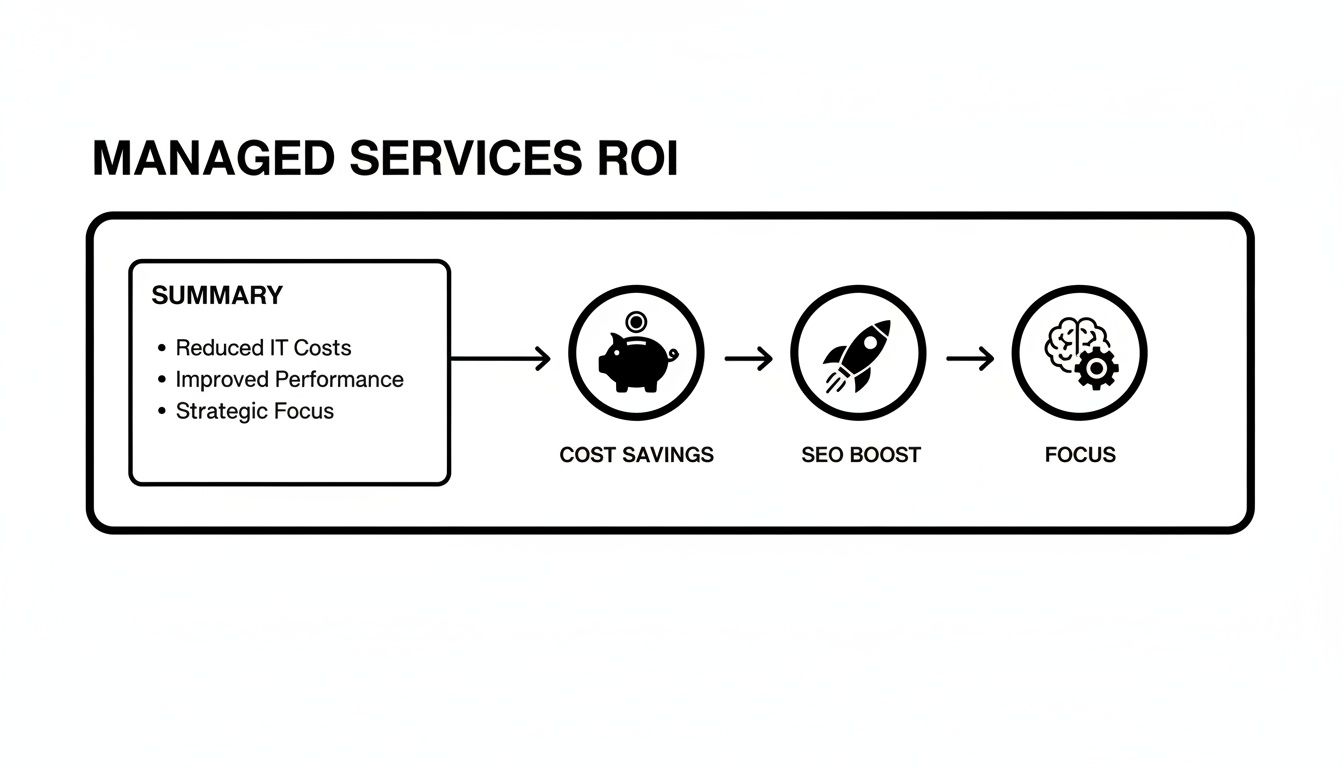
The return on your investment (ROI) shows up in two key areas. First, you get direct, easy-to-measure cost savings that protect your cash flow right now. Second, you gain powerful strategic advantages that fuel your business for the long haul.
The Direct ROI: Protecting Your Bottom Line
Think about the last time your website broke. The panic, the scramble to find a developer who could fix it yesterday, the eye-watering emergency fees—all while sales flatlined. It's a nightmare scenario. Managed services are basically an insurance policy against that kind of chaos.
Here's how that translates into real dollars and cents:
- Preventing Lost Sales from Downtime: If you run an e-commerce store, every minute your site is down can mean hundreds or even thousands of dollars in lost revenue. Proactive management keeps your digital doors open 24/7.
- Avoiding Sky-High Emergency Repair Bills: Getting hacked or dealing with a site-crashing bug can cost a small fortune to fix on the fly. A managed plan smooths out those unpredictable, massive costs into a predictable monthly expense.
- Cutting Down on Wasted Staff Time: Are you or your team members sinking hours every month into plugin updates, security scans, and troubleshooting? That's time and talent stolen from what really matters—like marketing, sales, or talking to customers.
The Indirect ROI: Fueling Your Growth
This is where things get really interesting. A well-cared-for website doesn't just prevent problems; it actively creates opportunities. The indirect benefits are less about saving money and more about making more money.
A faster, more secure site directly helps you hit your business goals. For instance, Google loves fast and secure websites, so keeping your site in top shape is a huge factor in ranking higher in search results. This means more organic traffic comes your way without you having to spend another dime on ads.
Your website’s performance is directly tied to your customer experience. A faster, more reliable site leads to higher user engagement, better conversion rates, and a stronger, more trustworthy brand reputation.
On top of that, a smooth user experience makes people want to stick around and, ultimately, buy from you. When pages load in a snap and every button works perfectly, you build trust and make it easy for customers to say "yes." This strengthens your brand and helps turn first-time visitors into loyal fans.
This growing understanding of value is why the global managed services market was valued at $297.20 billion in 2024. Small and mid-sized businesses, in particular, are jumping on board to get a competitive edge and make their budgets more predictable. You can read more about the growth of the managed services market and what's driving it.
Freeing Up Your Team to Do What They Do Best
Maybe the biggest win of all is the focus it gives back to your team. When you aren't putting out technical fires or losing sleep over security threats, you're free to think bigger. Your marketing team can build killer campaigns, your sales team can focus on closing deals, and you can focus on leading the company forward.
This simple shift turns your website from a technical headache into a strategic advantage. You can confidently roll out new features or launch a big marketing push, knowing your website’s foundation is rock-solid. Taking a look at comprehensive website care plans is usually the first step people take to get that kind of operational freedom.
At the end of the day, managed services aren't just another IT line item. They're a strategic investment that delivers returns through better security, improved performance, and—most importantly—the freedom to focus on growing your business.
Comparing Your Website Management Options
Figuring out if managed services are right for you is a lot easier when you compare them to the other ways you can keep a website running. Every business has to pick a path, and each one has its own mix of costs, required expertise, and headaches.
Let's walk through the four main choices: doing it all yourself (DIY), hiring a freelancer, putting an agency on retainer, or going with a dedicated managed services provider. The best fit really depends on your budget, your technical skills, and how much time you can honestly commit.
Do It Yourself (DIY) Management
The DIY approach looks like the cheapest way to go, at least on paper. Your only direct costs are for things like hosting and software. The real price you pay is in your time—and for a business owner, that’s your most precious resource. You're on the hook for everything: running security scans, updating plugins, and figuring out what went wrong when the site breaks at 2 AM.
While you get total control, you also take on all the risk. One wrong move, like a bad update, can knock your entire site offline. That means lost sales and a desperate, expensive hunt for an emergency developer. This path really only works for founders who are comfortable with technology, have simple sites, and have the time to learn and fix things on the fly.
Working with a Freelancer
Bringing on a freelancer is a common step up from DIY. You get an expert on your team without the costs of a full-time hire. Freelancers can be a great resource for specific projects, offering a flexible and direct line of communication.
The main issue here is that you're relying on one person. What happens if your freelancer gets sick, takes a vacation, or just gets swamped with other clients? Your website problems get pushed to the back burner. It can also be tough to ensure they're proactively looking out for your site's health, as they're often focused on completing one task at a time.
The Traditional Agency Retainer
Many full-service digital marketing agencies bundle website maintenance into a larger monthly retainer. The big plus here is having one partner for everything—marketing, content, and tech support. This can help make sure your website’s performance is tied directly to your marketing campaigns.
The downside? Website management usually isn't their main game. Technical support can be slower or less specialized than what a dedicated provider can offer. Agency retainers are also often the most expensive route, lumping in services you might not need and making it hard to see the specific value you’re getting from the maintenance part of the bill.
Website Management Models: A Head-to-Head Comparison
To make the decision clearer, it helps to see how these four models stack up against each other. This table breaks down the pros and cons across the criteria that matter most to a business, from cost and expertise to reliability and focus.
| Criteria | DIY Management | Hiring a Freelancer | Agency Retainer | Managed Website Services |
|---|---|---|---|---|
| Cost | Lowest initial cost, but high hidden costs (time, emergency fixes). | Moderate and flexible, but can be unpredictable. | Highest cost, often bundled with other services. | Predictable, fixed monthly cost. High value. |
| Expertise | Limited to your own knowledge. Steep learning curve. | Specialized expertise, but siloed to one person. | Broad marketing expertise, but often generalist tech skills. | Deep, specialized technical expertise from a dedicated team. |
| Time Investment | Very high. You are the IT department. | Low to moderate. Requires time for management and communication. | Low. The agency handles most tasks. | Very low. The provider proactively manages everything. |
| Reliability | Low. High risk of downtime and human error. | Moderate. Creates a single point of failure (one person). | Moderate to high, but support can be slow if it's not a core service. | Very high. Guaranteed uptime and fast support via an SLA. |
| Focus | Reactive. You only fix things when they break. | Task-based. Focused on completing specific projects. | Campaign-focused. Aligns with marketing goals. | Proactive. Focused on prevention, security, and performance. |
Looking at them side-by-side, you can start to see which model aligns with your company’s resources and priorities. The right choice is the one that lets you focus on your business, not on your website's technical troubles.
Why Choose Managed Website Services?
This is where managed services really shine as a balanced, reliable solution. You get an entire team of experts, which gets rid of the "single point of failure" risk you have with a freelancer. Since their entire business is focused on website hosting and management, they are built to be proactive. They use established systems to monitor, secure, and fine-tune your site 24/7.
The cost is predictable, usually landing somewhere between hiring a freelancer and signing a big agency retainer. You get a Service Level Agreement (SLA) that clearly spells out what they’ll do and guarantees things like response times and uptime. For any business that relies on its website to make money, this proactive and specialized approach is a smart, dependable investment in your growth.
How to Choose the Right Managed Services Partner

You’ve decided that managed website services make sense for your business. That’s a great first step. Now comes the real challenge: finding the right partner. This decision goes way beyond just comparing price tags; it's about building a relationship with a team you can trust with your most valuable digital asset.
Think of it like hiring a general contractor to build your dream home. You wouldn't just hand the job to the person with the lowest bid. You'd pore over their portfolio, check references, and make sure they have the skill to bring your vision to life. Applying that same level of care here is essential.
Evaluate Their Technical Expertise
Before you even think about signing a contract, you need to be sure a potential partner has the technical chops for your specific website. No two sites are identical, and an expert in one platform might be completely lost on another.
Start by asking what they specialize in. Does their team live and breathe your platform, whether it’s WordPress, Shopify, or something else? A team with deep, focused experience in your Content Management System (CMS) will solve problems faster and optimize your site more effectively.
From there, dig into how they handle the fundamentals of site management:
- Security: What's their game plan for finding threats and getting rid of malware?
- Performance: What specific tools and techniques do they use to make sites faster?
- Backups: How often do they back up your site, and where are those backups kept?
You're looking for clear, confident, and specific answers. If all you get is vague jargon, that’s a bad sign. A true expert can make complex topics easy to understand.
Scrutinize the Service Level Agreement
The Service Level Agreement (SLA) is easily the most important document in this entire process. It’s the contract that spells out exactly what your provider promises to deliver. Reading every word isn't just a good idea—it's absolutely critical.
Don't settle for vague promises. A solid SLA will give you hard numbers on:
- Guaranteed Uptime: They should guarantee your site will be online a certain percentage of the time. The industry standard is 99.9% or higher.
- Response Times: How fast will they get back to you when you submit a support ticket? Look for different times based on how urgent the issue is.
- Resolution Times: While it's harder to guarantee a fix time, a good SLA might provide target windows for resolving common problems.
An SLA isn't just legal boilerplate; it's the blueprint for your entire working relationship. If a provider seems reluctant to offer a detailed SLA with firm guarantees, consider that a major red flag.
This agreement holds your partner accountable. It ensures the managed website services you’re paying for are delivered as promised and gives you a clear path forward if they aren't.
Assess Their Communication and Support
Technical skill is a must-have, but so is good communication. You need a partner who is responsive, transparent, and just plain easy to work with. When your site goes down, you want to know a real human who knows their stuff is just an email or phone call away.
Test their communication style before you sign anything. Send them a few questions and see how quickly and thoroughly they respond. Find out if you'll have a dedicated contact or if you'll be using a general ticketing system. What are their support hours, and what's the plan for a middle-of-the-night emergency? A great partner makes you feel like a priority, not just another number in the queue.
Critical Questions to Ask Potential Providers
To help you properly vet potential partners, here’s a checklist of questions you should ask. Their answers will tell you everything you need to know about their expertise, processes, and how much they value their clients.
- Onboarding Process: Can you walk me through your exact process for taking over management of a website like mine?
- Disaster Recovery: Let's say the worst happens—my site gets hacked or crashes completely. What’s your step-by-step procedure to get it back online?
- Proactive Monitoring: How do you spot security and performance issues before they become big problems for my business?
- Update Protocol: How do you manage plugin and software updates? Do you test them on a separate staging site first to make sure nothing breaks?
- Reporting and Transparency: What kind of reports will I get, and how often? I want to see what's happening with my site's health and performance.
- Scope of Support: What’s actually included in my plan? I need to know what counts as an extra cost, like content changes or adding a new feature.
- Team Expertise: Who, specifically, will be working on my site? What’s their background with my platform?
Choosing the right partner is a direct investment in your company’s future. By taking the time to ask these questions and do your homework, you can find a team that provides real peace of mind and helps your business grow.
Common Questions About Managed Website Services
Even with all the benefits laid out, it's totally normal to have a few questions before handing over the keys to your website. This is a big decision for your business, and it pays to be thorough.
Let's walk through some of the most common things business owners ask. Getting straight answers should help you feel confident that you’re making the right move.
Can I Still Access and Update My Own Website?
This is usually the first thing people ask, and the answer is almost always yes, of course. It’s your website, after all. Any good managed services partner knows you might want to publish a blog post, tweak product details, or make small copy changes on the fly.
What they will likely do is have a conversation with you about how to do that safely. To keep everything secure and stable, they might suggest limiting who has full administrator access. They could also offer a little training to make sure the changes you make don't accidentally cause a problem. The goal is to work together, not for them to lock you out.
Think of your relationship with a managed services provider as a partnership. They handle the tricky technical stuff so you can focus on your content and strategy, but you're always the one in control.
It’s kind of like owning a high-performance car. You’re the one who gets to drive it every day, but you have a trusted team of mechanics handling the engine work and maintenance to keep it in peak condition.
What If I Need More Than Just Maintenance?
So, what happens when you outgrow your current setup? Maybe you want to add an online store, overhaul a landing page, or plug in a new marketing tool. This happens all the time—and it’s a great sign your business is growing.
Most managed services providers are ready for this. They typically offer development and design services that are simply billed on top of your monthly plan. The process is usually pretty simple:
- You send a request: Just outline the new feature or change you have in mind.
- They scope it out: The provider will assess the work and give you a clear quote for the time and cost.
- They get to work: Once you approve the estimate, their team starts building.
The big win here is that you're working with a team that already knows your website inside and out. That makes everything go much faster and smoother than hiring a new freelancer who has to get up to speed. It keeps the quality high and the whole process consistent.
Is It Worth the Cost for a Small Business?
When you’re running a small business, every dollar has a job to do. It's easy to look at the monthly fee for managed website services and see it purely as a cost. The real trick is to reframe it as an investment in your company’s stability and growth.
Think about the alternative for a second. How much revenue would you lose if your site crashed for a whole day during your busiest season? What would an emergency developer charge to fix a hack—often $150 per hour or more? When you run the numbers, a predictable monthly fee is almost always cheaper than the cost of a single disaster.
More importantly, it buys back your time. By offloading all the technical stress, you and your team can focus on what actually makes you money: sales, marketing, and talking to customers. For any small business, that recovered focus is invaluable.
Ready to stop worrying about your website and start focusing on your business? At OneNine, we provide expert website management that gives you peace of mind. Learn more about our services at https://onenine.com.


