

When you decide it’s time for a rebrand, it’s about so much more than a new logo or a fresh color palette. Think of it as a strategic overhaul of your company's core identity. You're hitting the reset button on your mission, values, and market position to reflect a fundamental shift in your business. This is about realigning with new goals, adapting to market changes, or connecting with a different audience.
Why Rebranding Is More Than Just a New Logo
Before you even think about sketching logo concepts or picking out fonts, you have to get brutally honest about the why. A rebrand that actually works is a calculated business move, not just a cosmetic touch-up. It's meant to solve a real problem or grab a new opportunity. It's a strategic pivot, not just a fresh coat of paint.
It’s a common mistake to think a rebrand starts and ends with the visual design. While a sharp new look is the most obvious outcome, it's actually the very last piece of a much larger puzzle. All the heavy lifting happens long before anyone on the design team opens up their software.
Auditing Your Current Brand Perception
First things first: you need a clear, unfiltered look at how your brand is seen right now. How do your customers, your own team, and the market actually perceive you? This means getting out of your own head and gathering some real-world intel.
- Talk to your customers. Send out surveys and ask your loyal clients what words they associate with your brand and why they stick with you over the competition.
- Listen to your team. Your employees are on the front lines every day. Host workshops to get their honest take on the brand’s strengths and weaknesses.
- Scope out the competition. How do you really stack up? Dig into their messaging, visual identity, and market position to find your own unique space.
- Monitor online chatter. Check social media, review sites, and forums. What are people saying about you when they think you're not listening?
This audit gives you the solid ground you need to stand on. Making rebranding decisions without this data is like flying blind—a recipe for a costly mistake. A powerful visual identity is born from this strategic core, which you can learn more about in our guide to crafting a professional visual brand.
Setting Clear and Measurable Goals
Once you know where you stand, you can decide where you're going. Every rebrand needs a clear purpose tied to a specific business outcome. This goal becomes your North Star, guiding every single decision you make along the way.
To help you connect the dots between your situation and your goals, here’s a quick breakdown of common scenarios.
Rebranding Drivers and Strategic Goals
| Common Rebrand Driver | Example Scenario | Primary Strategic Goal |
|---|---|---|
| Market Repositioning | A B2C company wants to move upmarket from a budget-friendly image to a premium, luxury brand. | Change price perception and attract a higher-spending customer segment. |
| Merger & Acquisition | Two regional tech firms merge and need a unified identity to present a stronger, combined front. | Build a cohesive culture and establish a new, singular brand in the market. |
| Outdated Image | A 20-year-old financial services firm looks and feels stuck in the past, losing clients to modern competitors. | Modernize the brand to appeal to a younger demographic and signal innovation. |
| Negative Reputation | A food company faces a PR crisis and needs to distance itself from a past issue to rebuild trust. | Overcome negative associations and demonstrate a renewed commitment to quality. |
By clearly defining what you want to achieve, you can ensure your rebrand is a focused, strategic investment rather than a shot in the dark.
This visual flow shows how strategy has to come before execution. You start with the audit, define your goals, and then build the plan.
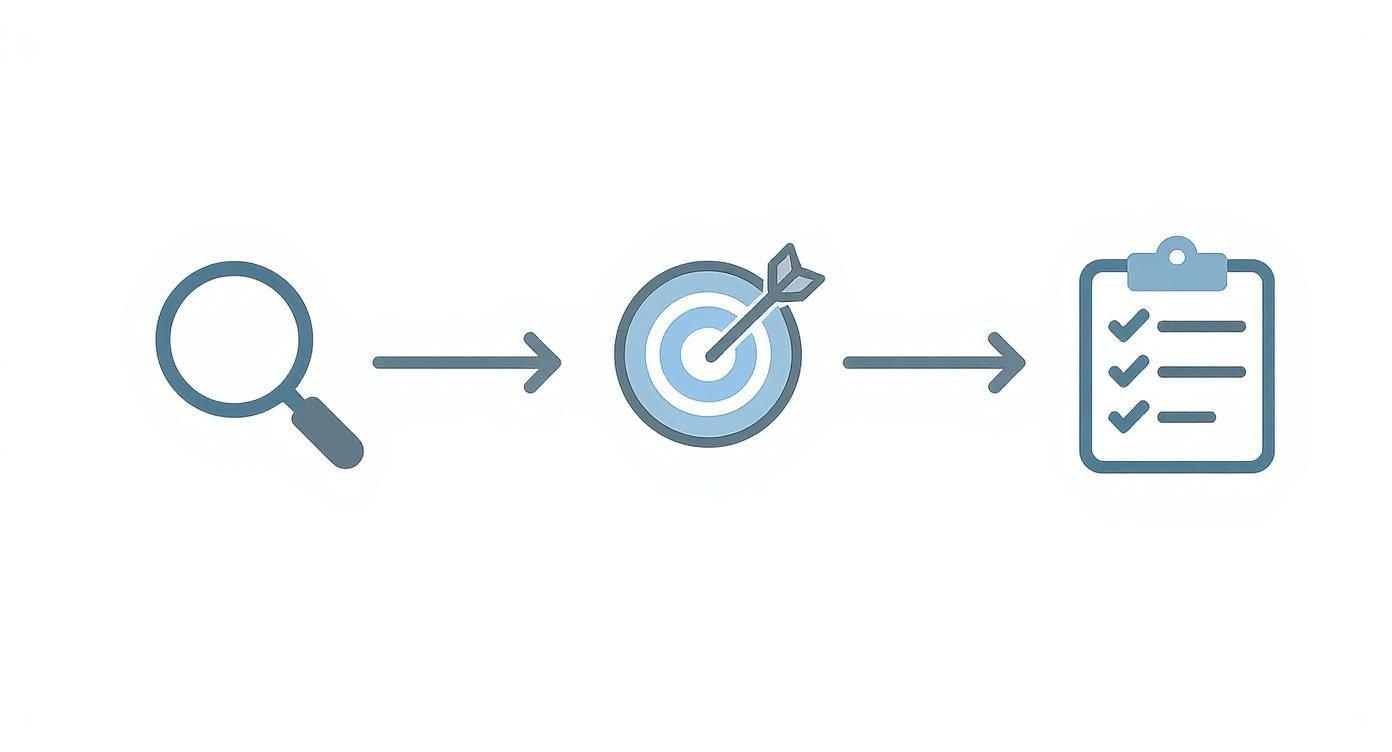
As you can see, a rebrand is a step-by-step process where the strategic foundation is non-negotiable.
Your goals have to be concrete. Are you trying to:
- Reach a new audience? Maybe you're shifting from an older, traditional base to a younger, more digital-savvy crowd.
- Justify a price hike? You need to elevate your brand's perception from a budget option to a premium choice.
- Escape a bad reputation? It's time to move on from a product mishap, a PR nightmare, or an outdated market image.
- Unify after a merger? The goal is to create one strong identity from two separate companies.
A rebrand isn’t a sign of failure; it’s a mark of evolution. It signals that your company is dynamic and willing to adapt to stay relevant and better serve its customers.
This isn't just for small businesses, either. It’s a standard move for some of the world's biggest companies. In fact, research shows that 74% of S&P 100 companies have rebranded within their first seven years. This proves that rebranding is a proactive strategy for growth, not just a reactive fix. By setting clear goals, you turn your rebrand into a smart investment that delivers real results.
Defining Your New Brand Identity and Voice
Alright, you've done the hard work of research and strategy. Now for the fun part: bringing your new brand to life. This is where all those insights and goals start to look and sound like a real brand—something your team can rally behind and your customers can finally connect with.
This isn't just a creative free-for-all. Every decision you make from here on out needs to be rooted in the strategic foundation you just built. We're not just picking pretty colors; we're choosing a visual and verbal language that stakes your claim in the market and speaks directly to your ideal customer.

Crafting Your Mission and Vision
Your mission and vision statements are the North Star for your brand. Forget the fluffy corporate jargon you see stuffed onto "About Us" pages; these are the core principles that will guide everything from company culture to product roadmaps and marketing campaigns.
A sharp mission statement nails down what you do, who you do it for, and why it matters. It should be clear and direct. Your vision, on the other hand, is your moonshot—it’s the future you’re working to create.
Think of it like this:
- Mission: This is our purpose today.
- Vision: This is where we're headed tomorrow.
Getting these right is the first real step in the creative process. They anchor every decision that follows.
Developing a Distinct Brand Voice
How your brand sounds is just as important as how it looks. Your brand voice is its personality, and it shines through in every piece of communication you create, from your website copy and social posts to the way your support team talks to customers. It’s what makes your brand feel human.
To nail down your voice, try thinking of your brand as a person. Is it:
- Friendly and approachable or formal and authoritative?
- Witty and clever or serious and straightforward?
- Edgy and modern or classic and traditional?
Once you land on a few core personality traits, you can build out a simple voice and tone guide with real-world examples. This makes sure everyone, no matter their role, sounds like they're part of the same company, creating a seamless experience for your audience.
A consistent brand presentation across all platforms can increase revenue by up to 23%. Your voice is a huge part of that consistency, building trust and recognition with every word.
Building Your Visual Identity
Now we get to the visuals—the logo, colors, and fonts that most people think of when they hear "rebrand." This is where your brand strategy finally gets a face. Your visual identity isn't just one logo; it's a whole system of design elements that work together.
The key components you'll need to lock down are:
- Logo: This is your brand’s most recognizable handshake. It has to be simple, memorable, and a true reflection of your new identity. Make sure it works everywhere, from a tiny website favicon to a massive trade show banner.
- Color Palette: Colors trigger instant emotions. Your primary and secondary colors should match the personality you're trying to project. For instance, blues often feel trustworthy and stable, while a splash of yellow can inject optimism and energy.
- Typography: The fonts you choose say a lot about you. A clean sans-serif font might feel modern and tech-focused, while a classic serif can communicate tradition and expertise.
All these elements need to play well together to tell one cohesive story. They’re the fundamental building blocks of your brand's visual language.
Creating a Comprehensive Style Guide
Finally, you need to get all of this down on paper. The single most important thing you can do to protect your new brand is creating comprehensive brand guidelines that act as the official rulebook for everything you've just created.
This document becomes the single source of truth for your brand. It empowers every employee and external partner—from marketing and sales to your freelance designers—to represent the brand correctly and consistently. Your style guide should get into the weeds, covering everything from logo spacing rules to the specific hex codes for your color palette. To dive deeper, you can learn more about how to create brand guidelines that your team will actually open and use.
Managing the Technical Side of Your Rebrand
https://www.youtube.com/embed/BdB7H4lWWwM
You can have the most brilliant new brand identity in the world, but if the technical execution is a mess, it can all fall flat. The real make-or-break moment of a rebrand happens behind the scenes. It's about protecting your hard-won online authority and making sure your customers don't even notice the digital transition.
Get this part wrong, and the consequences can be brutal. We've all seen major brands stumble. Remember when Twitter controversially became X? That clumsy transition led to huge market share losses and frustrated a lot of loyal users. This isn't just about a new logo; it's about a seamless experience.
Don't Torch Your SEO Equity
Think of your website's search ranking as a digital asset you've built brick by brick over years. When you rebrand—especially if you're changing your domain name or overhauling your site's structure—the number one priority is to protect that asset. You need to send a clear signal to Google that you've moved, not vanished.
Your most powerful tool here is the 301 redirect. It's essentially a permanent "change of address" form for the internet. A 301 tells search engines to pass the authority from an old page to its new counterpart. Skipping this step is like throwing away all your SEO work. Every single old URL has to be carefully mapped to a new one.
Here’s how to do it right:
- Create a URL Map: Start a simple spreadsheet. Column A is for every URL on your old site. Column B is for the corresponding URL on the new site. Don't miss any.
- Focus on What Matters Most: Pay extra attention to your high-performers—the pages with the most traffic, the most backlinks, and the highest conversion rates.
- Implement Methodically: Use your URL map to set up the 301s. If you’re on an Apache server, our guide on how to set up 301 redirects with .htaccess is a great place to start.
Pro-Tip: A rebrand is the perfect time to do some digital house-cleaning. As you migrate, look for opportunities to consolidate thin content, fix broken links, and improve your site architecture. You can emerge with an even stronger technical foundation than before.
Update Your Entire Digital Footprint
Your website might be the main event, but your brand lives all over the internet. A truly successful launch means updating every single online touchpoint. If you forget a key platform, you risk confusing your audience and looking unprofessional.
The first step is to create a master checklist of every single online account and profile tied to your business. You'll probably be surprised by how long the list is. As you tackle this, keep strong technical SEO best practices in mind to ensure your new presence starts off on the right foot.
Your Digital Update Checklist
This is all about being meticulous. Group your tasks into categories so nothing falls through the cracks.
Core Business Profiles:
- Google Business Profile: This is a big one for local search. Update your business name, logo, and website URL immediately.
- Online Directories: Go through every listing you have on Yelp, industry-specific sites, and local directories to make sure the new brand is reflected.
- Review Sites: Don't forget places like Trustpilot or G2. They need your updated branding and links, too.
Social & Communication Channels:
- Social Media: On LinkedIn, Facebook, Instagram, and anywhere else you have a presence, update your handles (if they're changing), profile pictures, cover photos, bios, and website links.
- Email Marketing: Re-skin every email template with your new logo, colors, and fonts. Double-check your sender information and legal footers.
- Email Signatures: Create a standardized email signature with the new branding and send it to your entire team. Make it a requirement for everyone to switch over on launch day.
By methodically working through these technical details, you're building a stable, consistent, and SEO-friendly foundation for your new brand. You’ll be set up for growth instead of playing catch-up.
Getting Your Team On Board Before You Launch
A rebrand that lands like a surprise party nobody wanted is a recipe for failure. I’ve seen it happen. Your employees are your first and most important brand ambassadors. If they aren’t bought in—if they don’t get it, believe in it, and feel genuinely excited about it—how can you expect your customers to?
A successful rebrand starts from the inside out. Period.

One of the most common missteps is when leadership spends months deep in strategy and design, only to drop the finished product on the company with zero context. This top-down approach almost always backfires, creating confusion and even resentment. It turns your biggest potential advocates into your first skeptics.
Start with the "Why," Not the "What"
Before a single new logo or color palette is revealed, you have to nail the "why." People need the backstory to get on board with change. You have to frame this as a strategic evolution, not just a facelift.
Set aside dedicated time for this—an all-hands meeting is perfect. Don't just tack it onto the end of a regular weekly update.
- Tell the Story: Walk everyone through the journey. Show them the customer feedback, the market data, and the competitive analysis that sparked the need for a change. Be transparent.
- Link it to the Future: Clearly explain the company's new mission and vision. Connect the dots for them, showing how this rebrand is the vehicle that will help everyone achieve long-term goals and open up new opportunities.
- Give Them a Role: Make it incredibly clear how each person and department plays a part in bringing the new brand to life. This isn't just marketing's job. This fosters a real sense of ownership.
When you're open about the process, you build trust. The rebrand stops being something that’s happening to them and becomes something they are a part of.
Turn Employees into Brand Champions
Once your team understands the strategy, it's time to build genuine excitement. Your goal is to give them the tools and confidence to talk about the new brand clearly and positively to anyone—customers, partners, even their own friends and family.
A great way to do this is to create an internal "Brand Champion" program. Hand-pick enthusiastic people from different departments, give them a sneak peek at the new materials, and empower them to be the go-to person for their peers' questions. This creates a grassroots movement that’s far more powerful than any top-down memo.
Your team's belief in the new brand is infectious. When an employee genuinely understands and supports the rebrand, that confidence is directly transferred to every customer interaction they have.
Throw a real internal launch party before you go public. Don't skip this. Make it a celebration of where you've been and a toast to where you're going. This is your moment to unveil the new look, hand out some cool new swag (everyone loves a fresh t-shirt or notebook), and get morale buzzing.
Manage the Practical Rollout
With the team fired up, the final piece of the internal puzzle is the nuts and bolts. A unified front on launch day is critical; nothing screams "disorganized" like old and new branding living side-by-side.
Get a detailed checklist going and assign owners to every single item.
- Digital Assets: Get all internal document templates, presentation decks, and intranet portals updated.
- Communication Tools: Design the new email signatures and send them out with crystal-clear instructions for a hard change-over date.
- Physical Stuff: Order new business cards, letterhead, and update any internal office signage.
- Sales & Marketing: Make sure every last sales deck, one-pager, and bit of marketing collateral is updated and ready to go.
By orchestrating this internal launch with care, you ensure that when you finally flip the switch, your entire company is aligned and ready to present the new brand with one, powerful voice.
Launching Your New Brand to the World
This is it. After months of hard work—strategy sessions, design debates, and careful planning—you’re finally ready to show the world your new brand. A great launch isn't just about flipping a switch; it's a carefully planned event that makes a statement and kicks off your company's next chapter.
The whole point is to own the narrative from day one. You need everyone to understand not just the what (the new logo and colors) but, more importantly, the why behind the change. When done right, a launch creates excitement, solidifies your new position in the market, and assures your existing customers that this is a step forward for everyone.

Crafting a Multi-Channel Launch Campaign
Your launch shouldn't be a single, quiet announcement. Think of it as a coordinated wave of communication hitting all the right channels at once. The trick is to tailor the message for each platform while keeping the core story consistent. A generic, copy-paste approach just won't cut it.
I've found that sequencing your communications is the best way to build momentum.
-
Personalized Email Outreach: Your most loyal customers and partners should hear the news from you first. A day or even a few hours before the big public reveal, send a personal email from your CEO or founder. Explain why you're rebranding, thank them for their support, and give them an exclusive sneak peek. It's a small gesture that builds a tremendous amount of goodwill.
-
Official Press Release: Draft a press release that tells a compelling story, not just a list of changes. Send it out to industry journalists, bloggers, and publications your ideal customers actually read. This gives your launch credibility and helps you earn valuable media mentions.
-
Targeted Social Media Blitz: Get a full set of assets ready for every social platform—new profile pictures, cover photos, and a series of planned posts. Don't just post "We've rebranded!" and call it a day. Create a short video telling the story behind the change, share some behind-the-scenes content from the process, and run a coordinated campaign to get your new look in front of as many eyes as possible.
Preparing Your Frontline Team
Your customer service and sales teams are about to become the face of this change. They’ll be the ones fielding questions, managing any confusion, and absorbing all the feedback—good and bad. If they’re not ready, the launch can go sideways fast.
Arm them with a comprehensive FAQ document that covers all the bases:
- Why did the company rebrand? (Give them the official story.)
- Is the product or service changing? (Clarify any updates.)
- What does the new name/logo mean? (Provide the backstory.)
- How do I log into my account now? (Address practical, immediate concerns.)
Running a few role-playing sessions on common customer questions is also a game-changer. It builds their confidence and ensures they can represent the new brand accurately and professionally from the very first interaction.
Your launch day is not the finish line. It's the starting line for building new brand recognition and trust with your audience. Treat every interaction as an opportunity to reinforce your new identity.
Measuring the True Impact of Your Rebrand
Once the excitement of launch day dies down, the real work begins: measuring success. You need to track the right metrics to see if the rebrand is actually achieving the strategic goals you laid out from the very beginning. This means comparing your post-launch data to the benchmarks you set before you started.
Don't forget why this matters. Brand familiarity has a huge impact on buying decisions, with around 50% of consumers more likely to buy from brands they already know. But building that recognition takes time—it often takes 6 to 7 impressions for a brand to truly stick. You can find more branding stats that show why trust is the foundation of customer relationships at wisernotify.com.
To really understand your performance, you need a balanced view of the data. I recommend focusing on a few key areas to get a clear picture.
Key Metrics for Measuring Rebrand Success
Here’s a look at the essential KPIs to track before and after your rebrand to measure its real-world impact.
| Metric Category | Specific KPI | Why It Matters |
|---|---|---|
| Brand Perception | Social Media Sentiment | Measures public reaction and tells you if the new brand is being received positively or negatively. |
| Website Performance | Direct & Organic Traffic | Indicates if your new brand is memorable enough for people to seek you out and find you via search. |
| Lead Generation | Marketing Qualified Leads (MQLs) | Shows if the rebrand is attracting the right kind of audience that fits your new positioning. |
| Sales & Revenue | Customer Lifetime Value (CLV) | Helps determine if the rebrand is attracting higher-value customers and improving long-term profit. |
By tracking these metrics consistently, you can move beyond gut feelings and get a data-backed view of your rebrand’s ROI. This ongoing analysis is what allows you to make smart adjustments to your marketing, ensuring your new brand doesn't just launch with a bang but continues to grow stronger over time.
Common Questions About Rebranding a Company
When you start talking about a rebrand, the questions come thick and fast. It's a big undertaking, and frankly, it can feel a little daunting. But getting your arms around the biggest challenges from the get-go is the best way to plan effectively and move forward with confidence.
Let's dive into the real, practical questions that every business leader asks. These aren't just hypotheticals; the answers will shape your project's scope, budget, and ultimately, its success. Getting clarity now will save you from major headaches down the road.
How Much Does It Cost to Rebrand a Company?
This is almost always the first question, and the honest answer is: it depends. The price tag on a rebrand can swing wildly based on your company's size and just how deep you need to go. A small business might get away with a simple visual refresh for a few thousand dollars, while a complete overhaul for a larger organization can easily soar into the six-figure range and beyond.
I find it helps to think of the costs in a few distinct buckets:
- Strategy and Research: This is the foundation. Don't skip it. Market analysis, customer interviews, and brand positioning are essential investments.
- Design and Creative: This covers all the tangible stuff—the new logo, the full visual identity system, and the all-important brand style guide.
- Website Development: This is often the biggest line item, especially if you're looking at a ground-up redesign and a complex technical migration.
- Launch and Marketing: You have to tell the world. This bucket includes creating new sales collateral, running ad campaigns, and PR efforts to make a splash.
As a rule of thumb, companies often set aside 5% to 20% of their total marketing budget for a rebrand. It’s a serious investment, but when you get it right, the payoff is huge.
How Long Does the Rebranding Process Take?
Patience is your best friend here. A proper, well-executed rebrand is a marathon, not a sprint. You should plan for it to take anywhere from six to eighteen months from the first conversation to the final launch. Trying to rush any part of it almost always backfires, leading to compromises and costly mistakes you'll have to fix later.
Here’s what a realistic timeline usually looks like:
- Research and Strategy (2-4 months): This is the deep-dive phase. You'll be auditing your current brand, sizing up the competition, and carving out your new position in the market.
- Identity and Design (3-6 months): Time to get creative. This is where the new brand voice, messaging, logo, and visual systems come to life through rounds of development and refinement.
- Implementation and Launch (3-8 months): This is the home stretch. It’s all about rolling out the new brand across every single asset—from your website and social profiles to internal documents—and then executing the public launch.
Should We Change Our Company Name?
This is one of the most critical decisions you'll make in the entire process. It’s a high-stakes choice and one you absolutely shouldn't take lightly. Sometimes, keeping your name is the smartest play; other times, a clean slate is exactly what you need.
Think about keeping your name if you have significant brand equity and a good reputation. The SEO authority and customer recognition you've built are incredibly valuable assets. On the other hand, a name change might be unavoidable if your current name has negative baggage, no longer reflects what you do, or is causing legal headaches. It's all about weighing the long-term strategic upside against the short-term disruption.
How Do We Rebrand Without Losing Customers?
The fear of alienating loyal customers is real, but it’s completely manageable if you have a thoughtful communication plan. The secret is to bring your customers along for the ride, not just spring the change on them out of the blue.
Your mission is to reassure them that the core values and quality they've come to trust aren't just staying—they're getting even better.
- Give them a sneak peek. Let your most loyal customers in on the secret first. It makes them feel important and can turn them into your biggest champions.
- Clearly explain the "why." Don't just show them the "what." Tell a compelling story about why you're evolving. Frame it as a move to serve them better.
- Nail the transition. Make sure the practical stuff is flawless. If you're changing logins, the user experience, or contact info, communicate it clearly and often.
It’s all about making your customers feel like insiders who are part of an exciting new chapter, not outsiders left behind by a change they never asked for.
At OneNine, we know that a rebrand is a massive undertaking. Our team lives and breathes website design, development, and strategy to make sure your new brand hits the ground running online. Let us be your partner in navigating this transition and building a digital presence that truly drives results. Learn more about our website management services.


