

A great website is no longer optional for a small business. It is your digital storefront, your primary marketing channel, and a direct line to your customers. But with countless options available, how do you choose the right tool for the job? The truth is, the term ‘best’ is subjective; the best builder for an ecommerce startup isn't the same for a local service provider or a creative portfolio. This guide cuts through the noise.
We’ve analyzed the 12 best website builders for small business, focusing on practical use cases, hidden costs, and the real-world experience of using each platform. This isn't just a list of features. It’s a detailed breakdown designed to help you make an informed decision based on your specific needs, budget, and technical comfort level. As you consider different website builders, it's essential to understand how your site fits into your overall strategy for how to advertise your small business effectively.
Each platform review includes screenshots and direct links, providing a clear look at what you can expect. We'll analyze them based on four key criteria:
- Ease of Use: How quickly can you get a professional site live?
- Feature Set: Do the tools match your business goals (e.g., booking, selling, blogging)?
- Scalability: Can the platform grow with you?
- Overall Value: Does the price justify the features and limitations?
By the end of this comprehensive guide, you'll have a clear framework to select a builder that not only helps you launch quickly but also supports your growth for years to come. Let's find the right digital foundation for your business.
1. Wix
Wix stands out as one of the best website builders for small business owners who need to launch a professional, feature-rich site quickly without touching a line of code. Its primary strength lies in its true drag-and-drop editor, which offers complete creative freedom, and its AI-powered Assistant (ADI) that can generate a website for you in minutes. This makes it ideal for service-based businesses like salons, consultants, or restaurants that need integrated booking, event management, and membership features right out of the box.
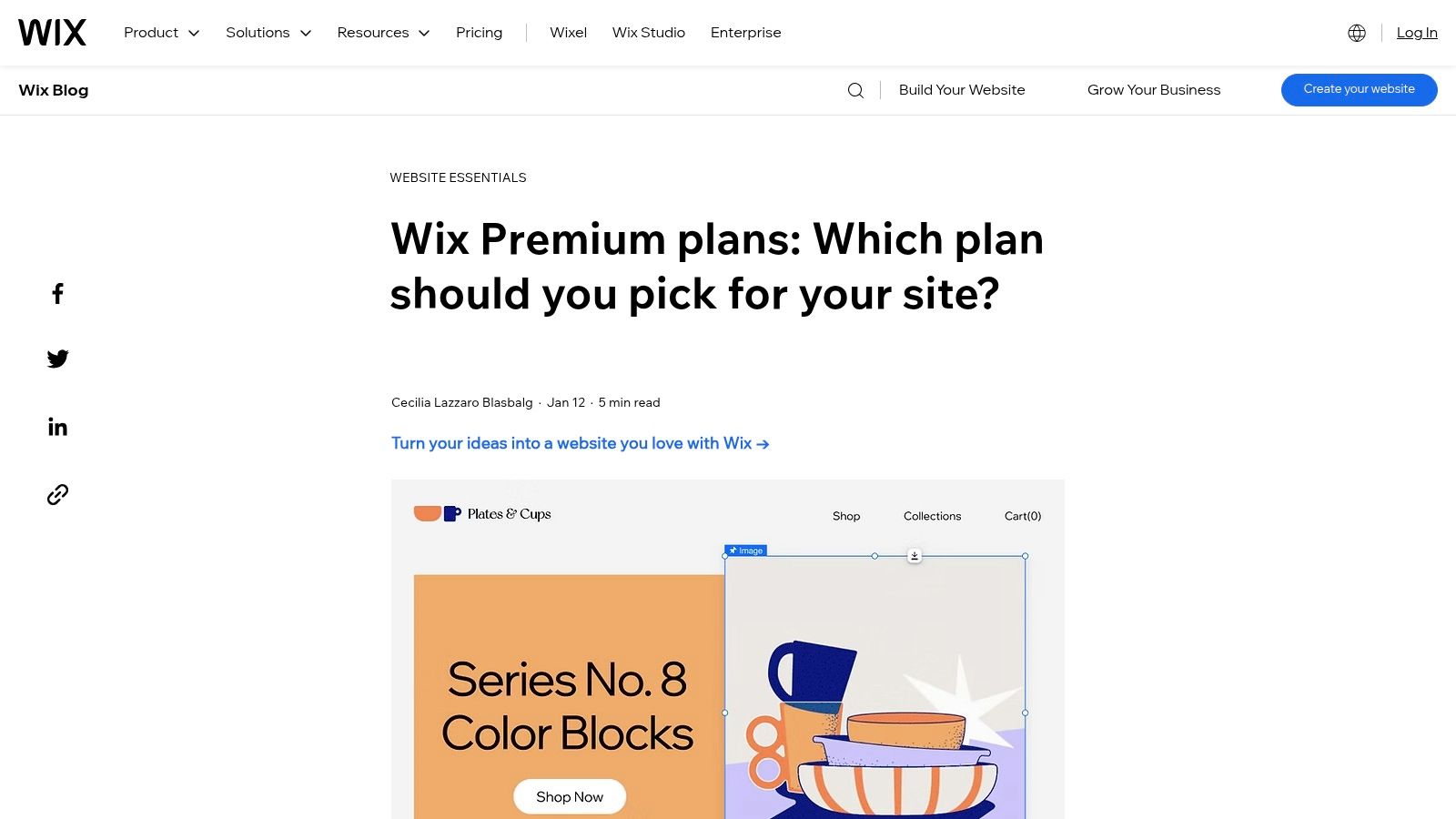
The platform is a comprehensive ecosystem. Beyond the builder, it provides robust native tools for marketing, SEO, and ecommerce, reducing the need to find and integrate third-party apps. While its broad functionality is a huge plus, the sheer number of options can sometimes make the editor feel "heavy," potentially impacting page load times if not optimized carefully.
Key Considerations
- Best For: Service businesses, creative professionals, and entrepreneurs who prioritize speed-to-launch and all-in-one functionality.
- Ease of Use: The visual editor is highly intuitive. The ADI option simplifies the process even further, making it accessible for absolute beginners.
- Pricing: Premium plans with a 14-day money-back guarantee are available, often with multi-year discounts. However, be mindful that the total cost can increase with premium apps from the extensive App Market. For a deeper analysis of how its pricing and features stack up, you can explore this detailed comparison of Wix vs. other top platforms.
Website: Wix Plans & Pricing
2. Squarespace
Squarespace has carved out a niche as the best website builder for small business owners who prioritize polished design and an elegant, cohesive brand presence. Its strength lies in its award-winning, mobile-responsive templates that provide a stunning and professional foundation right from the start. This makes it an exceptional choice for brand-driven businesses like photographers, designers, boutique shops, and consultants who need an all-in-one platform for publishing content, selling products, and managing appointments.
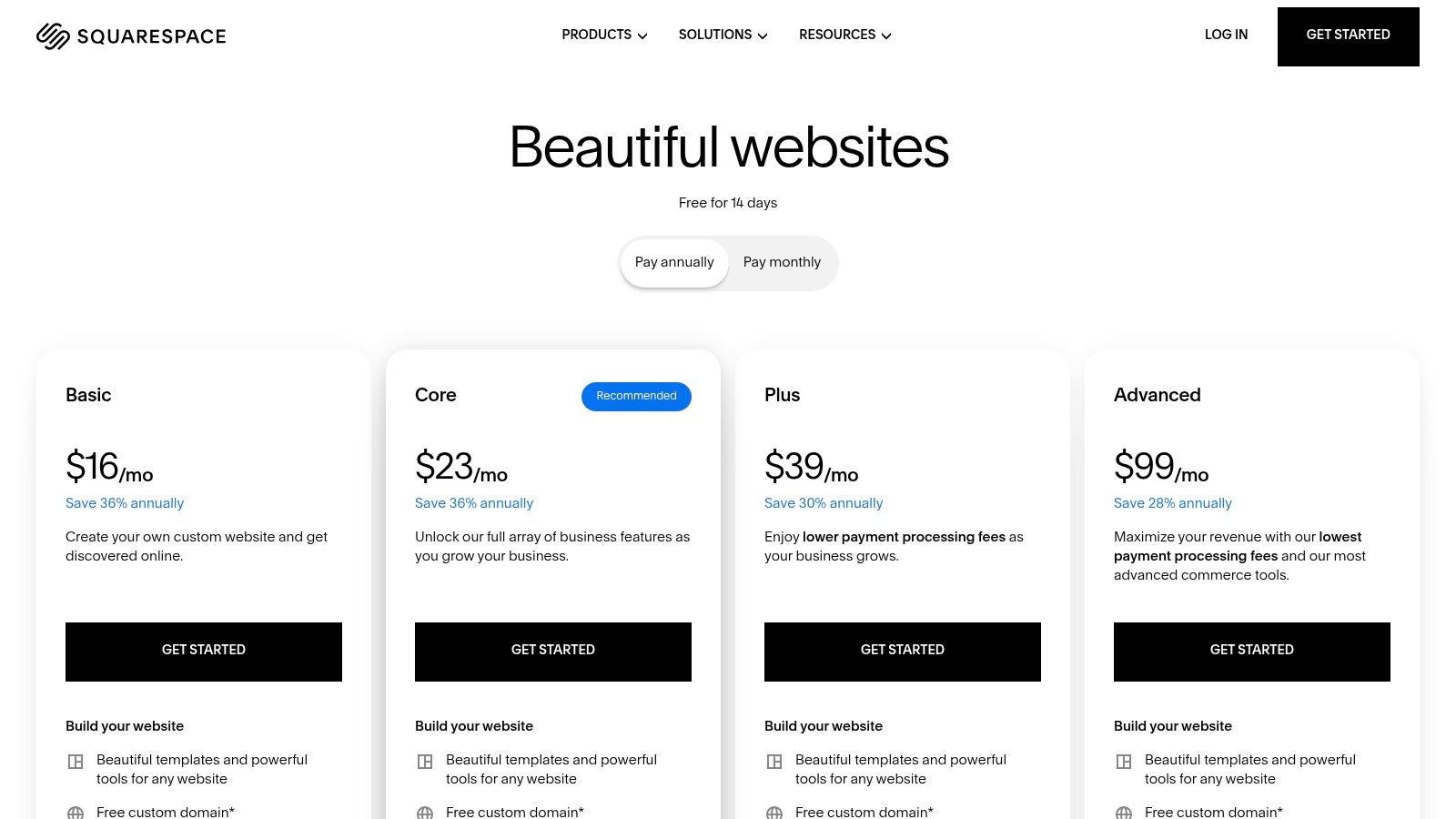
The platform offers a unified experience, integrating native tools for ecommerce, subscriptions, member areas, and email marketing directly into its ecosystem. This built-in approach simplifies management by eliminating the need for complex plugins or third-party integrations for core functionalities. While its structured editor ensures a consistent aesthetic and is simpler to master, it offers less granular design freedom compared to a true drag-and-drop builder, which may be a limitation for users seeking complete pixel-perfect control.
Key Considerations
- Best For: Creative professionals, bloggers, and brand-focused businesses that value sophisticated design and an integrated commerce and marketing toolset.
- Ease of Use: The section-based editor is very intuitive and easy to learn. It guides users toward creating well-designed layouts without overwhelming them.
- Pricing: All plans include a 14-day free trial (no credit card required) and 24/7 customer support. Be aware that access to more advanced features like subscriptions and abandoned cart recovery is reserved for higher-tier commerce plans.
Website: Squarespace Plans & Pricing
3. Shopify
For businesses where selling products is the central focus, Shopify is the undisputed leader and one of the best website builders for small business owners dedicated to ecommerce. It's more than just a website builder; it's a complete commerce platform designed to manage products, inventory, payments, and shipping seamlessly. Its strength lies in its scalability, making it an excellent choice for ambitious startups planning for significant growth, as well as established retailers moving online. Shopify powers everything from small home-based businesses to enterprise-level brands.
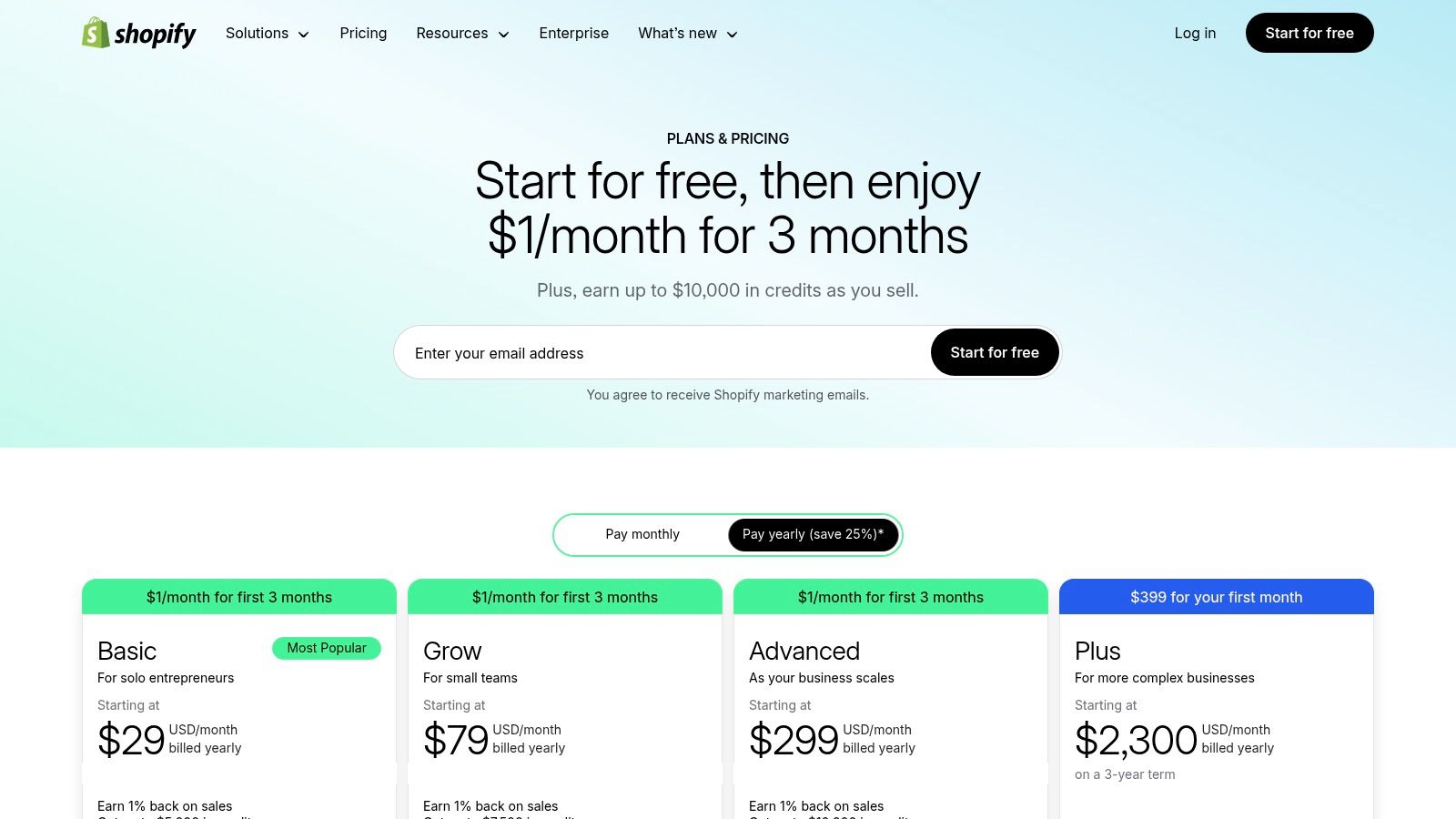
The platform offers a powerful ecosystem with an extensive App Store that allows you to add nearly any functionality imaginable, from advanced marketing automation to complex inventory management. This reliability and specialization in ecommerce mean its checkout process is highly optimized for conversions. While its website design tools are less flexible than a true drag-and-drop builder like Wix, the focus is on creating a fast, secure, and effective online store, not just a website.
Key Considerations
- Best For: Product-based businesses of any size, from startups to large retailers, who need a robust, scalable, and reliable ecommerce solution.
- Ease of Use: The backend is logically structured and easy to navigate for managing products and orders. The theme editor is straightforward but offers less creative freedom than general-purpose builders.
- Pricing: Plans are tiered based on features and transaction fees. The total cost often increases as you add paid apps to extend functionality, which is a common requirement for growing stores. A free trial is available to test the platform.
Website: Shopify Plans & Pricing
4. WordPress.com
WordPress.com offers a streamlined on-ramp to the world's most popular content management system, making it one of the best website builders for small business owners who value content and long-term flexibility. It bundles hosting, security, and a guided site builder, removing the technical hurdles of self-hosted WordPress. This platform is perfect for businesses built on content, like blogs, news sites, or portfolios, that want a powerful SEO foundation and the potential to scale significantly in the future.
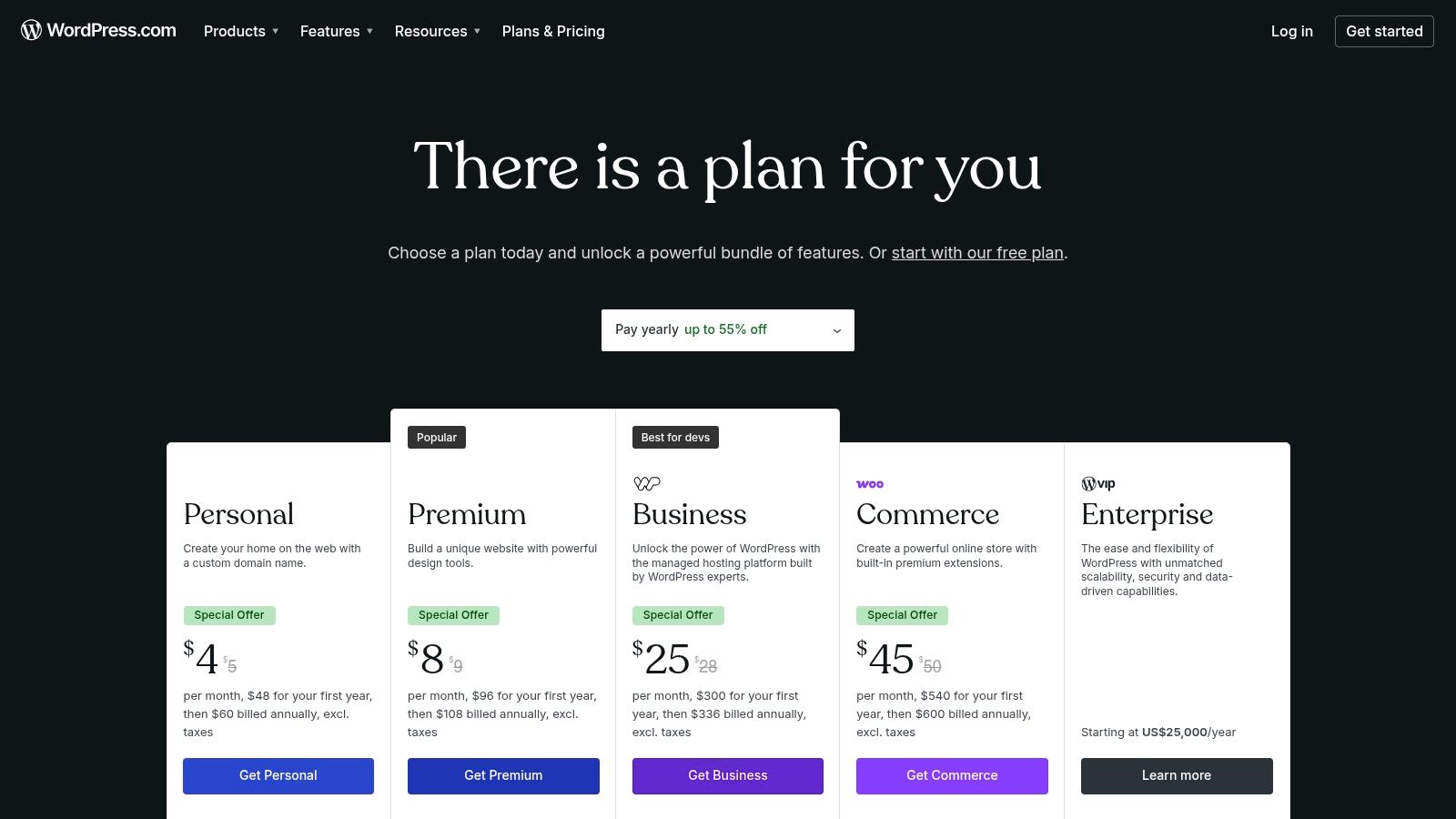
Unlike all-in-one builders, WordPress.com provides a clear growth path. You can start with a simple, managed site and later unlock the full power of the WordPress ecosystem by upgrading to plans that allow custom plugins and advanced themes. While the initial setup is straightforward, achieving a highly custom design has a steeper learning curve than pure drag-and-drop editors. Its true strength lies in its unmatched content tools and the ability to eventually migrate your site elsewhere if your needs change.
Key Considerations
- Best For: Content-heavy businesses, bloggers, and startups who want the power of WordPress without the hassle of managing their own hosting and security.
- Ease of Use: The block editor is powerful but requires more familiarization than visual builders. An AI-powered assistant is available to help accelerate the initial setup.
- Pricing: A free plan exists with limitations. Paid plans unlock more features, with the Business and Commerce tiers required for installing plugins and using advanced tools like WooCommerce. Multi-year billing options can offer significant savings.
Website: WordPress.com Plans & Pricing
5. Webflow
Webflow occupies a unique space, serving as a powerful bridge between simple drag-and-drop builders and full-stack custom development. It's one of the best website builders for small business owners, particularly designers and marketers, who demand pixel-perfect creative control and advanced animations without writing code. Its visual canvas directly manipulates HTML and CSS, producing clean, professional code that search engines love, making it exceptional for content-heavy marketing sites where design precision and performance are paramount.
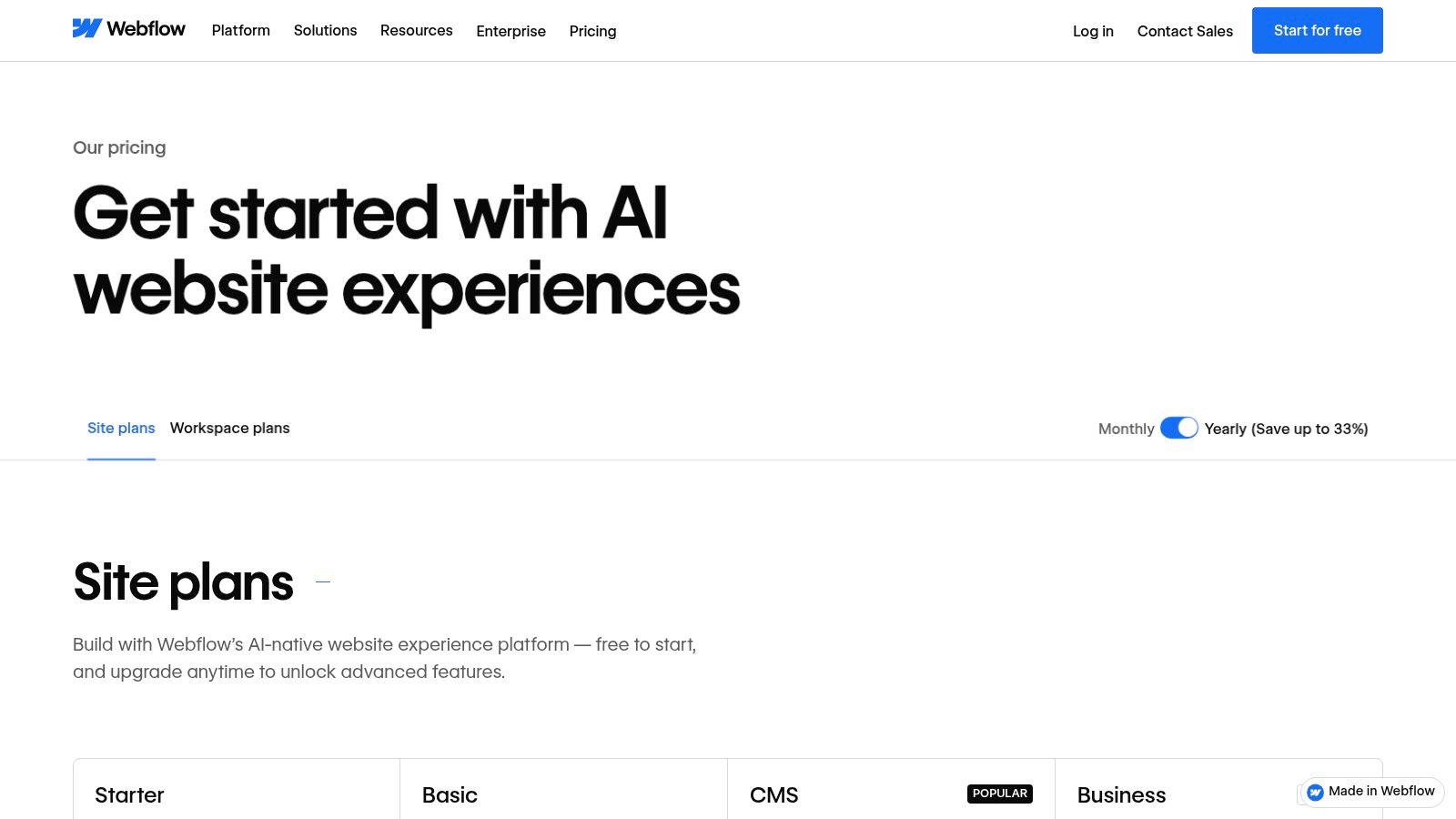
The platform is built around its powerful Designer, an intuitive CMS for managing dynamic content (like blog posts or team members), and enterprise-grade hosting. While its capabilities are immense, this comes with a steeper learning curve than simpler tools. It's a system you grow into, not one you master in an afternoon, making it a long-term investment for businesses that plan to scale their digital presence with sophisticated design and interactions.
Key Considerations
- Best For: Design-savvy businesses, marketing agencies, and startups that need a custom-designed, high-performance website with a robust CMS.
- Ease of Use: Presents a significant learning curve for beginners. It feels more like a visual development tool than a simple website builder.
- Pricing: Offers separate Site Plans for content-based sites and Ecommerce Plans for online stores. A free plan is available to learn the platform, but a paid plan is required to connect a custom domain.
Website: Webflow Plans & Pricing
6. GoDaddy Websites + Marketing (Website Builder)
GoDaddy's Websites + Marketing tool is one of the best website builders for small business owners who prioritize speed and simplicity above all else. Its main appeal is consolidating essential services like domain registration, email hosting, website building, and marketing into a single, user-friendly dashboard. This all-in-one approach is perfect for business owners who want to get a functional, professional-looking site online in under an hour without getting bogged down by complex design options.
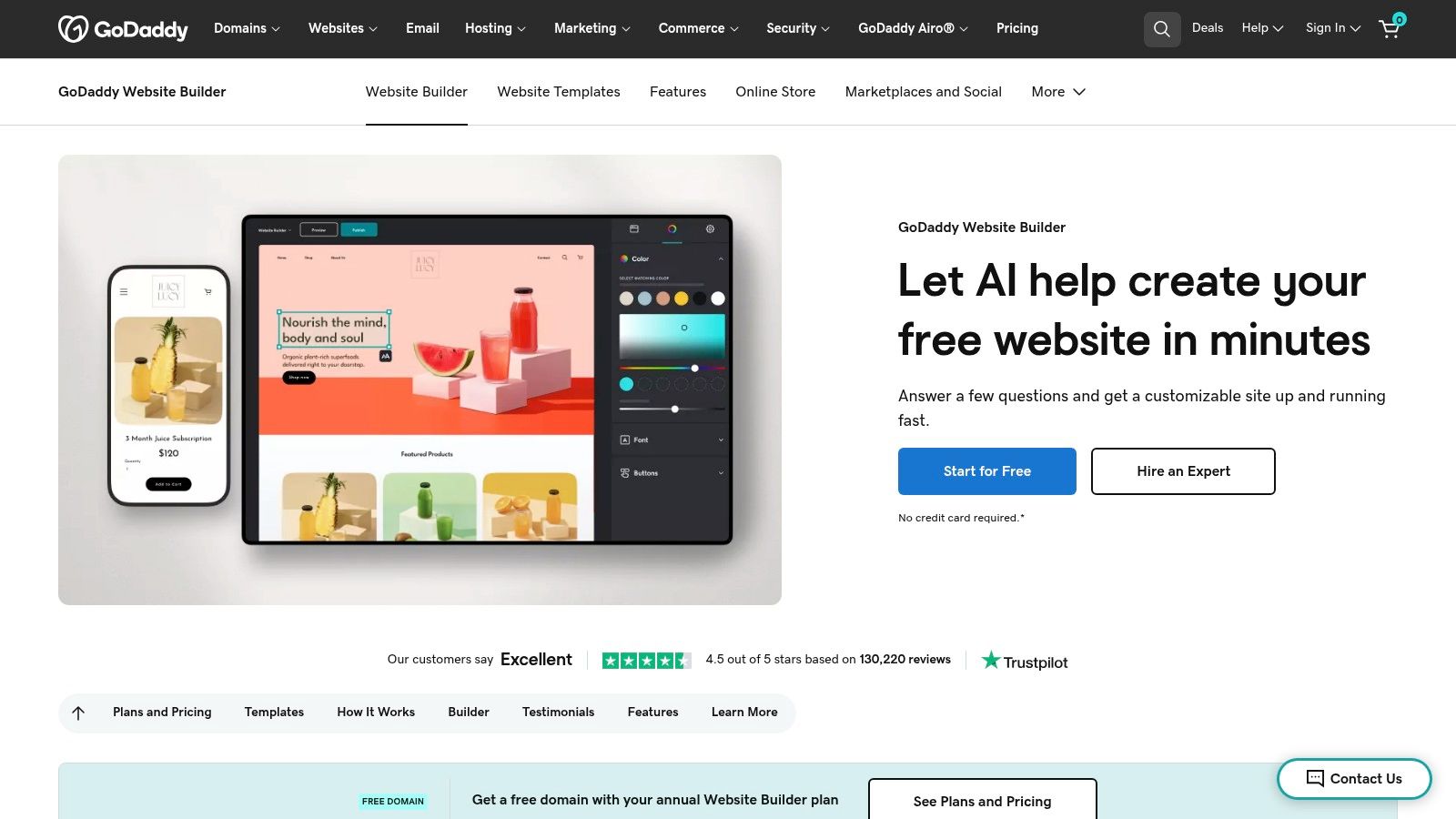
The platform uses a guided, section-based editor that simplifies the creation process significantly. While this means less granular design freedom compared to a true drag-and-drop system, it ensures the final site is mobile-responsive and clean. Its integrated marketing suite, which includes email marketing, social media post creation, and basic SEO tools, provides immense value by allowing businesses to manage their online presence efficiently from one place.
Key Considerations
- Best For: Service-based businesses, sole proprietors, and anyone needing a simple, fast website with integrated marketing from a single provider.
- Ease of Use: Extremely high. The guided setup and AI-powered content suggestions make it one of the easiest builders for complete beginners to master quickly.
- Pricing: Plans are competitively priced, with attractive introductory offers. However, it's important to review renewal rates, which are typically higher. To understand the total investment, you can explore this guide to small business website costs.
Website: GoDaddy Website Builder
7. Square Online (by Square/Weebly)
Square Online is one of the best website builders for small business owners already invested in the Square ecosystem for payments and point-of-sale. Its core strength is the seamless integration between in-person and online operations. This makes it a perfect fit for restaurants, local retailers, and service providers who need to manage inventory, orders, and customer data across both physical and digital channels without hassle. The platform is designed for commerce, offering built-in features for online ordering, local delivery, curbside pickup, and appointment booking.
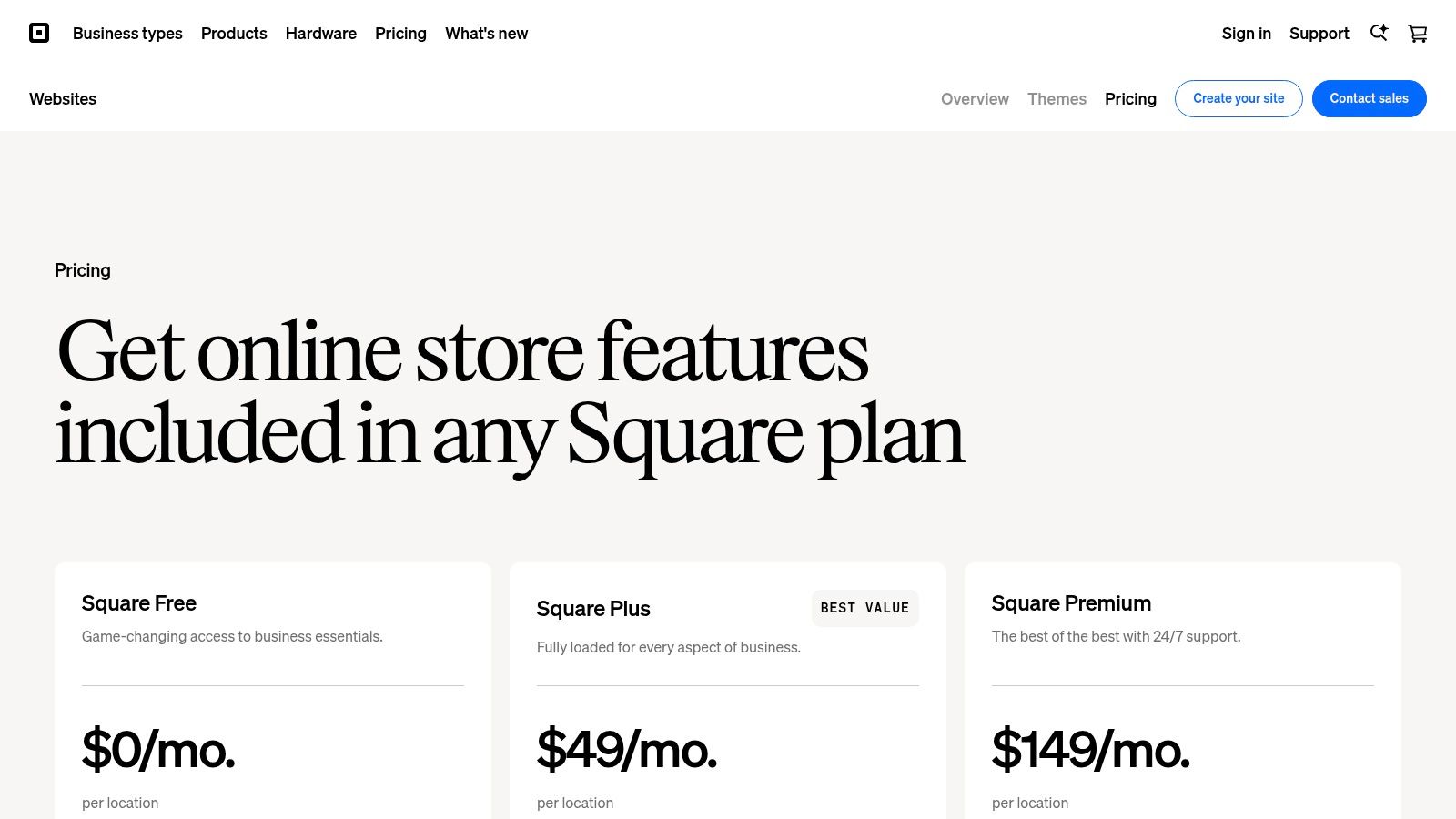
The platform prioritizes simplicity and function over creative freedom. While its design customization options are more limited than a builder like Wix, it excels at getting a transactional website live quickly. The unified dashboard for sales, marketing, and payments simplifies back-office management significantly. Transparent, flat-rate processing fees and next-day fund transfers are also major benefits for businesses managing tight cash flow. However, unlocking more advanced marketing and loyalty tools requires upgrading to a paid subscription.
Key Considerations
- Best For: Restaurants, retail shops, and service businesses that use or plan to use Square POS for unified online and offline sales management.
- Ease of Use: The setup is incredibly straightforward, especially for those familiar with Square. It’s built for speed and efficiency rather than granular design control.
- Pricing: A robust free plan is available to start selling online immediately. Paid plans (Plus and Premium) unlock advanced features, remove Square branding, and offer lower processing fees. All plans have clear, per-transaction processing rates.
Website: Square Online Plans & Pricing
8. Duda
Duda establishes itself as one of the best website builders for small business clients, specifically targeting agencies, freelancers, and SaaS platforms that build and manage websites at scale. Its core strength lies in its powerful collaboration and client management tools, which streamline the entire workflow from design to handover. The platform is engineered for efficiency, offering features like white-labeling, user permissions, and a client portal that allows agencies to provide a branded, professional service. This makes it a go-to choice for digital marketing agencies or web designers managing a portfolio of small business websites.
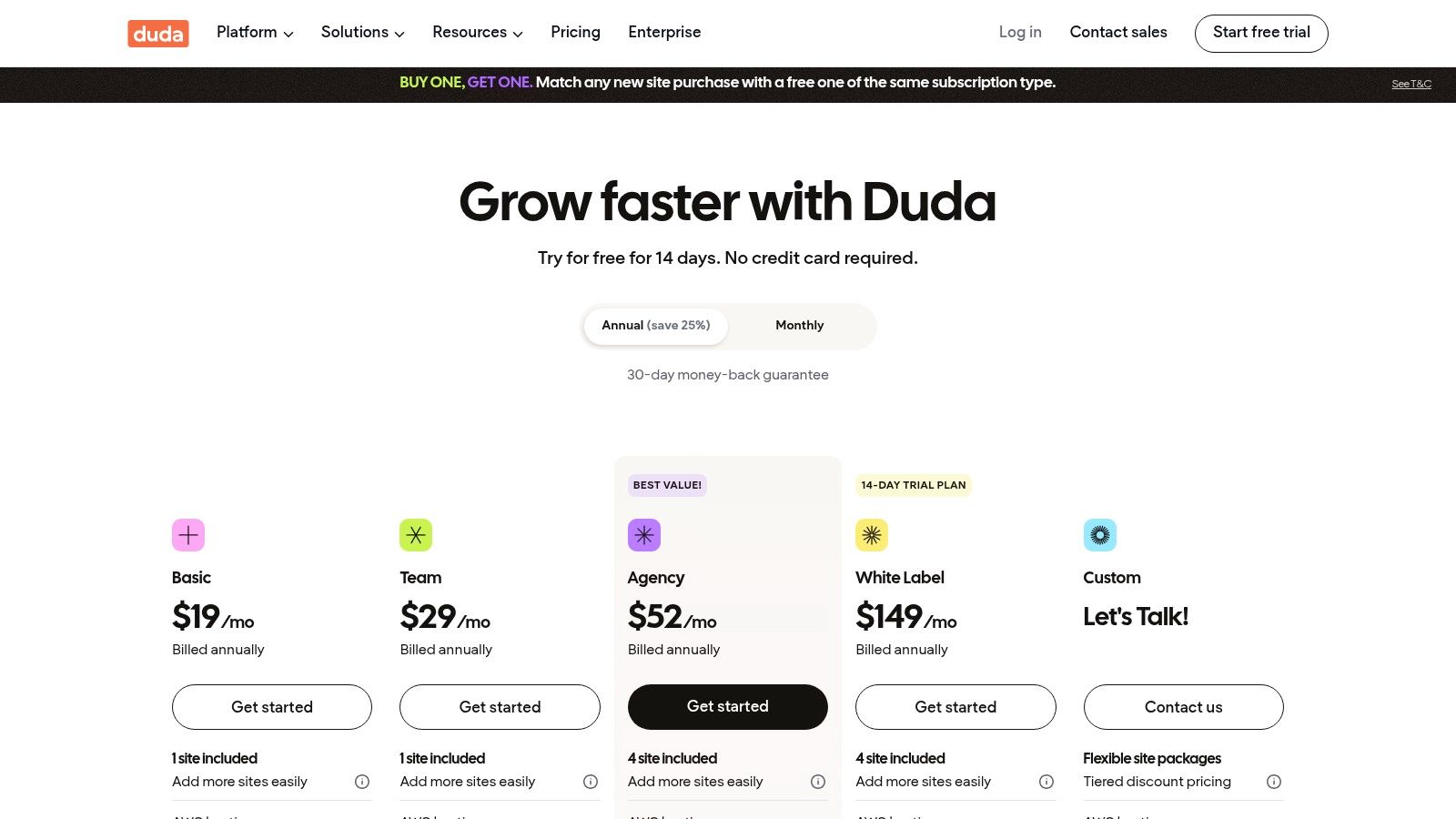
Unlike consumer-focused builders, Duda is built on high-performance AWS hosting and emphasizes structured, template-based design for consistent quality and rapid deployment. It also offers advanced site personalization rules, allowing businesses to show different content to visitors based on factors like time of day, location, or number of visits. While its performance and agency-centric features are top-notch, its pricing model is less economical for a single small business owner building their own site.
Key Considerations
- Best For: Web design agencies, freelancers, and businesses that need to manage multiple websites efficiently with robust collaboration tools.
- Ease of Use: The editor is structured and user-friendly, prioritizing speed and consistency over the absolute creative freedom of a pure drag-and-drop system.
- Pricing: Plans are structured per site or through team packages designed for agencies. Ecommerce functionality is available but typically comes as a paid add-on for each site, which can increase the overall cost.
Website: Duda Pricing
9. BigCommerce
BigCommerce is a powerful ecommerce-first platform and one of the best website builders for small business owners who anticipate significant growth. Its core strength lies in providing enterprise-grade features without charging platform transaction fees, making it a highly scalable solution. The platform is designed for businesses with complex catalogs or those planning to sell across multiple channels like Amazon, eBay, and social media, offering robust native integrations to manage everything from a single dashboard.
This focus on built-in functionality means less reliance on third-party apps for essential features like product reviews, real-time shipping quotes, and gift cards, which are often paid add-ons with competitors. However, its theme and app ecosystem is smaller than Shopify's. A key consideration is that its tiered plans are tied to revenue thresholds; as your sales grow past a certain limit, you are automatically upgraded to the next, more expensive plan. This structure supports scalability but requires careful financial planning.
Key Considerations
- Best For: Ambitious online retailers and SMBs with large or complex product catalogs who want to avoid transaction fees and scale their operations.
- Ease of Use: The interface is more technical than drag-and-drop builders, with a moderate learning curve. It's powerful but may require more initial setup time.
- Pricing: Plans are tiered based on annual sales volume, starting with a 15-day free trial. All tiers benefit from 0% platform transaction fees and 24/7 phone and chat support.
Website: BigCommerce Plans & Pricing
10. Hostinger Website Builder
Hostinger Website Builder secures its spot as one of the best website builders for small business owners who are highly price-conscious and need an all-in-one solution for a quick launch. Its main advantage is bundling powerful AI tools with web hosting, a free domain, and email at an extremely competitive price point. This makes it an excellent choice for startups, freelancers, or anyone looking to create a minimum viable product (MVP) without a significant upfront investment.
The platform is designed for speed and simplicity. Its AI-powered tools can generate a complete website, a blog post, or even a logo in minutes, streamlining the entire setup process. Hostinger also includes ecommerce functionality with zero transaction fees (standard payment processor fees still apply), which is a major cost-saving benefit for new online stores. While its design customization and third-party integrations are more limited than platforms like Wix or Shopify, its value proposition is unmatched for getting a professional online presence live on a tight budget.
Key Considerations
- Best For: Startups, solo entrepreneurs, and businesses seeking a low-cost, all-inclusive package to launch a functional site or online store quickly.
- Ease of Use: Extremely beginner-friendly. The AI tools and a straightforward grid-based editor make website creation accessible to users with no technical skills.
- Pricing: Known for its very low introductory pricing, especially on multi-year plans. The single plan includes hosting, a free domain for the first year, and all core features, which simplifies the buying decision.
Website: Hostinger Website Builder Plans & Pricing
11. HubSpot CMS (Content Hub)
HubSpot CMS (now part of Content Hub) is a powerful choice for small businesses that view their website as the central engine for their marketing and sales operations. Its primary strength is the seamless integration with HubSpot's world-class CRM. This makes it one of the best website builders for small business owners who need to track a lead's entire journey, from their first website visit to becoming a loyal customer, all within a single, unified platform. The drag-and-drop editor and built-in SEO tools make creating and optimizing pages straightforward.
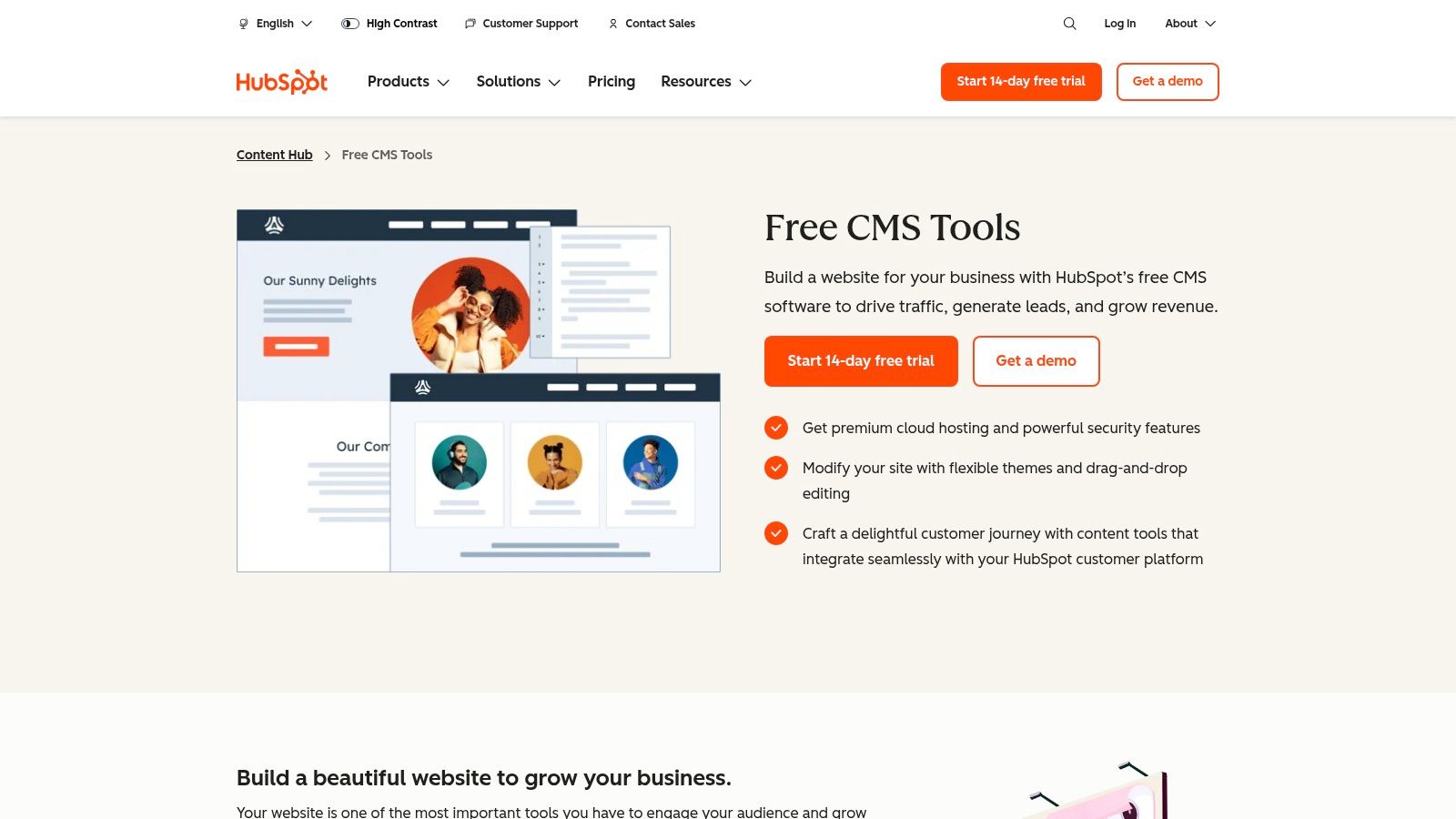
The platform is an all-in-one growth solution. It connects your website directly to native tools for email marketing, forms, live chat, and detailed analytics without requiring complex third-party integrations. This unified data allows for advanced content personalization and lead nurturing. While the theme and plugin ecosystem is smaller than WordPress, its core advantage is eliminating data silos. The main consideration is cost, as the more advanced features that make it so powerful are found in the higher-priced Professional and Enterprise tiers.
Key Considerations
- Best For: Businesses deeply invested in inbound marketing, lead generation, and using their website as a core sales and marketing tool.
- Ease of Use: The visual editor is accessible for non-technical users. The true power comes from leveraging the integrated marketing and CRM tools, which have a steeper learning curve.
- Pricing: A free plan is available with HubSpot branding. Paid tiers scale significantly, so it's crucial to align your budget with the features you need. For guidance on selecting the right system for your needs, you can learn how to choose a CMS with this detailed guide.
Website: HubSpot CMS Hub Plans
12. Capterra
While not a builder itself, Capterra is an indispensable research tool for finding the best website builders for small business needs. It serves as a massive online directory where you can compare hundreds of software options side-by-side, backed by a wealth of verified user reviews. This makes it a crucial first stop before committing to a platform, allowing you to filter providers by specific features, pricing models, and business size to create a tailored shortlist.
The platform excels at providing transparency through real-world user feedback. Instead of relying solely on marketing copy, you can read detailed accounts from other small business owners about their experiences, helping you understand a builder's true strengths and weaknesses. Its comparison tools let you view key differences at a glance, from customer support quality to ease of implementation.
Key Considerations
- Best For: Business owners in the research phase who want to compare multiple platforms using verified reviews and objective data before making a final decision.
- Ease of Use: The interface is straightforward, with powerful filters that make it easy to narrow down a vast catalog of software to a few relevant options.
- Pricing: Free to use for research. Capterra provides pricing information for the platforms it lists, but be aware that sponsored placements can influence the order of results, and listed prices might not reflect the latest vendor promotions.
Website: Capterra Website Builder Software Directory
Top 12 Small-Business Website Builders — Feature Comparison
| Platform | Core features | UX & quality | Value / pricing | Target audience | Unique selling point |
|---|---|---|---|---|---|
| Wix | Visual drag‑drop, AI site builder, ecommerce, App Market | ★★★★☆ — intuitive, fast launch | 💰 Mid — multi‑year discounts; apps can add cost | 👥 Small businesses, non‑tech teams | ✨ AI ADI editor, broad native business tools |
| Squarespace | Design‑forward editor, native commerce, email, analytics | ★★★★★ — cohesive, polished templates | 💰 Mid — all‑in‑one billing; tiered plans | 👥 Creators, brand‑focused SMBs | 🏆 Award‑winning aesthetics, integrated marketing |
| Shopify | Storefront builder, POS, payments, shipping, apps | ★★★★★ — reliable checkout, scalable | 💰 Mid→High — platform + app costs | 👥 Merchants scaling from startups to enterprise | 🏆 Best‑in‑class ecommerce ecosystem |
| WordPress.com | Managed WP hosting, themes, plugin access (higher tiers) | ★★★★☆ — strong blogging & SEO | 💰 Low→Mid — plugin access on Business+ | 👥 Bloggers, content marketers, devs wanting WP | ✨ Portability of WP + managed hosting |
| Webflow | Visual CMS, interactions, animations, hosting | ★★★★★ — pixel control, high performance | 💰 Mid→High — designer‑focused plans | 👥 Designers, marketers, content‑heavy sites | ✨ Pixel‑level control with clean code export |
| GoDaddy Websites + Marketing | Drag‑drop builder, AI content, email/SMS marketing | ★★★☆☆ — very fast, basic UX | 💰 Low→Mid — intro discounts; renewals higher | 👥 Local SMBs needing one vendor | ✨ Fast setup + bundled domain/email/marketing |
| Square Online | Ecommerce + pickup/delivery, Square POS integration | ★★★★☆ — simple, commerce‑centric | 💰 Low→Mid — clear payment rates per location | 👥 Restaurants, local retail, multi‑location sellers | ✨ Unified in‑person + online sales (Square POS) |
| Duda | White‑label, client portals, team permissions, AWS hosting | ★★★★☆ — professional workflows | 💰 Mid→High — agency pricing | 👥 Agencies, freelancers, multi‑site managers | ✨ Agency tools: white‑label & client workflows |
| BigCommerce | Omnichannel, 0% platform fees, tiered support | ★★★★★ — scalable, enterprise features | 💰 Mid→High — scales with revenue thresholds | 👥 Growing SMBs with complex catalogs | 🏆 Enterprise‑grade ecommerce without platform fees |
| Hostinger Website Builder | AI site, hosting, email, ecommerce (no Hostinger fees) | ★★★☆☆ — simple UI for quick launches | 💰 Low — budget with frequent promos | 👥 Price‑sensitive small businesses, MVPs | ✨ Very low entry price + bundled hosting tools |
| HubSpot CMS | Drag‑drop CMS, native CRM, forms, personalization | ★★★★☆ — strong analytics & lead flow | 💰 High — costs rise on Pro/Enterprise | 👥 Sales & marketing teams needing CRM integration | ✨ One stack for website + CRM + automation |
| Capterra | Directory, verified reviews, comparison tools, guides | ★★★★☆ — helpful research UX | 💰 Free to use (vendor listings sponsored) | 👥 Buyers researching and shortlisting tools | ✨ Large review dataset + side‑by‑side comparisons |
Making Your Final Choice: DIY vs. Partnering with an Agency
Navigating the landscape of the best website builders for small business can feel overwhelming, but you're now equipped with a detailed roadmap. We've explored everything from the all-in-one simplicity of Wix and Squarespace to the e-commerce powerhouses of Shopify and BigCommerce. We also touched on the design freedom of Webflow and the content-centric strength of HubSpot CMS.
Your journey to a powerful online presence starts with a clear understanding of your unique business needs. The right tool isn't about finding a one-size-fits-all solution; it's about identifying the platform that aligns perfectly with your goals, budget, and technical comfort level.
Recapping the Key Takeaways
Let's distill our findings into a few core principles to guide your decision. Remember that the "best" builder is the one that empowers you to achieve your specific business objectives without creating unnecessary friction.
- For Absolute Beginners and Service-Based Businesses: Platforms like Wix, Squarespace, and the Hostinger Website Builder offer the most intuitive drag-and-drop experiences. They are designed to get you online quickly with professional-looking templates and minimal technical fuss.
- For E-commerce Startups and Retailers: If your primary goal is selling products, look no further than Shopify or Square Online. These are built from the ground up with robust inventory management, secure payment gateways, and essential sales tools. BigCommerce is an excellent alternative for scaling stores with large product catalogs.
- For Content-Driven Businesses and Bloggers: WordPress.com remains a strong contender for its powerful blogging features and vast plugin ecosystem. For those focused on lead generation and marketing automation, HubSpot CMS provides an integrated solution that connects your website directly to your CRM.
- For Design Flexibility and Future Growth: If you have a clear brand vision and want granular control without writing code, Webflow is the undisputed champion. It offers unparalleled design freedom but comes with a steeper learning curve.
Your Next Steps: From Decision to Action
Choosing a platform is just the first step. The real work begins when you start building. Before you commit to a paid plan, take these actionable steps to ensure you're making a confident, informed choice.
- Define Your Non-Negotiables: Create a short list of 3-5 "must-have" features. This could be an integrated booking system, specific e-commerce capabilities, or advanced SEO tools. Use this list to immediately filter out platforms that don't meet your core requirements.
- Utilize Free Trials: Nearly every builder on our list offers a free trial or a limited free plan. Use this opportunity to test the editor's interface. Can you easily add a new page? Is it simple to change colors and fonts? A 30-minute test drive can reveal more than hours of research.
- Think Long-Term: Consider where your business will be in two to three years. Will you need to add membership features, expand your online store, or integrate with complex third-party software? Choose a platform that can grow with you, not one you'll outgrow in six months.
When to Go DIY vs. When to Hire an Expert
For many entrepreneurs, the DIY approach is a perfect starting point. It's cost-effective, empowering, and gives you complete control over your digital storefront. However, as your business scales, your website's needs often become more complex.
You might find yourself needing custom features that aren't available out-of-the-box, or you may realize that optimizing for site speed and advanced SEO is consuming time you'd rather spend serving customers. This is the natural inflection point where partnering with an agency becomes a strategic investment rather than an expense. An expert partner can handle the technical complexities, ensuring your website is a high-performing asset that drives growth, while you focus on what you do best: running your business.
Ready to build a website that not only looks great but also delivers real business results? The team at OneNine specializes in creating and optimizing high-performance websites on platforms like Webflow and Shopify. If you're ready to move beyond the limitations of a basic template and build a powerful, scalable online presence, schedule a consultation with us today.


