

Choosing the right online storefront is one of the most critical decisions for a small business. The platform you select can either accelerate your growth or create constant headaches. This guide cuts through the noise. We're not just listing features; we're providing a detailed breakdown of the 12 best ecommerce platforms for small business, focusing on real-world use cases, hidden costs, and the practical pros and cons that marketing materials often gloss over.
Whether you're a solo artist selling handmade goods, a growing retail brand managing complex inventory, or a service-based business venturing into digital products, this comprehensive resource will help you identify the perfect partner for your entrepreneurial journey. We understand that every business has unique needs, from budget constraints to technical skill levels.
This is not a surface-level review. Instead, think of it as a strategic manual designed to help you make an informed decision without the typical sales fluff. We will dive deep into the specific strengths and weaknesses of each option, helping you match a platform's capabilities directly to your business goals.
Inside this guide, you will find:
- A detailed analysis of top platforms like Shopify, BigCommerce, Wix, and WooCommerce.
- Honest assessments of their ease of use, scalability, and pricing structures.
- Practical scenarios outlining who each platform is truly built for.
- Screenshots and direct links to help you explore each option further.
Our goal is simple: to provide the clarity you need to choose the best ecommerce platform confidently and get back to what you do best, running your business. Let’s find the right fit for you.
1. Shopify
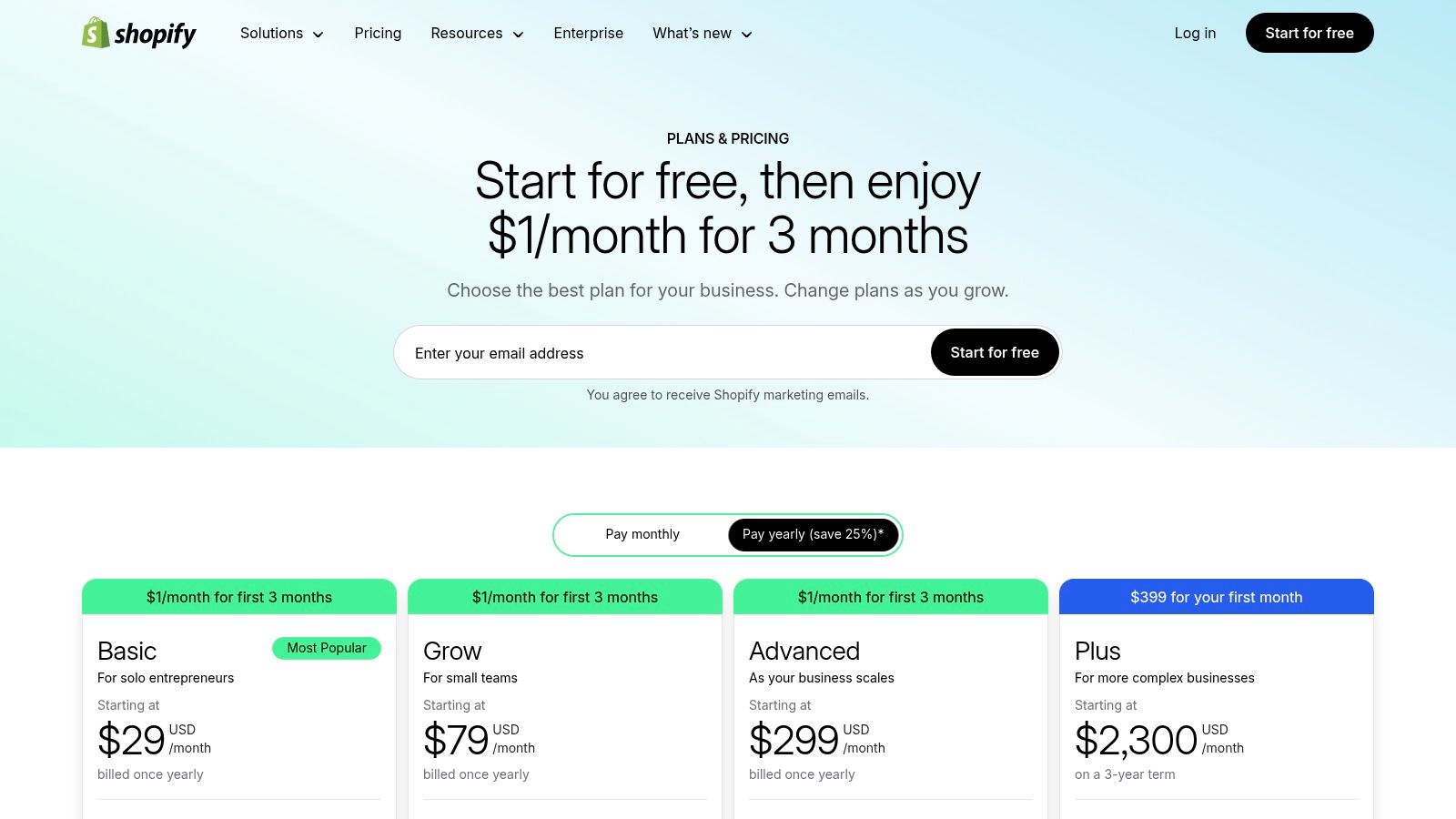
Shopify is a top contender among the best ecommerce platforms for small business, renowned for its all-in-one, user-friendly approach. It's built for speed to market, allowing entrepreneurs to launch a professional-looking online store in a matter of hours, not weeks. Its hosted solution means you don't have to worry about technical details like server management or security patches; Shopify handles it all.
The platform's guided setup, clean interface, and extensive documentation make it exceptionally easy for beginners to navigate. This focus on simplicity is why it's a go-to choice for businesses aiming for a fast and reliable launch.
Key Features and Use Cases
Shopify excels with its robust ecosystem. The Shopify App Store provides thousands of integrations for everything from email marketing to advanced analytics, allowing you to add functionality as your business grows. Its built-in payment processor, Shopify Payments, offers transparent pricing and simplifies transactions.
Shopify is ideal for direct-to-consumer (DTC) brands, dropshippers, and retailers who want a scalable solution that integrates online and in-person sales with its powerful POS system.
Once you've chosen Shopify, you might consider external help for custom design and functionality; for instance, you can find specialists for Shopify website development outsourcing to create a truly unique storefront.
Pricing and Limitations
- Pricing: Plans start at $29/month for the "Basic" tier, with higher tiers offering lower transaction fees and more advanced features.
- Pros: Very fast setup, excellent 24/7 support, and scales well from startups to enterprise-level with Shopify Plus.
- Cons: Monthly costs can increase significantly with paid apps. Customizing themes requires knowledge of Shopify’s template language, Liquid.
Shopify is an outstanding platform that balances power with ease of use. You can see how it stacks up against other options in our full ecommerce platform comparison.
Website: shopify.com
2. Wix eCommerce
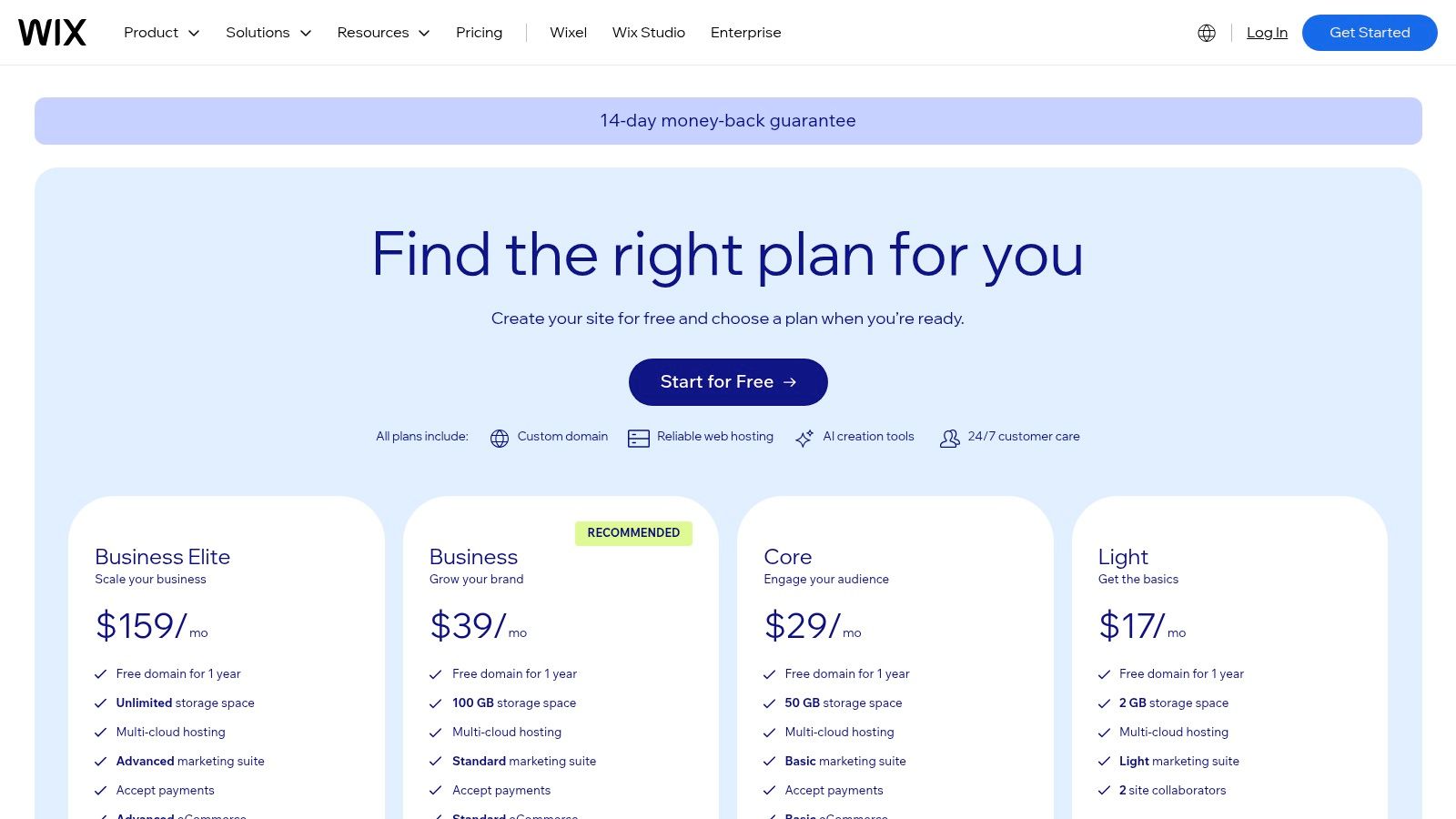
Wix eCommerce has evolved from a popular website builder into a powerful contender among the best ecommerce platforms for small business. It is specifically designed for DIY sellers who prioritize creative control and design flexibility. Its user-friendly, drag-and-drop editor allows anyone to build a visually stunning store without writing a single line of code.
The platform provides an all-in-one solution, bundling hosting, security, and a full suite of business management tools into its plans. This integrated approach simplifies the process, making it ideal for entrepreneurs who want to manage their website, marketing, and customer relationships from a single dashboard.
Key Features and Use Cases
Wix stands out with its highly intuitive visual editor and AI-powered site creation tool (Wix ADI), which can generate a website for you in minutes. It includes built-in payment processing, a secure checkout, and comprehensive tools for SEO, analytics, and marketing automations right out of the box. The Wix App Market also offers hundreds of plugins for extended functionality.
Wix is perfect for small businesses, artists, and service-based entrepreneurs who need a visually impressive online store with integrated booking, blogging, and marketing capabilities.
The platform is excellent for those who want to combine content and commerce seamlessly, creating a rich brand experience without needing technical expertise.
Pricing and Limitations
- Pricing: Business and eCommerce plans start at $27/month, offering various levels of storage and features.
- Pros: Extremely easy to design without coding, all-in-one hosting and support, and a broad feature set for the price.
- Cons: Its app ecosystem is smaller than Shopify's, and switching to a new template after your site is live can be a cumbersome process.
Wix eCommerce delivers an impressive balance of design freedom and essential business tools, making it a top choice for creative entrepreneurs.
Website: wix.com
3. Squarespace Commerce
Squarespace Commerce is a design-forward platform, ideal for small businesses where brand aesthetics and content are just as important as the products themselves. It merges a powerful website builder with integrated ecommerce, creating a seamless experience for creative entrepreneurs, artists, and service-based businesses who need a beautiful digital storefront. The platform is known for its award-winning templates that make professional design accessible to everyone, regardless of technical skill.

Key Features and Use Cases
Squarespace shines with its all-in-one approach. It offers polished templates with built-in features for selling physical products, digital goods, and subscriptions. The platform includes integrated payment processing, solid analytics, marketing tools, scheduling capabilities, and member areas, all managed from a single, intuitive interface. This makes it one of the best ecommerce platforms for small business owners who prefer simplicity.
Squarespace is perfect for brands that rely on strong visual storytelling, such as photographers, designers, bloggers, and boutique retailers who want to integrate a store with a portfolio or content hub.
Its unified system simplifies store management, allowing you to focus on growing your brand and connecting with your audience without juggling multiple tools.
Pricing and Limitations
- Pricing: Commerce plans start with the "Business" plan at $23/month (billed annually), but the "Basic Commerce" plan at $27/month removes transaction fees.
- Pros: Top-tier design and content management, a simple and unified interface for both site and store, and good native analytics.
- Cons: The app ecosystem is smaller compared to competitors, and access to some advanced development features is dependent on your plan.
Squarespace Commerce delivers a beautiful, integrated solution for businesses that prioritize a premium look and feel.
Website: squarespace.com
4. BigCommerce
BigCommerce positions itself as a top choice among the best ecommerce platforms for small business by offering an “open SaaS” solution. This combines the ease of a hosted platform with the flexibility often found in open-source systems, giving growing businesses more control without the technical overhead.
Its main draw is the powerful, built-in feature set that reduces the need for costly third-party apps. From the start, users get access to tools for multi-channel selling, single-page checkout, and robust product options, making it ideal for businesses with complex catalogs or those planning to scale quickly.
Key Features and Use Cases
BigCommerce stands out by not charging its own transaction fees on any plan, a significant cost-saver as you grow. Its native integrations with marketplaces like Amazon, eBay, and social channels like Facebook and Instagram allow you to manage sales from a single dashboard. The platform also offers strong built-in SEO tools to help you rank higher.
BigCommerce is perfect for established retailers and ambitious SMBs who need advanced features out-of-the-box, especially those in the B2B space or with large, complex product inventories.
The platform provides an API-driven, headless commerce approach for businesses wanting to create highly customized front-end experiences while using BigCommerce for its powerful back-end engine.
Pricing and Limitations
- Pricing: Plans begin at $29/month for "Standard," with tiers that unlock more features as your sales grow.
- Pros: No platform transaction fees, strong native feature set reduces app costs, and excellent for multi-channel and B2B sales.
- Cons: You are automatically upgraded to a higher-priced plan once you cross specific annual revenue thresholds, which can be an unexpected expense. Some advanced settings have a steeper learning curve.
BigCommerce is a powerhouse platform for businesses that have outgrown simpler solutions and need more built-in functionality to manage their growth.
Website: bigcommerce.com
5. WooCommerce (for WordPress)
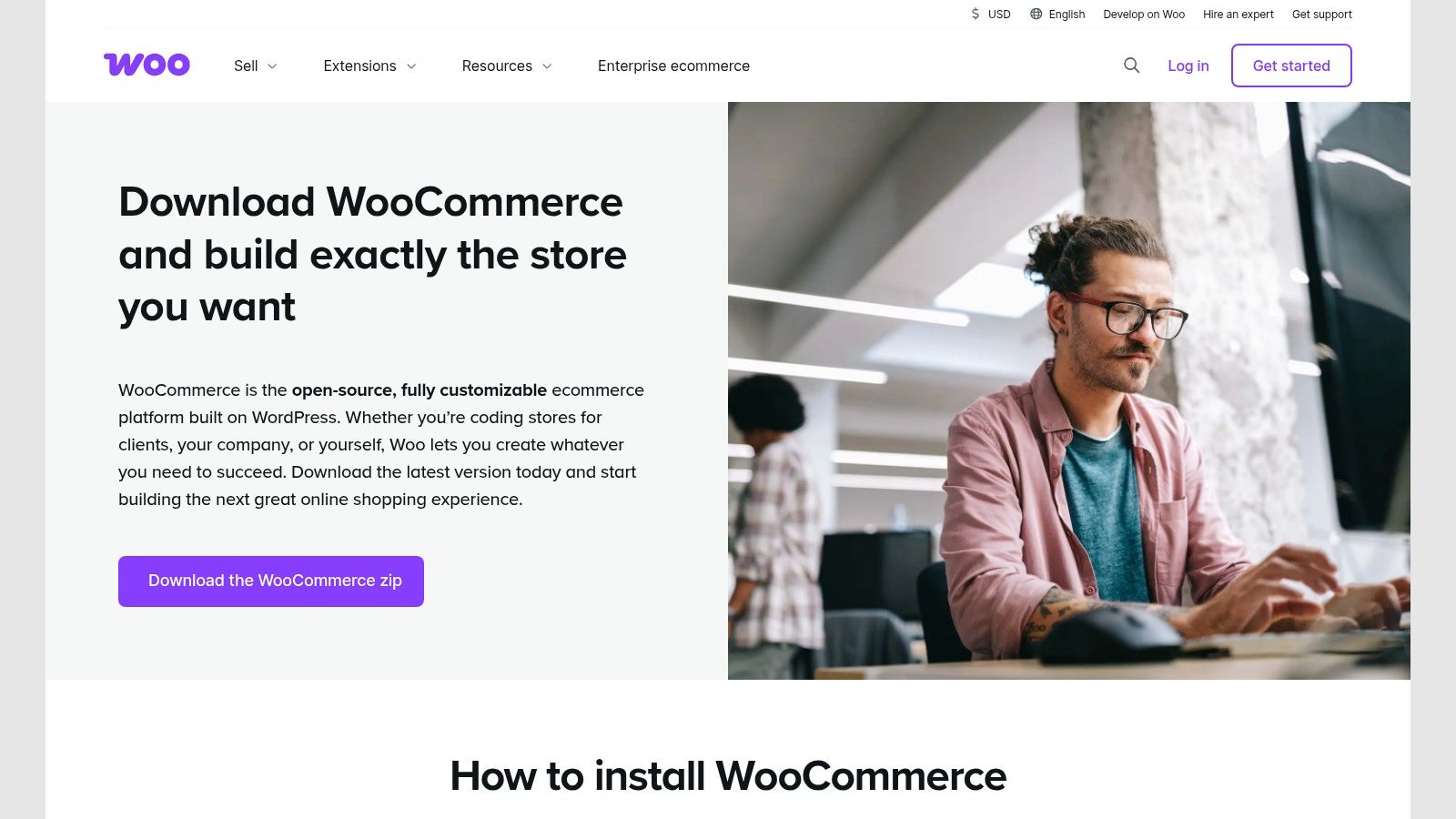
WooCommerce is a powerful, free, open-source ecommerce plugin designed exclusively for WordPress. This makes it one of the best ecommerce platforms for small business owners who already use or prefer the WordPress ecosystem. It transforms a standard WordPress site into a fully functional online store, offering unparalleled control and customization over every aspect of the business, from hosting to design.
Because it's a self-hosted solution, you retain complete ownership of your store and data. This freedom from SaaS platform constraints is a major draw for businesses with specific technical or branding requirements, allowing for true long-term scalability without vendor lock-in.
Key Features and Use Cases
The core strength of WooCommerce lies in its limitless flexibility, powered by a massive library of both free and paid extensions. You can add functionalities for subscriptions, bookings, complex shipping rules, and diverse payment gateways. Its integration with the WordPress block editor makes creating custom product pages more intuitive than ever.
WooCommerce is perfect for content-driven brands, bloggers monetizing their sites, and businesses that need a highly customized storefront and have the technical confidence to manage their own hosting and security.
Getting started is as simple as adding the plugin to your WordPress site. For those unfamiliar with the process, you can find a helpful guide on how to install plugins in WordPress.
Pricing and Limitations
- Pricing: The core WooCommerce plugin is free. Costs come from web hosting, your domain name, and any premium extensions or themes you choose to purchase.
- Pros: Complete control and data ownership, highly customizable, and cost-effective if you manage it well. A huge global community offers extensive support.
- Cons: The user is responsible for all technical aspects, including hosting, security, and updates. The cost of premium extensions can accumulate quickly.
WooCommerce offers an unmatched level of freedom, making it an excellent choice for businesses that value customization and ownership over an all-in-one, managed solution.
Website: woocommerce.com
6. Square Online
Square Online is one of the best ecommerce platforms for small business owners already using or considering Square’s ecosystem for payments and point-of-sale. It’s designed for simplicity and seamless integration, making it perfect for businesses that operate both in-person and online, such as local retailers, cafes, and service providers. The platform removes the friction of managing separate systems by unifying sales, inventory, and customer data.
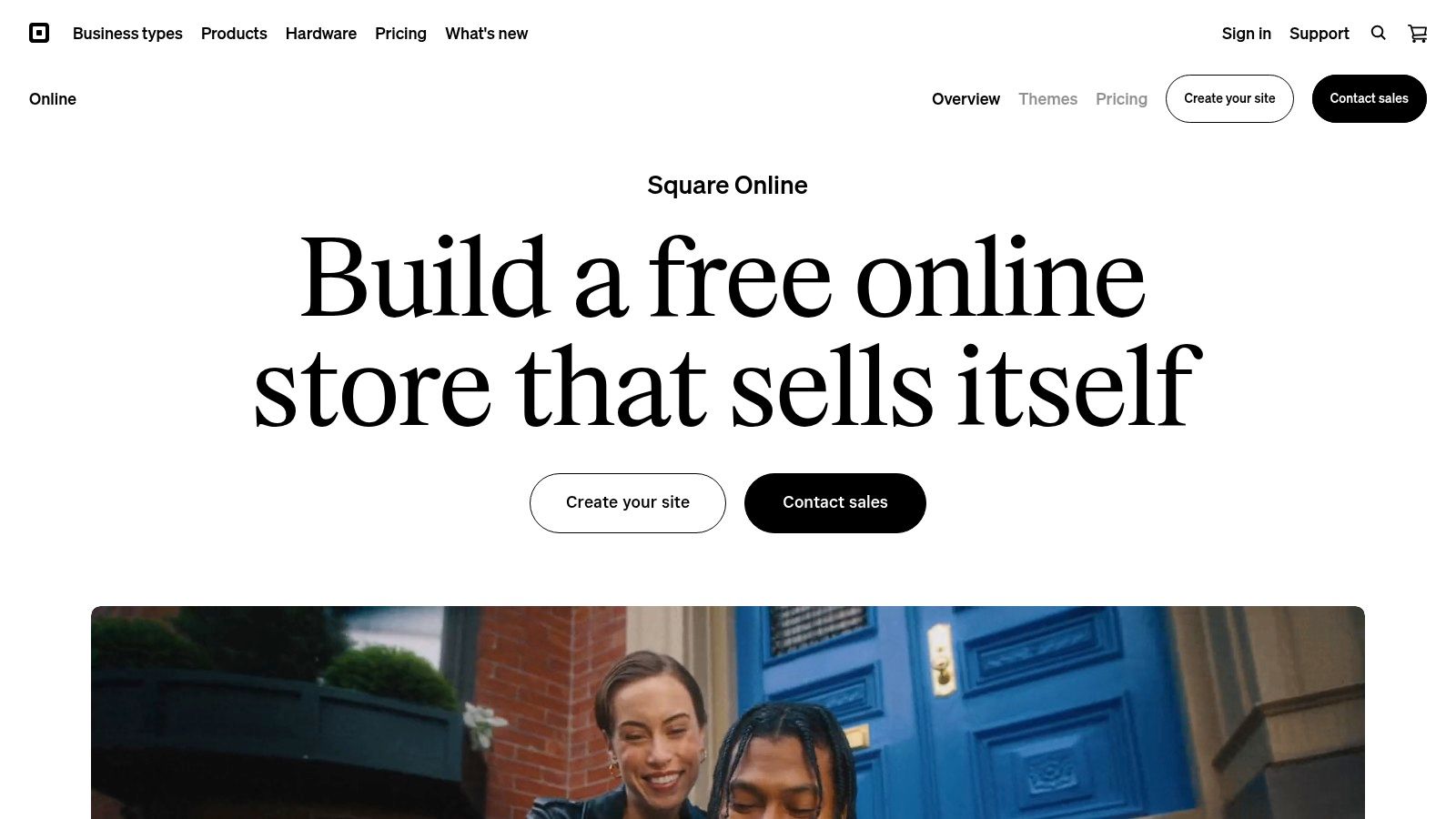
Its core strength lies in its ability to get businesses selling online quickly with minimal initial investment. The free plan provides a fully functional online store, lowering the barrier to entry for new entrepreneurs or brick-and-mortar shops expanding into digital sales for the first time.
Key Features and Use Cases
Square Online excels with features tailored to local commerce. Native tools for curbside pickup, local delivery, and appointment booking are built directly into the platform, not added as expensive apps. Its unified catalog syncs inventory between your Square POS and online store automatically, preventing overselling and simplifying management.
Square Online is ideal for restaurants, retail boutiques, and service-based businesses that need a simple, cost-effective way to manage omnichannel sales without the complexity of larger platforms.
The platform's straightforward setup guides you through shipping and fulfillment, making it easy to handle orders from day one. You can get more details in our guide on how to integrate a payment gateway to streamline your operations.
Pricing and Limitations
- Pricing: A robust free plan is available where you only pay transaction fees. Paid plans start at $29/month, offering more advanced features and lower processing rates.
- Pros: Lowest barrier to entry with a free plan, seamless integration of POS and online sales, and clear, flat-rate processing fees.
- Cons: Less flexible for very complex product catalogs and has a smaller theme and app ecosystem compared to competitors like Shopify or BigCommerce.
Square Online is an incredibly practical choice for businesses prioritizing integrated, omnichannel selling with a focus on ease of use and affordability.
Website: squareup.com/online-store
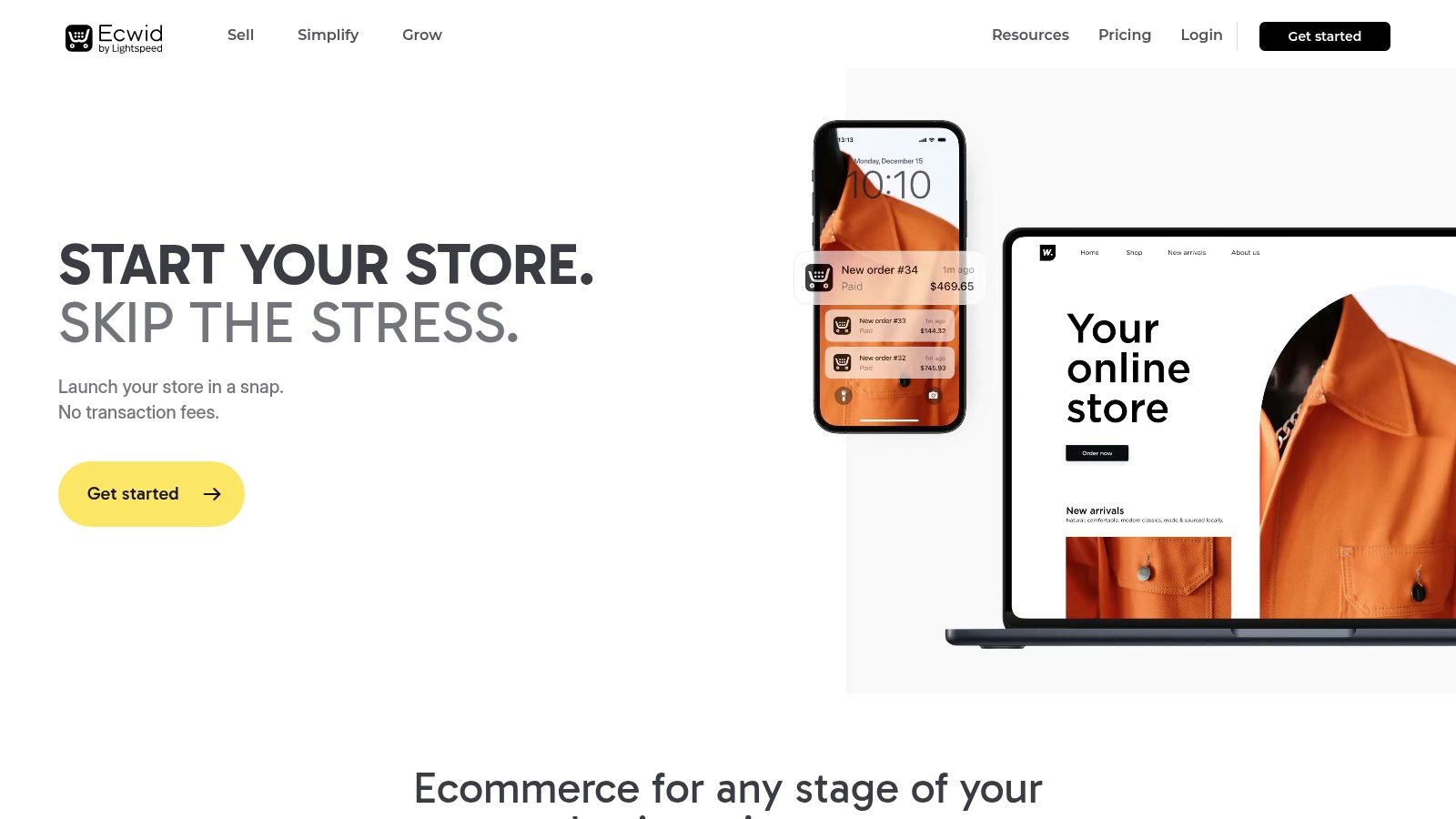
7. Ecwid by Lightspeed
Ecwid by Lightspeed offers a unique twist on ecommerce, positioning itself not as a website builder but as an embeddable storefront. This makes it one of the best ecommerce platforms for small business owners who already have a website, blog, or social media presence and simply want to add selling capabilities without starting over. It’s designed to integrate seamlessly into your existing digital footprint.
The platform works by providing a snippet of code that you can add anywhere online, instantly creating a full-featured store. This approach saves significant time and technical effort, allowing businesses to start selling in minutes on platforms like WordPress, Wix, or even a simple HTML site.
Key Features and Use Cases
Ecwid’s power lies in its flexibility. It enables true omnichannel selling by centralizing inventory management across your website, social media channels like Facebook and Instagram, and marketplaces such as Amazon and eBay. All sales and products are managed from a single, user-friendly dashboard.
Ecwid is the perfect solution for bloggers, artists, consultants, and local businesses with an established website who want to monetize their audience without rebuilding their online presence from scratch.
Unique features like 'Pay What You Want' pricing options and bulk discounts are built-in, offering creative ways to market and sell products. Its app market further extends functionality with tools for marketing, analytics, and store management.
Pricing and Limitations
- Pricing: A generous free plan is available for up to 5 products. Paid plans start at $19/month, unlocking more products, features, and sales channels.
- Pros: The fastest way to add ecommerce to an existing site, a capable free-forever plan, and powerful omnichannel selling capabilities.
- Cons: Less design control than dedicated site builders, and advanced features are locked behind higher-tier plans.
Ecwid is an excellent, low-barrier entry into ecommerce, particularly for those looking to enhance a site they already love.
Website: ecwid.com
8. Big Cartel
Big Cartel is a unique player among the best ecommerce platforms for small business because it is built specifically for artists and creators. It offers a streamlined, boutique-like experience for makers who want to sell a limited number of unique items without the complexity of larger, all-encompassing platforms. Its ethos is about simplicity and putting the artist first, making it feel less like a corporate tool and more like a creative partner.
The platform is intentionally lightweight, avoiding the feature overload that can overwhelm new business owners. This focus makes it an excellent choice for sellers with small product catalogs who prioritize an easy-to-manage, aesthetically pleasing storefront over extensive customization and scalability.
Key Features and Use Cases
Big Cartel provides just the essentials needed to get started. It offers clean, customizable themes, inventory tracking, and integrated payment processing through Stripe and PayPal. Paid plans include features like shipment tracking, tax calculations, and the ability to sell both online and in-person. Its simplicity is its core strength.
Big Cartel is the perfect platform for independent musicians selling merchandise, painters selling prints, or designers launching a limited-run t-shirt line. It’s for creatives who need a simple, affordable way to sell online.
The platform’s minimal setup allows artists to launch their shop quickly, keeping the focus on their products rather than on technical management.
Pricing and Limitations
- Pricing: A free "Gold" plan is available for up to 5 products. Paid plans start at $9.99/month for 50 products and go up to $19.99/month for 500 products.
- Pros: Very affordable with a free starting tier, incredibly easy for beginners with no coding skills, and has a clear focus on the creative community.
- Cons: Not suitable for large or complex product catalogs. It has very few native integrations and lacks the advanced marketing or SEO tools found on other platforms.
Big Cartel is an outstanding choice for artists and makers who need a straightforward, cost-effective solution for a small-scale operation.
Website: bigcartel.com/plans
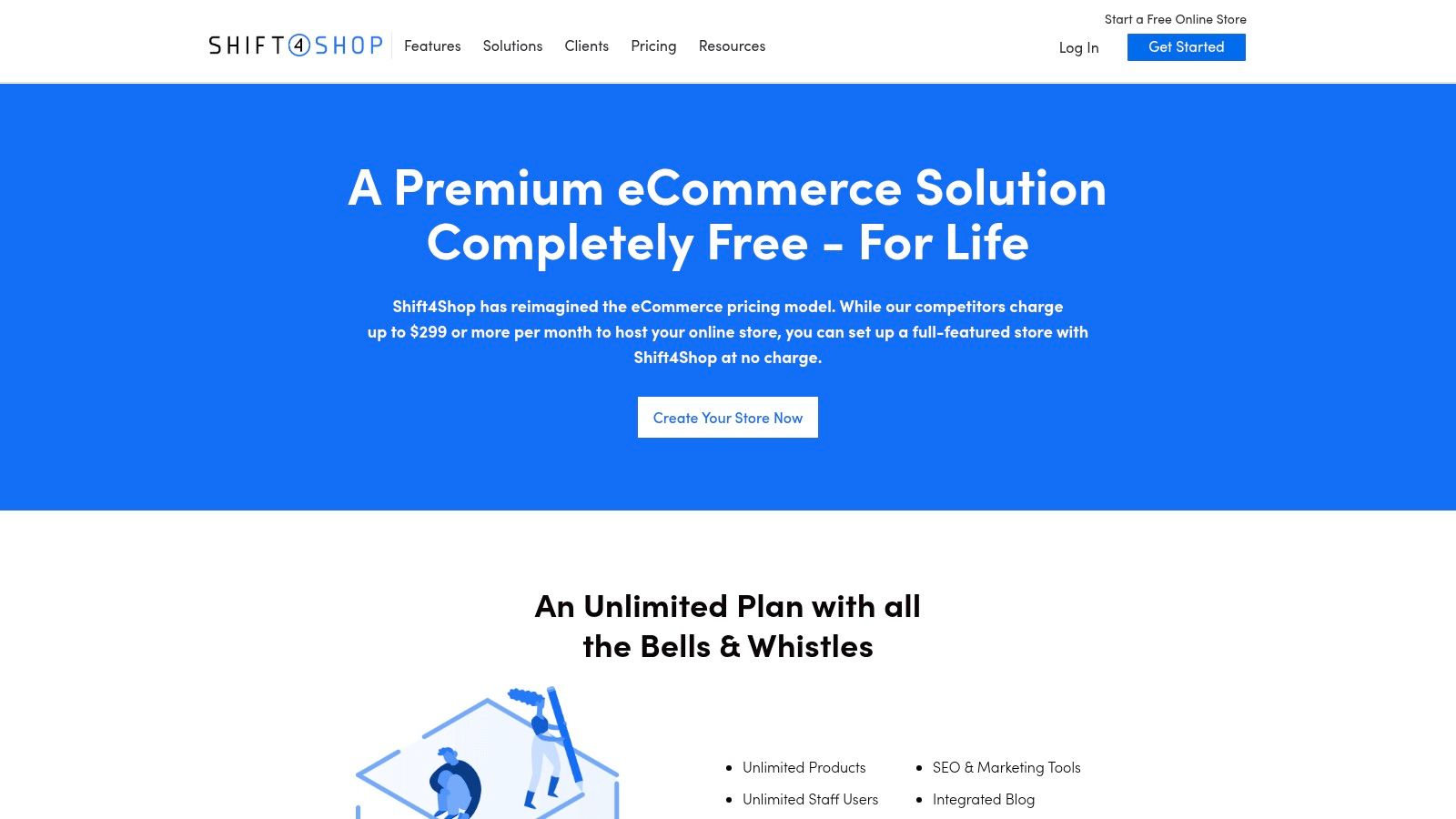
9. Shift4Shop
Shift4Shop (formerly 3dcart) stands out as one of the best ecommerce platforms for small business, particularly for US-based merchants who are cost-conscious. Its unique selling proposition is a potentially free, feature-rich platform for businesses that use the in-house payment processor, Shift4 Payments. This model eliminates monthly platform fees, a significant advantage for startups and SMBs managing tight budgets.
The platform provides a comprehensive, all-in-one hosted solution, meaning it handles all the technical backend tasks like security and server maintenance. This allows business owners to focus on growth rather than technical upkeep, offering a powerful alternative to other paid platforms.
Key Features and Use Cases
Shift4Shop comes packed with an impressive number of native features that often require paid apps on other platforms. These include unlimited products and staff users, no bandwidth limits, a free SSL certificate, and advanced functionalities like bulk pricing rules. Its app store also offers many free integrations for those using Shift4 Payments.
Shift4Shop is an excellent choice for US-based small businesses that need a robust, built-in feature set without the high monthly subscription costs and want to streamline their payment processing.
The platform is well-suited for businesses that have outgrown basic solutions and need more advanced tools for marketing, SEO, and inventory management included right out of the box.
Pricing and Limitations
- Pricing: The End-to-End Ecommerce plan is free for US merchants who process over $500/month with Shift4 Payments. Other plans are available for international merchants or those using different payment gateways.
- Pros: Potentially zero platform fees, a very extensive list of built-in features, and it’s a fully hosted, PCI-certified platform.
- Cons: The most attractive pricing is tied to using Shift4 Payments. The terms and marketing can be complex, requiring careful review to understand the full offer.
Website: https://www.shift4shop.com/pricing.htm?utm_source=openai
10. PrestaShop (Classic self-hosted + Hosted)
PrestaShop stands out among the best ecommerce platforms for small business by offering a flexible, open-source solution. It gives merchants the choice between a free, self-hosted version for complete technical control or a hosted plan that simplifies setup and maintenance. This dual approach caters to both tech-savvy entrepreneurs who want to customize every detail and those who prefer a more managed experience.
The platform is built on a modern codebase and provides a powerful back office for managing products, orders, and customers. Its open-source nature means you truly own your store and data, a key differentiator from many SaaS competitors.
Key Features and Use Cases
PrestaShop’s strength lies in its extensive customization capabilities. The PrestaShop Addons Marketplace offers thousands of modules and themes to extend functionality, from advanced analytics to specific marketing integrations. It also includes built-in tools like PrestaShop Checkout (powered by PayPal) to streamline payments.
PrestaShop is ideal for budget-conscious small to medium-sized businesses that want full ownership of their store and the flexibility to scale without paying a percentage of their revenue.
The self-hosted "Classic" version is perfect for merchants with development resources, while the hosted plans offer a great entry point for those needing support and managed infrastructure.
Pricing and Limitations
- Pricing: The self-hosted software is free (hosting costs are separate). Hosted plans start with a free trial and offer transparent, fixed pricing.
- Pros: High degree of control and extensibility with the self-hosted version, hosted option reduces the technical burden, and no revenue-sharing fees.
- Cons: The self-hosted option requires technical expertise for server management and security. Advanced modules from the marketplace can add significant costs.
PrestaShop provides a robust and adaptable framework, giving businesses the power to build and grow on their own terms.
Website: prestashop.com
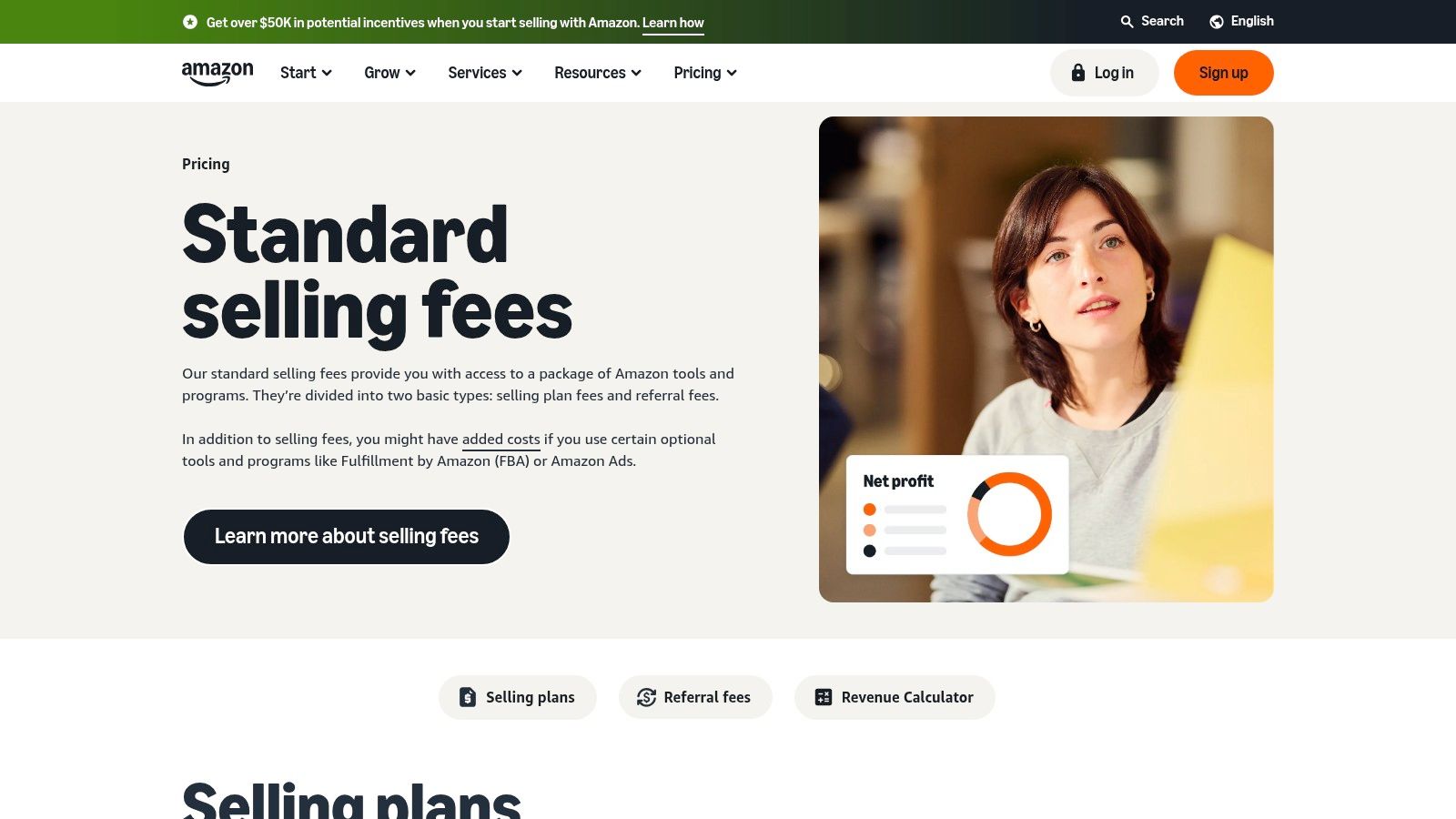
11. Amazon (Seller Central)
While not a standalone platform for building your own website, Amazon Seller Central is an indispensable sales channel for many of the best ecommerce platforms for small business. It offers immediate access to the world’s largest marketplace, allowing businesses to list products and tap into an enormous, pre-existing customer base that is ready to buy.
This makes it an incredibly powerful tool for product validation, reaching new audiences, and diversifying revenue streams beyond a dedicated storefront. For many businesses, selling on Amazon is a critical component of their overall ecommerce strategy, not a replacement for their own site.
Key Features and Use Cases
Amazon’s main draw is its Fulfillment by Amazon (FBA) service. With FBA, sellers ship their inventory to Amazon's fulfillment centers, and Amazon handles storage, packing, shipping, and customer service. This logistical power allows small businesses to offer Prime shipping speeds without managing their own complex warehousing operations.
Amazon is ideal for businesses with physical products looking to gain immediate market traction, test new items, or supplement sales from their primary online store by reaching a massive, high-intent audience.
The platform also provides robust advertising tools within its ecosystem, enabling sellers to promote products directly to shoppers actively searching for them. Seller University offers extensive resources to help new sellers navigate the platform’s complexities.
Pricing and Limitations
- Pricing: Two plans are available: Individual (pay per item sold) and Professional ($39.99/month plus referral fees, which vary by category).
- Pros: Unmatched customer traffic and buyer trust, fast path to generating sales, and access to the powerful FBA logistics network.
- Cons: High competition and strict seller policies can be challenging. Referral fees cut into profit margins significantly.
Amazon provides an unparalleled opportunity to get products in front of millions of buyers, but success often requires careful strategy to manage competition and fees.
Website: sell.amazon.com
12. eBay (Seller Center)
While not a traditional website builder, eBay is a massive online marketplace that serves as one of the best ecommerce platforms for small business owners selling unique, used, or collectible items. Its Seller Center provides a dedicated hub for managing listings, orders, and promotions, making it a powerful sales channel for reaching a huge, pre-existing customer base.
The platform is designed for accessibility, allowing sellers to list products directly from their mobile devices or desktop. This makes it a great starting point for businesses testing new products or clearing inventory without the overhead of building and marketing a standalone store.

Key Features and Use Cases
eBay stands out with its flexible selling formats. You can choose between fixed-price listings ("Buy It Now") or auction-style sales, which are perfect for rare or high-demand items where the market can set the price. The platform also offers optional Store subscriptions that provide lower fees and additional marketing tools for more established sellers.
eBay is ideal for sellers of vintage goods, refurbished electronics, collectibles, and niche products. It's also a great channel for businesses looking to tap into a global audience without significant marketing investment.
Sellers can use built-in promotion tools to create sales, offer discounts, and send offers to interested buyers, giving them direct control over their sales velocity.
Pricing and Limitations
- Pricing: eBay's fee structure is primarily based on final value fees, which are a percentage of the total sale amount. These vary by category. Optional Store subscriptions start at around $4.95/month.
- Pros: Access to a massive, diverse buyer audience. Flexible selling formats for different product types. Seller promotions and occasional fee credits.
- Cons: The fee structure can be complex and may cut into margins. Listing and managing inventory requires consistent, ongoing effort to remain competitive.
For businesses with the right kind of inventory, eBay offers unparalleled reach and a low barrier to entry.
Website: sellercenter.ebay.com
12-Platform Ecommerce Features Comparison
| Platform | Core Features / Unique Points ✨ | User Experience / Quality ★★★★☆ | Value Proposition 💰 | Target Audience 👥 | Price Points 💰 |
|---|---|---|---|---|---|
| Shopify | Hosted, drag‑drop, built-in payments, large app ecosystem 🏆 | Fast setup, strong templates, 24/7 support ★★★★☆ | Pay-as-you-go, app costs add up | Merchants scaling fast & large ecosystem 👥 | $$$ |
| Wix eCommerce | AI site creation, built-in marketing, CRM tools ✨ | Very easy design, broad features ★★★★ | All-in-one hosting, affordable | DIY sellers wanting design flexibility 👥 | $$ |
| Squarespace Commerce | Polished design, subscriptions, integrated payments ✨ | Top-tier design, easy interface ★★★★☆ | Good native analytics | Brands prioritizing aesthetics 👥 | $$ |
| BigCommerce | No tx fees, native multi-channel, strong B2B features 🏆 | Robust features, scalable, SEO tools ★★★★ | Reduces app need, plan upgrades | Growing SMBs w/ complex catalogs 👥 | $$$ |
| WooCommerce | Open-source, full control, extensibility ✨ | Maximum flexibility, large dev community ★★★★ | Free core, hosting cost varies | Tech-savvy owners wanting control 👥 | $ (self-hosted) |
| Square Online | Free plan, POS integration, curbside pickup ✨ | Lowest barrier, seamless POS integration ★★★ | Free start, pay processing fees | SMBs w/ combined online & in-person sales 👥 | $ |
| Ecwid by Lightspeed | Embeddable, social selling, bulk pricing options | Fast setup, free tier ★★★ | Add ecommerce quickly | Sellers adding ecommerce to existing sites 👥 | $ (free tier available) |
| Big Cartel | Simple editor, low-cost plans, basic discounts | Very affordable, easy ★★★ | Minimal overhead | Artists, makers, small catalogs 👥 | $ |
| Shift4Shop | Unlimited products, free SSL, native bulk pricing 🏆 | Feature-rich, PCI-certified ★★★★ | $0 platform fees with Shift4 pay | Cost-sensitive US SMBs 👥 | $ (with payment processing) |
| PrestaShop | Self-hosted + hosted, marketing modules, open-source | Strong control, hosted option available ★★★★ | Transparent pricing, no rev share | SMBs wanting ownership & extensibility 👥 | $$ |
| Amazon Seller Central | Largest marketplace, FBA logistics option 🏆 | Unmatched traffic, strong tools ★★★★☆ | Fees reduce margins | Small businesses seeking broad reach 👥 | $$ |
| eBay Seller Center | Auction & fixed-price, flexible formats | Diverse audience, seller promotions ★★★ | Fee complexity | Sellers of new, used & collectibles 👥 | $-$$ |
Making the Right Choice for Your Business's Future
Choosing your online home is one of the most significant decisions you'll make as a small business owner. The platform you select isn't just a piece of software; it's the engine that powers your sales, customer relationships, and brand identity. As we've explored, the landscape of the best ecommerce platforms for small business is diverse, with each option offering a unique blend of strengths tailored to different types of entrepreneurs. There is no single "best" platform, only the one that is best for you.
Recapping our journey, we saw how platforms like Shopify provide a powerful, all-in-one ecosystem perfect for businesses focused on rapid growth and ease of use. On the other hand, WooCommerce offers unparalleled freedom and customization for those already comfortable within the WordPress environment, giving you complete control over your store's destiny. For creators and artists, Big Cartel offers a simple, focused solution, while businesses with strong local roots find an ideal partner in Square Online for its seamless integration of in-person and online sales.
How to Finalize Your Decision
The key to making the right choice lies in honestly assessing your own needs, resources, and future goals. Don't be swayed by what's popular; instead, focus on what's practical for your specific situation. Before you commit, walk through these critical questions:
- What is your technical comfort level? Be realistic. If you're not comfortable managing plugins, updates, and potential troubleshooting, a self-hosted solution like WooCommerce or PrestaShop might introduce unnecessary friction. A hosted platform like Shopify, Wix, or BigCommerce handles the technical heavy lifting for you.
- What is your budget, both now and in the future? Look beyond the monthly subscription fee. Factor in transaction fees, the cost of premium themes, and essential apps or plugins. A platform with a low entry cost might become more expensive as you scale and require more functionality.
- What kind of products are you selling? A business with a simple, small catalog has very different needs than one with hundreds of complex product variations. Similarly, if you're selling digital downloads, subscriptions, or services, ensure the platform you choose supports those business models natively or through affordable apps.
- How do you plan to grow? Consider your five-year plan. Will you need robust multi-channel selling capabilities, advanced SEO tools, or extensive B2B features down the line? A platform like BigCommerce is built for scalability, with many advanced features included out of the box. To further assist in your decision-making, consider delving into a detailed Shopify vs. BigCommerce comparison to understand the nuances of each platform.
Your Actionable Next Steps
Theory is helpful, but hands-on experience is invaluable. Nearly every platform on our list offers a free trial or a free plan. Use this opportunity to your advantage. Sign up for your top two or three contenders and perform a few essential tasks:
- Add a product: How intuitive is the process? Can you easily add variations, images, and SEO details?
- Customize the storefront: Try changing colors, fonts, and layout. Is the theme editor user-friendly?
- Explore the app store: See what integrations are available for marketing, shipping, and accounting tools you already use.
- Test the checkout process: Experience your store from a customer's perspective.
This trial period is your chance to discover the small details and workflows that will define your daily experience. What feels clunky? What feels intuitive? This direct comparison is the single most effective way to find the perfect fit.
Your ecommerce platform is the foundation upon which your digital future will be built. Take the time to choose wisely, experiment thoroughly, and align your decision with your long-term vision. By doing so, you're not just picking a tool; you're setting your business on a clear path to sustainable growth and success.
Feeling overwhelmed by the technical setup or unsure how to build a store that truly converts? The team at OneNine specializes in designing and developing high-performance ecommerce websites on major platforms like Shopify and BigCommerce. Let us handle the complexities so you can focus on what you do best: running your business. Contact us today to build an online store designed for success.


