
Let's think of your website as a high-performance race car. To keep it in winning form, it needs a full diagnostic check-up from time to time. Professional website audit services are exactly that—a deep dive under the hood to uncover hidden issues that might be costing you traffic, leads, and sales.
What Are Website Audit Services Anyway?
At its heart, a website audit is a comprehensive health check for your most valuable digital asset. It’s a thorough analysis that inspects your site's performance from every angle to make sure it's firing on all cylinders. This process goes way beyond a simple scan for errors; it’s a strategic evaluation designed to pinpoint powerful opportunities for growth.
Think of it as getting a clear, objective report card on what’s working, what's broken, and where you have room to improve. This kind of deep dive is absolutely essential for any business that depends on its website to attract customers and drive revenue.
Beyond Finding Errors to Finding Opportunities
A common mistake is thinking an audit is just about flagging problems like broken links or slow-loading pages. While catching those technical glitches is definitely part of the job, the real power of professional website audit services is in turning those findings into a strategic game plan.
A great audit doesn't just hand you a list of problems. It gives you a prioritized action plan that connects technical fixes to real business goals, like boosting traffic and increasing conversion rates.
This proactive approach helps you stop losing ground to competitors and start building a website that genuinely helps your business grow. It’s not just about maintenance—it's about optimization.
The Growing Importance of Audits
With so much business happening online, a high-performing website is no longer a "nice-to-have." It's a necessity. This shift is clearly reflected in the market, where global revenues for website audit services are expected to jump from USD 2.4 billion to USD 6.5 billion over the next decade. This growth underscores just how critical audits have become for improving performance, SEO, and user experience.
An audit can be broad, covering the entire site, or it can be highly focused. For instance, understanding what PPC audit services involve is a smart first step to getting more out of your advertising budget and improving your ROI.
A comprehensive website audit typically breaks down into a few key areas. This table gives you a snapshot of what experts look for.
Key Areas a Website Audit Investigates
| Audit Area | Primary Goal |
|---|---|
| Technical Health | Check for issues with site speed, mobile responsiveness, security, and crawlability that impact performance. |
| SEO Performance | Analyze how well the site ranks in search engines and identify opportunities to improve visibility. |
| User Experience (UX) | Evaluate how easy and intuitive it is for visitors to navigate the site and find what they need. |
| Conversion Rate Optimization (CRO) | Examine how effectively the site persuades visitors to take action, like making a purchase or filling out a form. |
In the end, investing in a website audit is the first step toward building a stronger, more effective online presence that directly supports your business goals.
The Four Pillars of a Comprehensive Website Audit
To really get what website audit services do, it helps to break the whole process down. A real, professional audit isn't just one big check-up. It's more like a coordinated inspection of four key areas that all depend on each other.
Think of your website as a house. To make sure it’s a great place to live (and for others to visit), you’d check the foundation, the interior design, its reputation in the neighborhood, and how easy it is for guests to get in the front door and find their way around.
Each of these pillars looks at a different part of your site's performance, but they are all connected. A weakness in one area can easily drag down the others. That's why a complete, holistic review is the only way to build lasting success online.
Pillar 1: Technical SEO
First up is Technical SEO. This is all about the "bones" of your website—its foundational health. In our house analogy, this is like checking the plumbing, wiring, and structural integrity. It doesn't matter how gorgeous the paint job is if the foundation is cracked. In the same way, if your site has major technical problems, all your other marketing efforts will be fighting an uphill battle.
A technical SEO audit digs into the stuff that search engine crawlers really care about. This includes:
- Site Speed: How fast do your pages load? A slow site is a conversion killer. In fact, over 50% of mobile users will bounce if a page takes more than three seconds to load.
- Mobile-Friendliness: Your site has to work flawlessly on smartphones and tablets, where most people are browsing these days.
- Crawlability and Indexability: Can search engines actually find, read, and add your pages to their massive database? If not, you're invisible.
- Site Security: Using HTTPS is non-negotiable. It protects user data and is a massive trust signal for both visitors and Google.
Pillar 2: On-Page SEO
Once we know the foundation is solid, we move on to On-Page SEO. This is where we analyze the actual content on each page of your site. Back to our house: this is like evaluating the purpose and layout of every room. Is the kitchen actually functional for cooking? Is the bedroom a restful space?
For your website, this means making sure every page gives users what they want while also sending clear signals to search engines about what it's about. It answers the simple question: "Does this page actually deserve to rank for its target keywords?"
An on-page audit looks closely at:
- Content Quality and Relevance: Is the information on the page genuinely helpful, accurate, and a perfect match for what the user was searching for?
- Keyword Optimization: Are you using your target keywords naturally in the page title, headings, and throughout the text?
- Meta Tags: Do your title tags and meta descriptions make people want to click on your link in the search results?
Pillar 3: Off-Page SEO
The third pillar, Off-Page SEO, shifts the focus to your website’s reputation across the entire internet. This is your site's "neighborhood." Is it a respected, well-connected area, or is it a bit sketchy? A beautiful house in a bad neighborhood is going to have a lower value, plain and simple.
It's the same online. A technically perfect site with amazing content can still get buried in search results if it has a poor external reputation. This is mostly measured by your backlink profile—that is, all the links pointing to your site from other websites.
An off-page audit is all about the quality and quantity of these backlinks. A single link from a major, trusted source like a news outlet is a huge vote of confidence. On the flip side, a bunch of links from spammy, irrelevant sites can actively hurt your rankings.
Pillar 4: User Experience and Conversion
The final pillar brings it all home by focusing entirely on the human visitor. This is a combined audit of User Experience (UX) and Conversion Rate Optimization (CRO). After a visitor arrives at your well-built, beautifully furnished house in a great neighborhood, can they actually accomplish what they came to do?
This infographic shows how all these efforts connect directly to real business results.
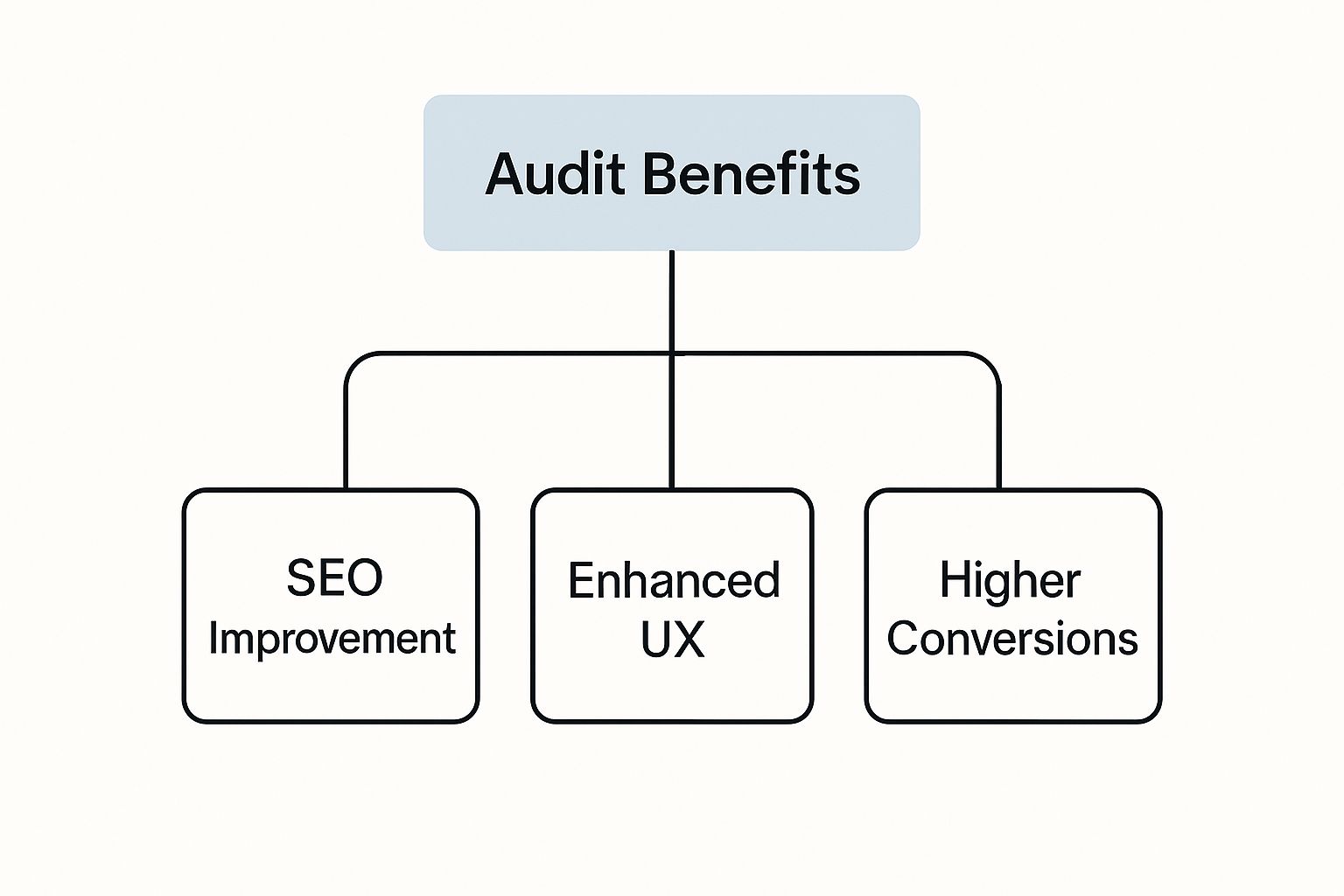
As the diagram shows, a good audit points the way to better SEO and a smoother user experience, which ultimately leads to more customers for your business.
A UX and CRO audit investigates things like:
- Navigation and Site Structure: Is your menu easy to understand? Can people find important pages in just a couple of clicks?
- Calls-to-Action (CTAs): Are your buttons and links clear, compelling, and placed where they'll guide people to take the next step?
- Readability and Design: Is the text easy to read on all devices? Does the visual design help the user, or is it just distracting?
Together, these four pillars give you a complete, 360-degree view of your website's health and performance. To see a detailed breakdown of the specific checks involved, take a look at our ultimate website audit checklist for expert-level success.
Real Business Growth from a Professional Audit

A detailed audit report is packed with valuable data, but its real worth is measured in tangible results. Professional website audit services are all about connecting those technical findings to actual business growth. It’s a process designed to turn diagnostics into a clear, actionable plan that directly improves your bottom line.
Think of it like this: an audit is like a doctor finding high cholesterol. The diagnosis itself is important, but the real benefit comes from the diet and exercise plan that follows—the steps that actually improve your health. In the same way, an audit doesn't just point out problems; it delivers the specific solutions that make your business healthier and more profitable.
For example, an audit might uncover a simple but devastating crawlability issue, where search engines can't even see some of your pages. The fix could be as easy as correcting a single line in your robots.txt file. The result? Suddenly, those hidden pages get indexed, bringing in a flood of organic traffic and potential customers you never knew you were missing.
Turning Technical Fixes into Revenue
Let's look at another common culprit: slow site speed. A good audit will pinpoint exactly what’s causing the lag, whether it's massive image files or bloated code. Fixing this isn't just about keeping visitors from getting impatient—it directly impacts your revenue.
When a website's loading time improves by just one second, conversions can increase by up to 7%. For an online store, that tiny technical tweak could mean thousands of dollars in new sales.
This shows how a one-time investment in a comprehensive website audit can pay for itself over and over. The entire focus is on linking technical performance to key business metrics, making sure every recommendation serves a clear purpose.
These improvements also create a positive ripple effect. A faster, more intuitive website doesn't just lower your bounce rate; it builds your brand's reputation. When visitors have a smooth experience, they see your business as more professional and trustworthy, making them far more likely to come back.
A Strategic Roadmap for Stronger Marketing ROI
A professional audit also supercharges the return on investment (ROI) from all your marketing activities. If you're spending money on ads to drive people to a confusing or broken website, you're basically pouring water into a leaky bucket. An audit patches the leaks.
By ensuring your site is fully optimized for performance and conversions, you make every marketing dollar work harder.
- Improved Ad Campaign Performance: When your landing pages are fast and relevant, your ad quality scores go up, which can lower your cost-per-click.
- Better Content Marketing Results: Your amazing content has a much better shot at ranking high in search results when it lives on a technically solid website.
- Increased Lead Generation: With optimized forms, clear calls-to-action, and a seamless user path, more visitors will turn into qualified leads.
Beyond just finding what's wrong, a professional audit gives you a clear path forward. It might provide an actionable conversion optimization checklist built around your specific user data and business goals. This turns the audit from a simple report into a strategic guide for ongoing improvement.
Ultimately, the goal of website audit services isn't just to fix what's broken. It's about building a stronger, more resilient digital foundation that supports sustainable growth for years to come.
Your Step-by-Step Guide to the Audit Process
Hiring someone for website audit services can feel a bit like handing your car keys to a new mechanic. You know it’s necessary, but what exactly are they going to do back there in the garage? The whole process can seem like a black box.
Let's pull back the curtain. A professional website audit isn't random guesswork; it’s a structured, methodical process. Once you understand the roadmap, you can work with a provider confidently, knowing what to expect every step of the way.
Each stage builds on the one before it, making sure the final recommendations are grounded in your specific business goals and hard data.
Phase 1: Initial Consultation and Goal Setting
It all starts with a conversation. This is probably the most important part of the whole audit, because it sets the stage for everything else. A good audit partner won’t just start running scans; they’ll start by getting to know your business.
We’re talking about your big-picture goals here. Are you trying to drive more e-commerce sales? Generate better leads for your sales team? Or maybe you just want to be seen as the go-to expert in your industry. Agreeing on these targets ensures the audit focuses on the metrics that actually matter to your bottom line.
Think of this first meeting as a two-way street. It’s your chance to lay out your challenges, and it’s the provider’s chance to explain how they work. This way, everyone is on the same page before a single line of code is analyzed.
Phase 2: Data Collection and Technical Scans
With clear goals in place, the real digging begins. This is where the auditors bring out their specialized toolset to perform a deep-dive analysis. It’s like a comprehensive health screening for your website, gathering critical data from every nook and cranny.
This stage typically involves:
- Crawling the entire website to map out every page, link, and image, mimicking how a search engine sees your site.
- Running performance tests to check things like page speed, mobile-friendliness, and Core Web Vitals.
- Analyzing your backlink profile to gauge your site's authority and sniff out any potentially harmful links.
- Plugging into analytics platforms like Google Analytics and Google Search Console to see how real people are using your site.
All this information provides the raw material for the next phase, painting a complete picture of where your site stands today.
Phase 3: Expert Analysis and Prioritization
Here’s where human expertise makes all the difference. The raw data from the scans is handed over to experienced specialists who know how to read the tea leaves. An automated tool can tell you a page is slow; an expert can tell you why it’s slow and which fix will give you the most bang for your buck.
The real value of an audit isn't just in the data itself, but in the human interpretation that turns that data into an actionable, prioritized strategy for growth.
Analysts are the ones who connect the dots between a technical glitch and your business goals. They prioritize recommendations based on a simple formula: potential impact versus the effort required. This smart approach is a key part of effective website management and ensures you’re working on the changes that will move the needle the most.
Phase 4: Actionable Reporting and Implementation Support
Finally, all the findings and strategic advice are packaged into a clear, straightforward report. A great report won’t drown you in technical jargon. Instead, it uses visuals, explains the "why" behind every suggestion, and gives you a step-by-step action plan.
But the best website audit services don’t just hand you a report and disappear. They stick around to help you put the plan into action, walking you through the findings and supporting your team. While a website audit is very specific, it's also helpful to see how it fits into a bigger picture, like the one outlined in this Brand Audit Checklist. This complete approach is what turns a simple audit into real, measurable growth for your business.
How To Choose The Right Website Audit Partner

Picking someone to audit your website is less like hiring a vendor and more like choosing a strategic partner. The market is flooded with options, but the value you get can vary wildly. A great partner won't just hand you a list of errors; they'll deliver a clear roadmap for growth that actually aligns with your business goals.
You're looking for a team that feels like an extension of your own—someone who is genuinely invested in seeing you succeed. This means you have to look past the slick sales pitches and really dig into their process, their expertise, and their past results. The right choice here is the difference between a generic report and a game-changing strategic plan.
Look Beyond The Automated Tools
You'll see plenty of offers for cheap or even free website audits. While that’s tempting, these are almost always churned out by automated software and nothing more. These tools are fine for flagging surface-level stuff like broken links or missing meta descriptions, but they completely lack the critical thinking needed for a truly useful audit.
An automated scan has no idea what your business context is, who you're trying to reach, or what your specific goals are. It can't tell you which of the 50 issues it found will actually move the needle for your business. This is where a human expert becomes your secret weapon.
A worthwhile audit is a blend of powerful tools and seasoned human analysis. The tools gather the data, but an expert interprets it, connects the dots, and builds a prioritized action plan that makes sense for your business.
That human element is what separates a basic scan from a strategic investment. It's how raw data gets turned into a clear path forward.
Key Evaluation Criteria For Your Search
When you're comparing potential partners, it helps to use a consistent checklist. This way, you're making a smart, apples-to-apples comparison instead of just getting wowed by a fancy presentation. This is especially true in a competitive market like North America, which holds a 37.85% share of the global auditing services market. That market, valued at over $99 billion, is booming because businesses need expert-led solutions, not just software. You can learn more about the global auditing services market growth on cognitivemarketresearch.com.
Here’s what to zero in on:
- Proven Track Record & Case Studies: Don't be afraid to ask for examples of their work. A respectable agency should be eager to share case studies that show the problems they found for other clients and, more importantly, the real results their advice generated.
- Transparent Process & Communication: They should be able to walk you through their audit process from start to finish, no problem. How will they deliver the findings? Who can you call with questions?
- Customization vs. One-Size-Fits-All: Does their approach feel tailored to you, or are they pushing a single, cookie-cutter package? A good partner’s first questions should be about your business goals.
- Clear Deliverables: What do you actually get at the end? Ask to see a sample report. It should be easy for anyone to understand (even non-tech folks) and clearly prioritize recommendations based on impact and effort.
Comparing Website Audit Providers
Choosing the right partner is a big decision. This checklist will help you evaluate different providers to see who is the best fit for your team and your goals.
| Evaluation Criteria | What to Look For | Red Flags to Avoid |
|---|---|---|
| Expertise & Track Record | Case studies with clear, measurable results. Client testimonials and reviews. | Vague promises without proof. No examples of past work. |
| Process Transparency | A clear explanation of their methodology, tools, and communication plan. | Secrecy around their process. Unwillingness to share details. |
| Customization | They ask about your business goals and target audience before starting. | A "one-size-fits-all" package or price for every client. |
| Deliverables | A sample report that is clear, actionable, and prioritizes findings. | A sample report that is just a data dump from an automated tool. |
| Pricing & Value | A price that reflects the depth of analysis and expert time involved. | Prices that seem "too good to be true." High-pressure sales tactics. |
By using this framework, you can cut through the noise and find a partner who will provide genuine value, not just a lengthy to-do list.
Understanding Pricing And Spotting Red Flags
Pricing for website audit services can be all over the map, from a few hundred dollars to several thousand. The cost usually comes down to the size and complexity of your site and how deep the analysis goes. Just be cautious of prices that seem way too low—they almost always are. An unusually cheap audit is a tell-tale sign of a purely automated report with zero expert analysis behind it.
Remember, once the audit is done, the real work is just getting started. The findings will point to necessary fixes and improvements. A good partner will often discuss how they can help with implementation or ongoing support, which is a key part of any good website maintenance service that keeps your site healthy and performing well.
Finally, keep an eye out for these red flags during your search:
- Guaranteed #1 Rankings: Nobody can guarantee top rankings on Google. This is an immediate sign of a dishonest provider.
- Lack of Transparency: If they get cagey about their methods or the tools they use, it’s a major warning sign.
- High-Pressure Sales Tactics: A confident expert doesn't need to rush you into a decision.
Taking your time to choose the right partner is the most important step in this whole process. Do your homework, ask the tough questions, and pick a team you can trust to guide your digital strategy toward real, measurable success.
Common Website Audit Questions Answered
Even with a good grasp of the process, it's totally normal to have a few lingering questions before you dive into a professional website audit. Getting these sorted out is the final step to moving forward with confidence.
Let's clear up some of the most common questions we hear from business owners.
How Often Should My Website Be Audited?
So, what's the magic number? For most businesses, a deep, professional audit once a year is the sweet spot. An annual review is usually enough to catch new technical problems, stay on top of search engine updates, and make sure your site still aligns with where your business is headed.
That said, you might need to check in more often in a few specific cases.
- Tough Competition: If your industry is a battlefield, a six-month cycle can give you the edge you need to stay ahead.
- Big, Complex Sites: An e-commerce store with thousands of products or a massive content site has more moving parts. A semi-annual audit is a smart move here.
- After a Big Change: Just launched a redesign or moved your site to a new platform? An audit is non-negotiable to make sure you didn't break anything in the process.
Even with a big yearly audit on the books, it’s a good habit to run quick "health checks" every quarter on basics like site speed, security, and any crawl errors that pop up.
Can I Just Do a Website Audit Myself?
It’s definitely tempting to try and save a few bucks with a DIY audit, and for some things, it’s a great starting point. Running a free online tool is fantastic for spotting obvious, surface-level issues like a handful of broken links or some missing meta descriptions. Think of it as a quick first pass.
But a professional service goes so much deeper. The insights you get from an expert are something an automated tool just can't match.
A free tool can tell you what's wrong. An expert can tell you why it's wrong, which fixes will actually move the needle for your business, and the exact order you should tackle them in.
Experts don't just use a single free tool; they use a whole arsenal of sophisticated, paid software. More importantly, they bring years of real-world experience. They know how to interpret all that complex data and connect it directly to your business goals, turning a confusing list of errors into a clear roadmap for growth.
What Is the Difference Between an SEO Audit and a Website Audit?
This is a great question and a very common point of confusion. Think of it this way: an SEO audit is a crucial part of a website audit, but it’s not the whole picture. An SEO audit zooms in specifically on everything that affects your ranking on search engines like Google.
A comprehensive website audit takes a much wider view. It includes a full SEO audit, of course, but it also digs into other critical areas:
- User Experience (UX): Is your site actually easy and enjoyable for people to use?
- Conversion Rate Optimization (CRO): How well does your site convince visitors to become customers?
- Security: Are there holes in your defense that could put your site or your customers' data at risk?
- Overall Performance: We're talking a holistic look at speed, mobile-friendliness, and accessibility from the perspective of a real person.
Simply put, a full website audit looks at your site through two lenses: one for the search engines and another, just as important, for the human beings you want to serve.
Ready to stop guessing and start improving? The team at OneNine provides expert website management and audit services that deliver a clear, actionable plan for growth. Let us help you turn your website into your most powerful asset. Learn more and get started today at onenine.com.


