
Promoting a website isn't a one-and-done task. It's a thoughtful mix of smart planning, solid SEO, great content, and reaching out to the right people. The best game plan blends the slow-and-steady wins of long-term organic growth with the quick boosts you get from short-term paid tactics.
This guide will walk you through putting that plan together, from figuring out what you actually want to achieve to checking if you're on the right track.
Building Your Website Promotion Blueprint
Jumping into promotion without a plan is like driving without a destination. You’ll burn a lot of fuel but probably won't end up anywhere you want to be. A solid blueprint makes sure every single thing you do is on purpose and moves you closer to your business goals.
First, Know Your Audience
Before you can get your website in front of anyone, you have to know who you're trying to reach. "Small business owners" is way too broad. Dig deeper. Are you talking about a 25-year-old e-commerce founder who lives on TikTok, or a 50-year-old local plumber who’s just trying to figure out Google?
Sketch out a quick buyer persona. Give them a name and a job. What keeps them up at night? For example, your target might be "Marketing Maria," who runs marketing for a B2B tech company and is desperate for more qualified leads. Once you know Maria's problems, you can create content and ads that speak directly to her.
Set Clear, Measurable Goals
What does "success" actually mean for your website? A vague goal like "get more traffic" is useless because you can't measure it. This is where SMART goals (Specific, Measurable, Achievable, Relevant, Time-bound) come in handy.
- Bad Goal: Increase website traffic.
- Good Goal: Increase organic website traffic by 20% in Q3 by publishing one SEO-focused blog post per week.
You could also aim to get 50 new email sign-ups in the next 30 days or rank in the top five on Google for a key phrase within six months. When you have clear targets, you know exactly what you’re shooting for. As you start laying out your plan, understanding these powerful strategies to increase online presence is a total game-changer.
A well-defined goal is your north star. When you're deciding whether to spend time on a new social media platform or write another blog post, you can just ask: "Does this get me closer to my goal?"
Take a Look at Your Competitors
Your competitors have already done a lot of the homework for you. Sizing them up can show you what’s already working in your space and, more importantly, where the gaps are.
Don't just glance at their homepage. Use free tools to see which keywords they're ranking for or which of their blog posts get the most shares. See where they hang out on social media and what kind of stuff their audience responds to. The point isn't to copy them—it's to find a weakness in their strategy that you can turn into your strength.
Master SEO to Attract Organic Visitors
If you want a steady stream of visitors who are already looking for what you offer, you need to get friendly with search engines. That’s what Search Engine Optimization (SEO) is all about—making your website the best possible answer when someone types a question into Google.
This isn't about tricking algorithms. It’s about building a solid foundation for your long-term promotion. Think about it: paid ads disappear the second you stop paying for them. A well-optimized page, on the other hand, can pull in traffic for months, even years. If you're new to this, a great place to start is understanding What Is Search Engine Optimization Explained.
Finding Your Target Keywords
Everything in SEO begins with the words and phrases your ideal customers are actually using. These are your keywords. Your mission is to figure out what they are and then build pages that speak directly to their needs.
Don't waste your time trying to rank for a huge, broad term like "marketing." That's a losing battle. Instead, dig deeper for long-tail keywords. These are longer, more specific phrases like "how to promote a local bakery website." They have far less competition and attract people who are much closer to buying or taking action.
Here’s how to start finding them:
- Think like your customer: What problems are they trying to solve? What questions keep them up at night?
- Use free tools: Hop on Google Keyword Planner or Ubersuggest. These can give you a peek into what people are searching for and how hard it will be to rank for those terms.
- Spy on your competition: Check out what keywords are already sending traffic to your competitors. You might uncover some golden opportunities they’ve already found.
On-Page SEO Essentials
Once you have your keywords, it's time to signal to Google what your page is all about. We call this on-page SEO—optimizing the stuff people actually see on your site.
Your title tag is your first impression in the search results. Make it count. It needs to be clear, include your main keyword, and spark a little curiosity. Right below it is the meta description. While it doesn't directly affect your rank, it’s your ad copy—your one shot to convince someone to click on your link instead of the one above or below it.
On the page itself, make sure your primary keyword is in your main heading (the H1 tag) and woven naturally into your subheadings and body text. Always write for people first, search engines second.
Why Technical SEO Cannot Be Ignored
All the great content in the world won't matter if search engines can't crawl and understand your site. That's where technical SEO comes in. It’s the behind-the-scenes work that ensures your website is structurally sound.
One of the biggest culprits that sinks otherwise great websites? Slow loading times.
Site speed is a confirmed ranking factor. A slow site frustrates users, and Google takes that as a signal of a poor user experience. A key metric here is Time to First Byte (TTFB), which is just a fancy way of saying how quickly your server wakes up and responds. We've put together a guide with 7 ways to reduce TTFB for faster websites to help you make some quick improvements.
And it goes without saying, your site must work perfectly on a phone. Most searches happen on mobile devices now, so Google naturally prioritizes sites that deliver a great mobile experience.
Don't Overlook Local SEO
If you have a physical location or serve a specific area, local SEO is an absolute goldmine. It’s all about tuning your online presence to show up in relevant local searches.
The numbers here are staggering. There are about 97 billion local searches globally every month, and searches including "near me" have skyrocketed by over 500% in recent years. More importantly, 46% of all searches on Google have local intent, and a whopping 28% of those searches lead to a purchase.
Your Google Business Profile is the single most important tool for local SEO. Set it up and fill out every single section. It's your digital storefront on Google Search and Maps.
Make sure your business name, address, and phone number (NAP) are identical everywhere they appear online. Consistency is key. Finally, encourage your happy customers to leave reviews—they have a huge impact on local rankings and build trust with new people finding you for the first time.
Create Content That People Want to Share

Let's be honest: SEO gets people to your website, but it's your content that makes them pull up a chair and stay for a while. If you really want to promote your site effectively, you have to create stuff that’s so genuinely useful that people can't help but share it. This isn't about just pumping out blog posts. It's about becoming the go-to resource in your niche.
When your content solves a real problem for someone, it stops feeling like marketing. It just feels helpful. The ultimate goal is for a reader to have that "aha!" moment and immediately think, "My friend needs to see this." That kind of organic sharing is worth more than any ad campaign you could ever run.
Finding Ideas That Actually Hit the Mark
The best content ideas aren't dreamed up in a boardroom; they're pulled directly from your audience's most common questions and biggest frustrations. Forget guessing. A little bit of digital eavesdropping will tell you exactly what people are struggling with.
Think about it: where do your ideal customers hang out online? What are they asking about on Reddit, in niche forums, or in Facebook groups? Those threads are a goldmine of proven content ideas just waiting for you.
Here are a few practical ways I find winning topics:
- Scour Q&A Sites: I spend a lot of time on platforms like Quora and Reddit. Just search for keywords in your industry and look for the questions with tons of comments and upvotes. That's a clear signal of a widespread problem you can solve.
- Spy on Your Competitors (Ethically!): Use an SEO tool—even a free one—to see which articles are sending your competitors the most traffic. Don't just copy them. Look for an angle they missed or a way you can explain the topic more clearly. Can you go deeper? Create a better visual?
- Listen to Your Own Customers: Pay attention to the questions that pop up in your email inbox or on sales calls. If one person took the time to ask, I guarantee a hundred others are silently wondering the same thing.
Don't Just Write—Create Valuable Assets
A well-written blog post is a fantastic starting point, but why stop there? People consume information in different ways. Some prefer watching a video, others love a quick visual summary, and some want a downloadable checklist. When you diversify your formats, you create valuable assets that give people more reasons to link back to you.
For example, a blog post on "10 Ways to Speed Up Your Website" is solid. But what if you also created an infographic that visually represents those ten points? That's something people will eagerly share on LinkedIn or Pinterest.
My Two Cents: The format should always serve the content. A complex, step-by-step process is perfect for a video tutorial, while a ton of data is much easier to digest as a slick infographic.
Get Organized With a Simple Content Calendar
To build a loyal audience, you have to show up consistently. A content calendar is your best friend here, and it doesn't need to be some complex, color-coded behemoth. A simple spreadsheet is all you need to keep a steady flow of fresh content coming.
At a minimum, your calendar should track:
- The Topic: A working title for the piece.
- The Format: Is it a blog post, video, or maybe a case study?
- The Target Keyword: What's the main search term you're aiming for?
- Publish Date: When is it going live?
- Promotion Checklist: Where will you share it? Think newsletter, Twitter, specific forums, etc.
This simple bit of organization turns content creation from a chaotic, reactive chore into a proactive strategy. It ensures every single piece you create has a clear purpose and a promotion plan from day one—which is how you make sure your hard work actually gets seen.
Use Social Media to Build a Real Community
Think of social media as less of a billboard and more of a town square. It’s not just a place to drop links to your website; it's where you build a following—a group of people who genuinely care about what you do and are excited to see what you publish next. The real magic happens when you stop broadcasting one-way messages and start sparking actual conversations.
Effective social media promotion isn't about shouting into the digital void. It's about finding out where your ideal customers are already talking and joining in authentically. You have to treat each platform like its own little world, with its own language and social norms.
Find Your People and Engage
Your audience isn't everywhere, so you shouldn't be either. The first step is figuring out which platforms your target customers actually use. A B2B software company will almost certainly get more mileage out of LinkedIn, while a brand selling handmade jewelry will find its home on visually-driven platforms like Instagram or Pinterest.
Once you've zeroed in on the right channels, the game shifts from self-promotion to participation. This is where you lay the foundation for a real community.
- Look Beyond Your Own Profile: Don't just post on your own page and wait for the world to come to you. Jump into relevant Facebook Groups, subreddits, or niche forums where your audience is already asking questions.
- Give Value, Then Ask: Offer helpful advice and answer questions without immediately dropping a link. If you see someone on Reddit struggling with a problem your new blog post solves, give them a quick summary of the solution right there in the comments. Then, you can offer the link for more detail.
- Start Real Conversations: Don't just announce things. Ask open-ended questions. Instead of "Check out our new product!" try, "How are you currently dealing with [the problem your product solves]?"
This chart shows just how powerful social media can be for driving traffic, often coming in right behind organic search.
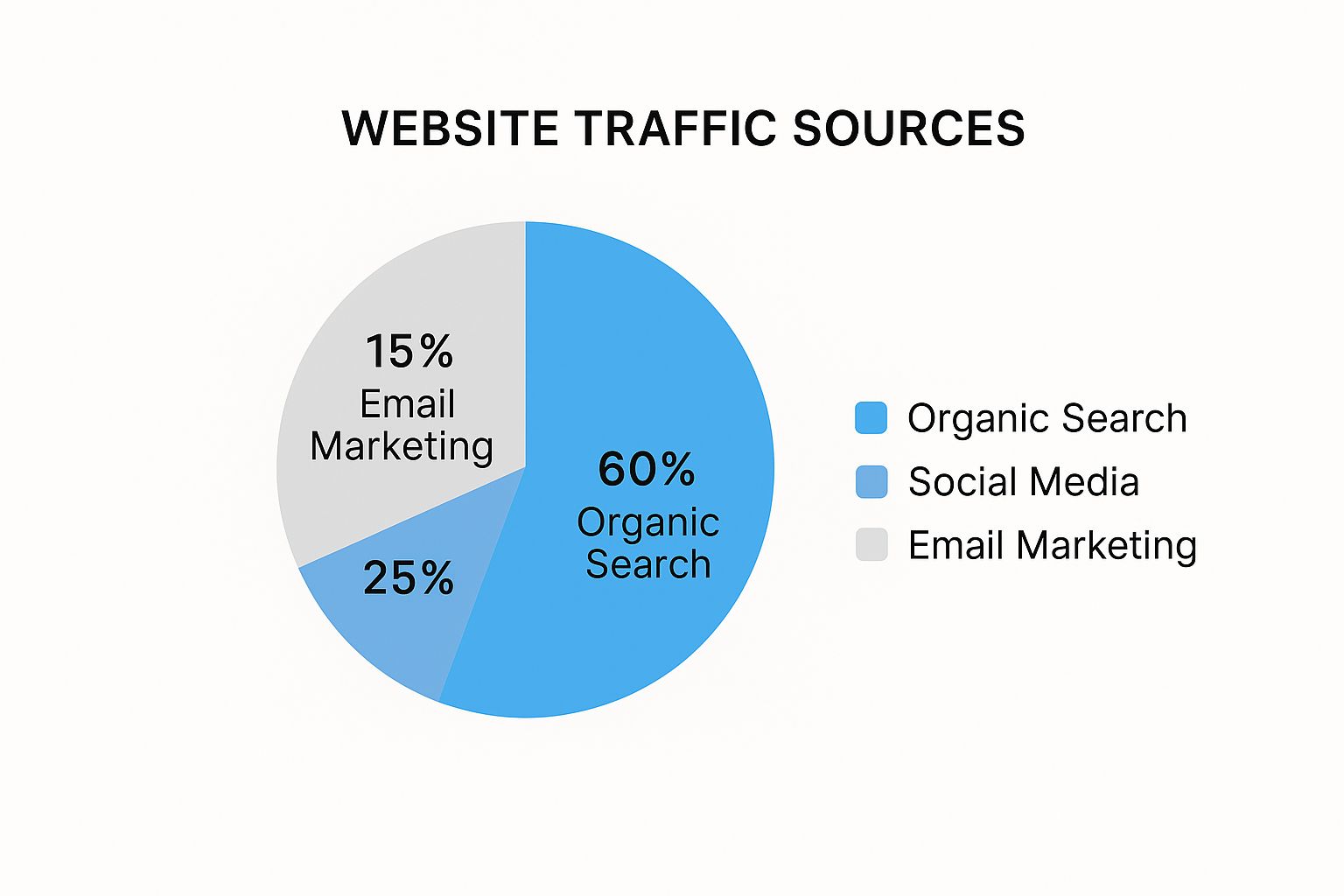
It’s a great reminder that while SEO is a huge piece of the puzzle, a solid social media game is non-negotiable for a balanced traffic strategy.
Speak the Language of the Platform
A post that crushes it on LinkedIn will probably bomb on TikTok. Every platform has its own vibe and preferred content format. If you’re just cross-posting the exact same message everywhere, you’re missing a massive opportunity to connect.
To help you decide where to invest your time, here’s a quick breakdown of the major platforms.
Choosing the Right Social Media Platform
| Platform | Best For (Audience/Content) | Promotion Tactic Example |
|---|---|---|
| Broad demographics, community building, local businesses. Great for videos and curated content. | Running a targeted ad campaign for a new blog post to users who have shown interest in similar topics. | |
| Younger audiences (under 35), B2C brands, visual products. Perfect for high-quality images, Reels, and Stories. | Creating a behind-the-scenes Reel showing how your product is made, with a link to the product page in your bio. | |
| X (Twitter) | Real-time news, tech, B2B, and media. Ideal for short updates, threads, and joining trending conversations. | Turning a long-form article into a 10-part thread with key takeaways, with a link to the full piece at the end. |
| B2B professionals, career development, and industry news. Best for long-form posts, articles, and company updates. | Sharing a case study from your website as a text post, tagging the client company, and posing a question to your network. | |
| Female-skewing audience, DIY, e-commerce, food, and design. Excellent for driving traffic via visual discovery. | Creating an eye-catching infographic that summarizes a "how-to" guide and linking it back to the full article on your site. | |
| TikTok | Gen Z and Millennials. Thrives on short-form, entertaining, and educational video content. | Making a 30-second video that demonstrates a quick tip from your latest guide, telling viewers to find the full guide via the link in your bio. |
This table isn't exhaustive, but it should give you a solid starting point for matching your content to the right audience.
My rule of thumb is to create one core piece of content and then remix it for each channel. A deep-dive blog post can become a professional text-and-image update for LinkedIn, a slick carousel for Instagram, a quick-tip video for TikTok, and a rapid-fire thread on X.
Beyond just posting, genuine interaction is what fuels growth. To really get this right, you'll want to explore some essential social media engagement strategies that can help you build a loyal following. This approach shows you understand the unwritten rules of each platform. And if you’re a local business, weaving this into your local marketing is crucial. You can learn more in our guide on how to optimize your website for local search.
https://onenine.com/how-to-optimize-your-website-for-local-search-a-step-by-step-guide/
By focusing on authentic conversations and content tailored for each platform, your social media accounts will transform from simple link repositories into thriving communities that send engaged visitors back to your website again and again.
Use Paid Advertising to Accelerate Growth
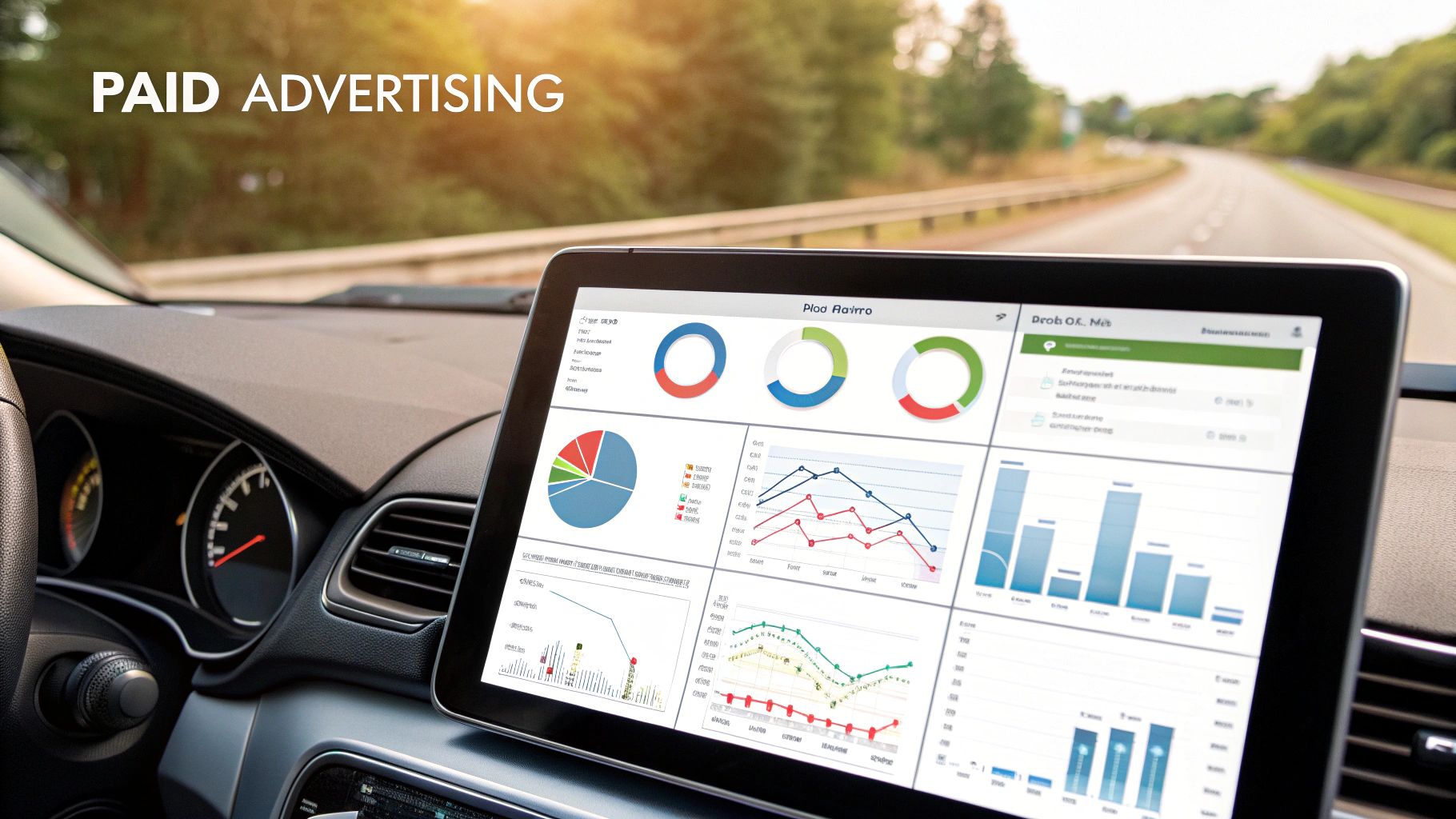
While organic strategies like SEO are the foundation for long-term traffic, they don't work overnight. Paid advertising, however, is like flipping a switch. You get immediate visibility, putting your website right in front of the people you want to reach and gathering crucial data that can sharpen your entire marketing approach.
This isn't just about spending money for the sake of it; it's a strategic investment to kickstart growth. The numbers don't lie. As of 2024, digital channels now account for a staggering 72.7% of all ad spending worldwide, totaling over US$790 billion. That figure has more than doubled since 2019, which tells you everything you need to know about where the competition is. You can discover more insights about global digital advertising to see the full picture.
Targeting Intent with Google Ads
The real magic of Google Ads is its ability to capture user intent. You aren’t interrupting someone scrolling through their feed; you’re showing up the very moment they’re searching for a solution you offer. It’s the digital equivalent of having a storefront on the world's busiest street.
The secret is to go after specific, long-tail keywords that signal someone is ready to make a move. Instead of a broad term like "web design," you’d have much better luck targeting phrases like "web design services for small businesses" or "e-commerce website developer quote."
Here are a few tips I've learned from running countless campaigns:
- Master Your Negative Keywords: This is huge. Tell Google which search terms you don't want to show up for. If you sell high-end running shoes, add words like "cheap," "free," and "discount" as negative keywords. This simple step stops you from wasting your budget on unqualified clicks.
- Write Ad Copy That Gets Clicked: Your ad has one job: convince the right person to click. Speak directly to their problem and offer your solution. Using numbers, asking a question, or highlighting a unique benefit can make all the difference.
- Create Dedicated Landing Pages: Please, don't send ad traffic to your homepage. Every ad campaign needs its own landing page that directly reflects the ad's promise. This consistency is absolutely essential for turning clicks into customers. We cover this in detail in our guide on 10 effective website optimization strategies for success.
Finding Your Audience with Social Media Ads
If Google Ads is about targeting intent, social media ads on platforms like Facebook, Instagram, and LinkedIn are all about targeting people. The power here is the incredibly granular demographic and behavioral data you can use. You can zero in on users based on their interests, job titles, life events, or even their past interactions with brands like yours.
This is perfect for building brand awareness and reaching people who don't even know they need you yet. For example, a company selling sustainable coffee could create an audience of users who follow environmental groups, have shown interest in fair-trade products, and live in specific eco-conscious cities.
My personal rule for social ads is "pattern interrupt." Your ad needs to stop the scroll. Use a striking visual, a bold headline, or a video that grabs attention within the first three seconds.
To get the most out of your social ad budget, you have to use retargeting. This means showing ads specifically to people who have already visited your website. It’s an incredibly effective way to bring back curious visitors who left without converting. By showing them a tailored ad—maybe with a special offer or a reminder of the exact product they looked at—you can dramatically boost your conversion rates. After all, most people need to see your brand a few times before they’re ready to buy.
Advanced Strategies for Modern Promotion
Once you've got the promotional basics down, it’s time to shift gears. Standard methods will get you on the field, but the advanced strategies are what truly set you apart and give you a real competitive edge. We're moving beyond the one-size-fits-all approach that audiences have learned to ignore.
The goal here is to create experiences that feel tailor-made. This means using data to genuinely understand what your visitors want and delivering it in a way that feels personal and relevant.
Embrace Personalization and AI
Think about how many generic marketing messages you ignore every single day. They’ve become background noise. That's why personalization isn't just a nice-to-have anymore—it's what users expect. It could be as simple as an online store showing you products based on your browsing history or as sophisticated as a B2B site changing its homepage based on your industry.
This is where technologies like Generative AI are completely changing how we work. Companies that nail personalized marketing don't just see a small bump in engagement; they often crush their revenue goals. Why? Because content that feels like it was made just for you builds loyalty and encourages repeat business.
It’s no surprise that 56% of marketing leaders are already funneling their budgets into personalization. With Generative AI tools becoming a standard feature in most marketing software, brands that create these custom experiences will have a massive advantage. You can learn more about the latest marketing trends to see where things are headed.
Here’s how you can put AI to work right now:
- Dig into user behavior to spot patterns and segment your audience into meaningful groups.
- Draft personalized email campaigns that speak directly to an individual’s known interests.
- Generate fresh content ideas based on trending topics within your specific audience niches.
Treat AI as your co-pilot. It can handle the heavy lifting—the data crunching and initial drafting—so you can stay focused on the bigger strategic picture. It lets you create incredibly relevant experiences at a scale that just wasn't possible a few years ago.
Unlock New Audiences with Partnerships
Why spend months building an audience from the ground up when you can connect with a ready-made one? Strategic partnerships are one of the most powerful and often overlooked ways to get your website in front of the right people. It's a shortcut to instant credibility.
And you don't need to chase huge corporations. The best collaborations are often with other businesses or creators who serve the exact same audience you do, just in a different way.
A partnership has to be a win-win-win. It must benefit you, your partner, and—most importantly—both of your audiences. If the audience doesn't get real value from it, the promotion will fall flat every time.
Start by thinking about who your audience already trusts. Your list of potential partners could include:
- Influencers: Find creators in your niche whose followers are a perfect match for your ideal customer. Even a single authentic mention can send a wave of highly targeted traffic your way.
- Complementary Businesses: If you sell high-end coffee beans, team up with a company that sells premium coffee makers. You could co-create a "perfect brew" guide, run a joint giveaway, or offer each other's customers an exclusive discount.
- Industry Publications or Blogs: Offer to write a guest post or provide an expert quote for an article. This move positions you as an authority and puts your website right in front of a dedicated readership.
The secret is to approach these relationships with a genuine desire to give, not just take. When you focus on creating real value together, you can tap into powerful networks that will accelerate your website's growth faster than you could on your own.
Common Questions About Promoting Your Website
When you're trying to get a website off the ground, a lot of the same questions pop up. You're not alone. Let's tackle some of the most common ones I hear from marketers and business owners.
How Much Should I Actually Spend on Promotion?
This is the big one, right? The classic "it depends" answer is frustrating, but we can put some real numbers on it. A good starting point for a new business is earmarking 5-10% of your total revenue for marketing. If you're more established and ready to hit the accelerator, that number can easily climb to 15% or even higher.
But the real answer isn't about a percentage—it’s about your goals. If you need leads now, you'll probably lean heavily on paid ads. If you're building a brand that will last, your investment will shift more toward great content and SEO.
My Advice: Don't pull a number out of thin air. Start small with one or two channels you think have potential. Track every dollar and see what comes back. Once you find something that works, that's when you pour gas on the fire.
How Long Does It Really Take to See SEO Results?
SEO is a long game, and anyone who tells you otherwise is selling something. It's not like flipping a switch. You can generally expect to see some small signs of life—a little more traffic, a few keyword rankings starting to pop—within 3 to 6 months.
But getting to the top of page one for a keyword that actually matters? That could easily take a year or more. A few things will dictate your timeline:
- Your Site's Age & Authority: Google trusts older, more established sites. A brand-new domain is starting from scratch.
- The Competition: Trying to rank for "best pizza in Toledo" is a world away from trying to rank for "project management software."
- Your Consistency: SEO rewards effort. The more consistently you create genuinely helpful content and earn quality links, the faster you'll see the needle move.
Should I Use Paid Ads or Focus on Organic Content?
This isn't a battle to be won; it's a partnership. The smartest strategies don't pick one over the other—they use both to create a powerful feedback loop.
Here’s how I think about it:
| Channel | Its Superpower | The Catch |
|---|---|---|
| Paid Ads | Blazing-fast traffic and immediate data. | The traffic stops the second you turn off your credit card. |
| Organic Content | Builds a lasting asset that can bring in traffic for years. | It's a slow, steady climb to build momentum. |
Use paid ads for a quick boost, to test which headlines resonate with your audience, or to drive traffic while your SEO is still warming up. At the same time, use your organic content to build a foundation—a reliable, long-term source of traffic that isn't tied to your daily ad spend.
At OneNine, we know that building a real online presence is a marathon, not a sprint. If you're looking for a partner to guide you through these challenges and build a website that delivers, we're here to help. See how we can work together at https://onenine.com.


