

The secret to great client relationships isn't about dazzling them with constant surprises or bending over backward to over-deliver. It’s much simpler. It all comes down to defining what a “win” looks like together, right from the very beginning. This isn't about setting the bar low; it’s about building a partnership on a solid foundation of clarity, trust, and consistent reliability.
A Realistic Look at Client Expectations

We've all been there. It feels like client demands are getting more intense every year, and we're stuck in a frantic race where the goalposts just keep moving. But what if I told you that's mostly a myth?
The truth is, what clients really want isn't a magician who can grant impossible wishes. They just want a partner they can count on. Someone who delivers on their promises, consistently and without drama.
The Truth About "Skyrocketing" Demands
It might feel like you're trying to hit a constantly moving target, but the data tells a different story. Customer expectations haven't been shooting through the roof. In fact, they've leveled off and even dipped slightly over the past few years.
One study from 2022 even found that customer expectation scores were about one percent lower than they were back in 1994. You can dig into the full findings on customer expectations to see for yourself. The pressure we feel often comes from our own assumptions, not from our clients.
This should be a huge relief. It means you can stop trying to be a mind-reader and instead focus on becoming a master of alignment. The goal isn't to wow them with more, but to deliver exactly what you agreed upon, exceptionally well.
Your job isn't to tell clients what they want to hear. Your duty is to give them candid advice and an honest assessment of what’s truly achievable. That’s how you build real, lasting trust—far more effectively than over-promising ever could.
To help you get there, let's break down the core principles that guide every successful client relationship. Think of these as the foundation for how you'll approach every project from now on.
Core Pillars of Effective Expectation Management
These four pillars are the bedrock of a smooth, collaborative, and successful client engagement. Mastering them will shift your projects from being a source of stress to a source of pride.
| Pillar | What It Means | Why It Matters |
|---|---|---|
| Proactive Discovery | Digging deep to find the real goals, not just the surface-level requests, before any work starts. | It ensures you're solving the right problem and avoids costly misunderstandings down the road. |
| Crystal-Clear Scope | Defining exactly what you will do—and just as importantly, what you won't do. | This prevents scope creep, protects your time, and keeps the project focused and on budget. |
| Reliable Communication | Setting a predictable rhythm for updates so your client never has to wonder what's going on. | Consistent communication builds confidence and makes the client feel like a valued partner, not an outsider. |
| Structured Feedback | Creating a formal, clear process for handling feedback and change requests. | This turns potential disruptions into strategic decisions and keeps the project moving forward smoothly. |
By building your process around these fundamentals, you establish clear rules of engagement that everyone understands and respects.
This guide will walk you through exactly how to put each of these pillars into practice. Let's get started.
Building a Foundation with a Strong Discovery Process
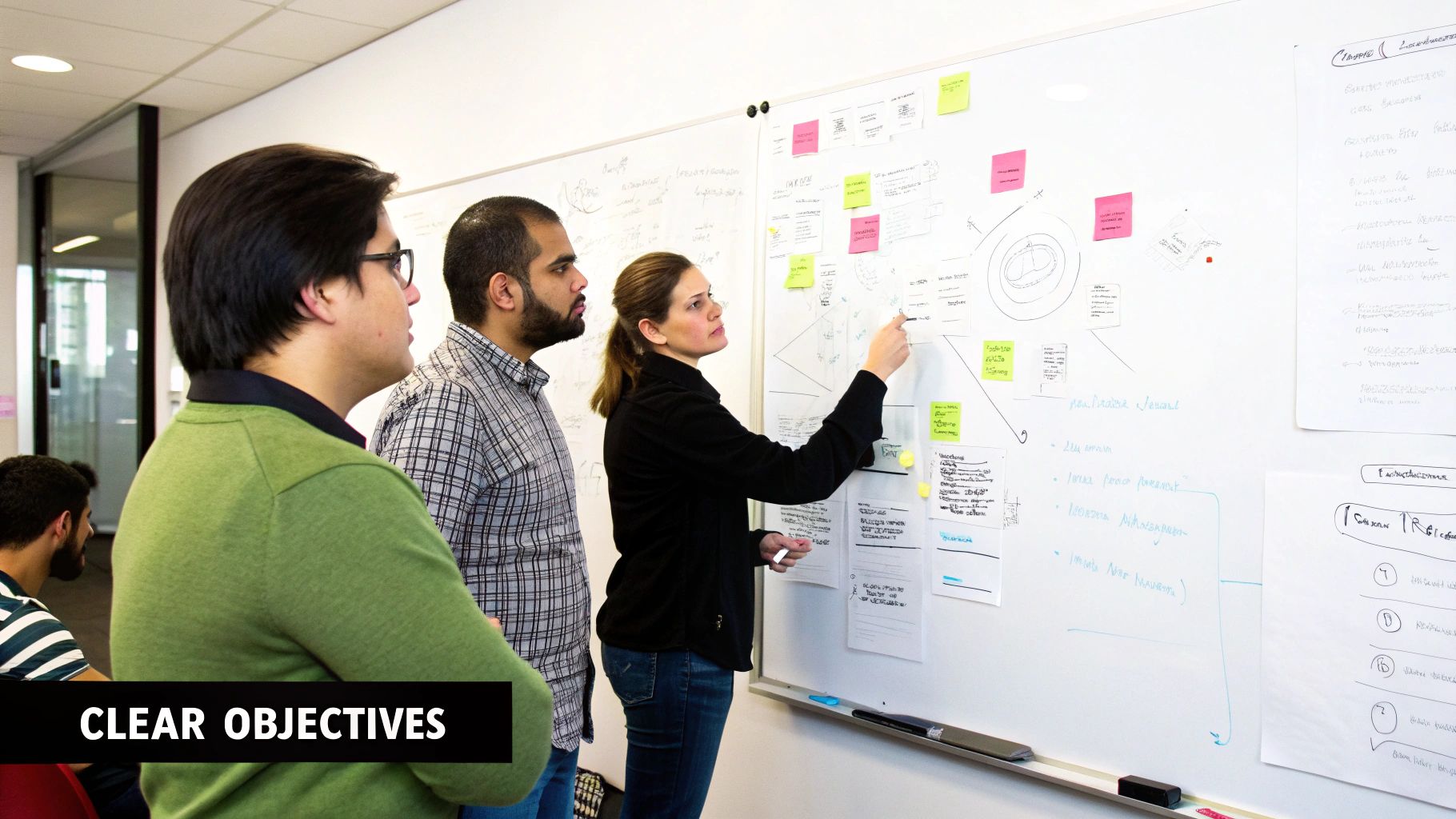
Most of the time, when a project goes sideways, you can trace the problem back to the very first conversation. It happens before anyone writes a line of code or picks a single font. It’s those initial meetings where assumptions are made, and the real reasons for the project are never quite brought to light.
A solid discovery process isn't just a box to check. It's the foundation for everything that follows.
Too many agencies hear "We need a new website" and immediately jump into talking about features. This is a classic mistake and a fast track to mismatched expectations. In fact, one study of digital agencies found that 41.1% struggle with managing what their clients expect. A great discovery process digs much deeper to get to the why behind the what.
Uncovering the Real Goals
Think of yourself as a detective. The client's initial request is simply the first clue. Your real job is to figure out the core business problem they’re trying to solve. This means you have to ask better questions—ones that go beyond a simple checklist.
Instead of asking, "So, what pages do you need?" try these on for size:
- Six months from now, what result would make you say, "This project was a huge success"?
- Who are we actually building this for? What's the one thing you want them to do?
- What have you tried before that fell flat, and what’s your gut feeling on why it didn't work?
Questions like these completely change the dynamic. You're moving from a simple order-taker to a strategic partner, helping them figure out the best way to solve their problem.
Your client is paying for your honest assessment, not for you to simply agree with them. Being candid about what's realistic builds far more long-term trust than telling them what they want to hear.
Separating Goals from Preferences
A huge part of discovery is learning to tell the difference between a real business goal and a stakeholder’s personal taste. A CEO might tell you he "can't stand the color blue," but if data shows his target audience converts best with blue calls-to-action, his preference could tank the project's results.
I saw this firsthand with a financial services client. They were dead set on a minimalist, artsy design with a lot of abstract imagery. It looked incredible, but it was completely wrong for their target audience: retirees who needed clear, direct information and visuals that felt trustworthy.
If we had done a proper discovery, we would have caught that disconnect right away. By focusing on what their users actually needed—clarity, trust, and simple navigation—we could have guided them to a design that was professional but, more importantly, actually worked for their audience.
This is how you start managing expectations from the get-go. You establish that every decision will be measured against the project's goals. This creates a shared "source of truth" that you can both refer back to, preventing scope creep and making sure everyone is aiming for the same target.
Defining Scope and Setting Clear Boundaries
Once you’ve wrapped up a solid discovery process, your next move is to translate all that great insight into a rock-solid Scope of Work (SOW). Don’t think of the SOW as a set of rules meant to restrict the client. It’s more like the project’s constitution—a shared agreement that protects both you and your client from the frustration and burnout that comes with ambiguity.
This document is your single best defense against project chaos. Working without one is like trying to navigate a new city without a map. You’re just asking for misunderstandings and endless, soul-crushing revisions. A clearly defined scope is the most direct way to prove you’ve listened to your client and have a real plan to get them where they want to go.
From Conversation to Concrete Deliverables
Your SOW needs to be painfully specific. Vague phrases like "website redesign" or "ongoing marketing support" are just invitations for scope creep. You have to break down every major goal into tangible, specific deliverables. Doing this turns abstract ideas into a concrete checklist of what, exactly, will be delivered and when.
For instance, a "website redesign" SOW shouldn't be a one-liner. It should spell things out:
- Specific Deliverables: Homepage mockup (for both desktop and mobile), two full rounds of revisions on that approved mockup, development of five core website pages (e.g., Home, About, Services, Blog, Contact), and final implementation of client-provided content.
- Clear Timelines: A projected schedule with key milestones, like "Mockup delivered by October 15th" and "Initial development complete by November 30th."
- Success Metrics: What does a win actually look like? The groundwork for this is often laid well before the project kicks off by establishing success metrics at the point of sale.
This level of detail gets everyone on the same page from day one. It’s no surprise that the global customer experience management market was valued at $9.35 billion in 2022 and continues to grow. Companies are investing heavily in formalizing processes like detailed scoping because they know it's fundamental to success.
The Power of "Out of Scope"
Just as important as listing what you will do is clearly stating what you won't. This is where so many projects go off the rails. Being upfront about what's "out of scope" proactively handles a client's unspoken assumptions and saves you from major headaches down the road.
Your SOW isn't just about what you'll do; it's a powerful tool for defining what you won't do under the current agreement. This clarity protects your resources and reinforces your value.
An "out of scope" section might list items such as:
- Ongoing monthly SEO services
- Content creation for new blog posts
- Subscription costs for any third-party software
- Website maintenance and security updates after launch
Defining these boundaries from the get-go is the absolute best way to prevent scope creep. If you want to dive deeper into this, we have a whole guide on how to prevent scope creep.
When a client eventually asks for something that falls outside these lines—and they will—you won't be backed into an awkward corner. Instead, you can have a calm, collaborative business discussion. Simply refer back to the SOW and say, "That's a fantastic idea, and it would be perfect for Phase Two. Let's put together a separate proposal for that." This approach positions you as a strategic partner, not a difficult vendor, and keeps the current project moving forward without derailing it.
Mastering Proactive Communication and Reporting
A solid scope of work is your project's foundation, but proactive communication is the engine that keeps it moving forward. When you get it right, you turn a nervous client into a confident partner. This goes way beyond just "communicating more"—it’s about having a real, structured approach that builds trust and keeps everyone on the same page from day one.
Today's clients don't just want random updates; they expect you to know what’s going on at all times. InMoment’s research on customer expectations on a global scale paints a clear picture. The bar is high. This means communication can't be an afterthought; it has to be a deliberate part of your service.
Building a Reliable Communication Rhythm
The secret is to create a predictable rhythm that your client can count on. This single step stops them from ever having to chase you for an update, which is a huge confidence killer. The best time to set this rhythm is right at the start, during onboarding.
Lay out a simple communication plan that clearly defines:
- Update Frequency: For most projects, a weekly summary email hits the sweet spot. It's consistent enough to feel connected but not so frequent that it becomes noise.
- Communication Channels: Decide on a primary channel, whether it's email or your project management software. This keeps important conversations from getting lost in the shuffle.
- Meeting Schedule: Set up regular check-in calls—maybe bi-weekly—to walk through progress and handle any questions live.
Simply defining these "rules of engagement" makes you a predictable and reliable partner, which is exactly what clients are looking for.
Your goal isn't just to report what you've done. It's to reinforce that you are in control of the process, which gives your client the peace of mind they are paying for.
The Art of the Proactive Update
A great weekly update is so much more than a simple to-do list. Think of it as a strategic tool for showing value and shaping the client’s perception of the project. Your updates should always be forward-looking and incredibly easy to scan.
I've found this simple format works wonders:
- What We Accomplished This Week: A quick, bulleted list of the big wins.
- What We’re Working on Next Week: This builds momentum and shows the client what’s coming.
- Action Items or Blockers: Clearly state if you need anything from their side to keep things moving.
This structure is a lifesaver, especially when you have to deliver bad news. If you hit a snag, don't try to hide it. Address it head-on in your update, explain the potential impact, and—most importantly—present your plan to fix it. This kind of transparency builds massive trust.
If you want to dive deeper, our guide on client communication best practices has even more tips. By owning the narrative, you position yourself as a problem-solver, not just someone ticking off tasks.
Dealing with Feedback and the Dreaded Scope Creep
Let’s be honest: no project plan is a fortress. No matter how perfectly you scope a project, feedback and last-minute requests are going to happen. It's just part of the job. The trick isn't to avoid them, but to have a solid game plan for when they pop up. This way, you can handle them gracefully and turn a potential headache into a productive conversation.
When feedback rolls in, your first job is to just listen. Don't get defensive. A client's input, even when it stings a little, means they're invested. Think of it as a chance to get back on the same page. To really get ahead of this, it helps to be proactive. There are many proven ways to collect customer feedback that can give you the insights you need to manage expectations before they become problems.
This flow chart gives a great visual of how to take that raw feedback and turn it into something organized and actionable.
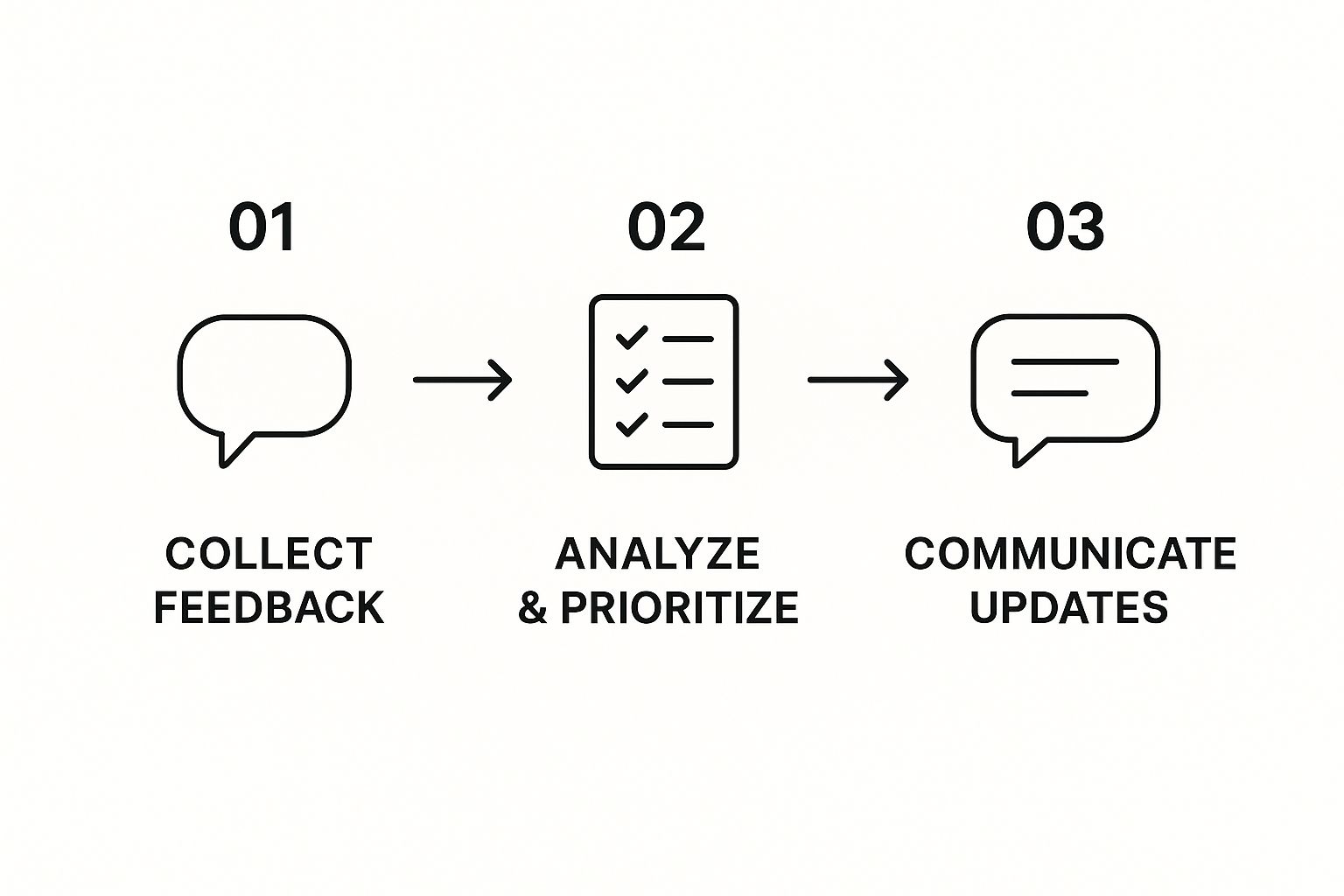
The key takeaway here? Don't just react. Every piece of input needs to be thoughtfully considered before you respond.
A Smart Strategy for Scope Creep
The biggest challenge you'll face is scope creep. We've all been there—those little "can you just…" requests that seem harmless on their own but quickly add up to a mountain of unpaid work. A HubSpot report found that for 23% of agencies, managing client expectations is a huge source of stress, and scope creep is almost always the culprit.
Your best defense is a clear and consistent process. When a new request lands on your plate that's clearly outside the original agreement, your gut reaction might be to shut it down. Don't. Instead, try this simple approach to maintain your boundaries while keeping the client on your side.
- Acknowledge and Validate: First, show them you hear them. Something like, "That's an interesting idea. I can definitely see how that would be a great addition." This immediately signals that you're an ally, not an obstacle.
- Assess the Real Impact: Next, figure out what this really means for the project. How many more hours will it take? Will it delay the timeline? Does it need a bigger budget? Get specific numbers.
- Present Them with a Choice: Now, you frame the request as a business decision for them. This is where you shift from a potential argument to a collaborative choice.
Your role isn't to be a silent workhorse absorbing extra tasks. It's to be a strategic partner. Give your client a clear, professional assessment of what a new request will cost in both time and money. This empowers them to make a smart, informed decision and shows that you value your own work.
How to Turn a Standoff into a Partnership
Let's walk through a real-world example. Imagine your client suddenly decides they want a slick new animation on their homepage—something that was never discussed in the initial scope.
Instead of sighing and quietly adding it to your to-do list, try this:
"I love that idea for an animation. We can absolutely make that happen. Based on a quick assessment, building that will require about 15 extra hours of development, which would add $1,500 to the project cost. It would also push our launch date back by about three days. How would you like us to proceed?"
See the difference? You didn't say no. You said, "Yes, and here's what it will take." You've given the client all the information they need to decide if this new shiny object is truly worth the investment. The dynamic completely changes. You're no longer the vendor pushing back; you're the expert partner helping them make the best decision for their business.
Finishing Strong: How to Wrap Up a Project and Pave the Way for More
How you finish a project is every bit as important as how you start. Those final weeks can be the difference between a client thinking the project was "good" and them thinking it was "great." It’s your last chance to really shine, solidifying the relationship and opening the door for future work.
Think about it: a rushed, messy ending leaves a client feeling dropped and confused. But a thoughtful, professional wrap-up? That cements your reputation as a partner they can count on. It’s not just about zipping up some files and sending an invoice; it’s a structured offboarding that proves your value one last time.
The Project Post-Mortem: A Look Back to Move Forward
Before you officially close the books on a project, you absolutely need to hold a wrap-up meeting or post-mortem. This isn't a time to point fingers or dwell on what went wrong. Instead, it’s a chance to sit down together, review the entire journey, celebrate the victories, and get some honest feedback.
This meeting is incredibly valuable for two reasons:
- Showcase Your Success: Go back to the original scope of work. Pull up those goals you set together at the beginning and walk them through exactly how you crushed each one. This is a tangible demonstration of the value you delivered.
- Gather Real-World Insights: This is your chance to ask candid questions. What did they love about the process? Where could things have been a bit smoother? What was the one thing that made the biggest impact for them?
This feedback is pure gold. Not only does it give you incredible insights to sharpen your own process, but it also makes your client feel genuinely heard.
A project isn’t really over until both you and the client agree on what success looked like. That final alignment is your last opportunity to manage their perception and leave them with a positive, lasting impression.
The Art of a Seamless Hand-Off
Once you’ve reviewed the project, the final step is the official hand-off. The goal here is simple: empower your client to take the reins without feeling like they’ve been thrown into the deep end. You want them to feel confident and capable, which means giving them everything they need to succeed on their own.
A truly top-notch hand-off package should include a few key things:
- A clear summary of all the final deliverables and exactly where to access them (think organized cloud folders, not a messy email chain).
- All necessary logins and credentials for any new platforms or tools.
- A short training video or a simple, custom "how-to" guide for their new website, system, or asset.
This level of detail shows you're invested in their long-term success, not just cashing the final check. It’s this kind of thoughtful approach that turns a one-off project into a long-term partnership. Mastering this final phase is one of the most powerful client retention best practices there is, making it easy for clients to hire you again and sing your praises to others.
Common Questions and Real-World Answers
Even with a perfect plan, you're going to run into tricky client situations. It just happens. Here’s how I’ve learned to navigate some of the most common bumps in the road, with advice you can put into practice today.
How Do I Politely Say "No" to a Client's Request?
The trick is to never actually say the word "no." A hard "no" feels like a wall, but a strategic response can turn a potential conflict into a productive conversation.
The best approach is to frame your response around the goals we've already agreed on. When a new idea comes up, acknowledge it, then gently tie it back to the existing budget or timeline.
For instance, try saying something like: "That's a really creative idea. To get that done before launch, we'd need to push the go-live date back by about two weeks. What if we add it to the top of the list for phase two?"
This does a few things:
- It validates their idea (you're not just shutting them down).
- It clearly states the consequences (a two-week delay).
- It offers a solution (let's do it next).
You've successfully protected the project's scope without being the bad guy. Instead, you come across as a strategic partner looking out for the project's success.
The goal is to show you're on their side, even when you can't accommodate a request. By focusing on shared project goals, you reinforce your partnership and keep the conversation productive.
What's the Best Way to Handle a Client Who Keeps Changing Their Mind?
Ah, the "scope creeper." We've all been there. The secret weapon here is a rock-solid initial scope and a formal change request process you laid out from the very beginning.
When a new request pops up, don't just informally agree to it. Guide them back to the process. Simply saying, "This sounds great. Let me get a formal change order drafted up for you to review," is often all it takes.
This isn't about creating bureaucracy for the sake of it. It's a natural friction point that forces a moment of consideration. When clients see their idea documented with its impact on the timeline and budget, they tend to become much more deliberate about which changes are truly necessary.
What if the Client Is Still Unhappy After Everything?
First things first: listen. Don't get defensive. Just let them talk and try to pinpoint the real source of their frustration. More often than not, it's a simple misunderstanding or a misaligned expectation.
Once you have the full picture, go back to the documentation together. Review the original Scope of Work (SOW), emails, and any other agreements.
- If you find that your team did miss something, own it immediately. Don't make excuses. Present a clear, proactive plan to make it right.
- If the work delivered matches the scope but their expectations were different, the conversation shifts. It's no longer about blame, but about finding a constructive way forward together.
At OneNine, we know that a great project is built on more than just code—it’s built on clear communication and a genuine partnership. If you’re looking for a team that can deliver outstanding results without the usual headaches, we’re ready to help. Find out how we make website management simple.


