

Building an email list is actually pretty simple at its core. You create something valuable that your audience genuinely wants—like a killer guide, a handy template, or an exclusive video—and offer it up for free. All they have to do is share their email address to get it.
It's a straightforward value exchange. This simple trade turns a casual website visitor into someone you can build a real connection with, and it's the bedrock of every single successful email list out there.
Why Your Email List Is Your Most Valuable Business Asset
Think about your social media followers for a second. It's like you're renting an apartment. Sure, you can furnish it and have people over, but the landlord—the social media platform—can change the rules anytime. An algorithm update can decimate your reach overnight, or they could even shut your account down with little warning.
Learning how to build an email list is like buying your own home. It’s an asset you own and control completely.
This ownership gives you a direct, stable line to your most loyal fans. You're no longer fighting for attention in a noisy, crowded feed or praying the algorithm shows your content to the right people. You’re building a reliable channel to nurture relationships and create predictable growth for your business.
The Power of a Direct Connection
An email list is so much more than a database of contacts. It’s a community you’ve built, one person at a time. This direct line of communication is a game-changer, allowing you to:
- Build Real Loyalty: When you consistently show up in someone's inbox with helpful, valuable content, you build a level of trust that a fleeting social media post just can't match.
- Generate Predictable Revenue: Got a new product or a special offer? You can announce it directly to a group of people who have already raised their hand and said they're interested in what you do.
- Get Honest Feedback: Email is a two-way street. It's the perfect place to send out a quick survey, ask a question, and truly understand what your audience is struggling with.
The real magic of an email list isn't about having a huge number of subscribers. It’s about the quality of the relationship you cultivate with each person. You shift from shouting into a crowd to having a real conversation.
The Tangible Impact on Your Bottom Line
A well-managed email list isn't just a feel-good marketing channel; the financial returns are massive. In fact, some marketers have reported a staggering 760% increase in revenue just from sending targeted, segmented campaigns. It shows you just how powerful this asset can be when used correctly.
At the end of the day, your email list is one of the most resilient parts of your business. It insulates you from the whims of social media platforms and gives you the power to build a lasting connection with your audience. Figuring out the long-term value of your list often comes down to driving engagement and brand awareness, making sure every email strengthens your brand and boosts your bottom line.
Choosing Your List Building Tech Stack
Before you can even think about collecting emails, you need to decide where that list is going to live. This is your Email Service Provider (ESP), and trust me, picking the right one from the get-go will save you a world of headaches later on. A bad fit now means a painful migration in the future.
Think of your ESP as the central hub for your entire email marketing operation. It’s not just a digital address book; it’s the machine that sends your welcome emails, houses your sign-up forms, and ultimately helps you build a relationship with your subscribers.
This whole process, from offering a valuable freebie (or "lead magnet") to getting that new subscriber onto your list, is powered by your tech.
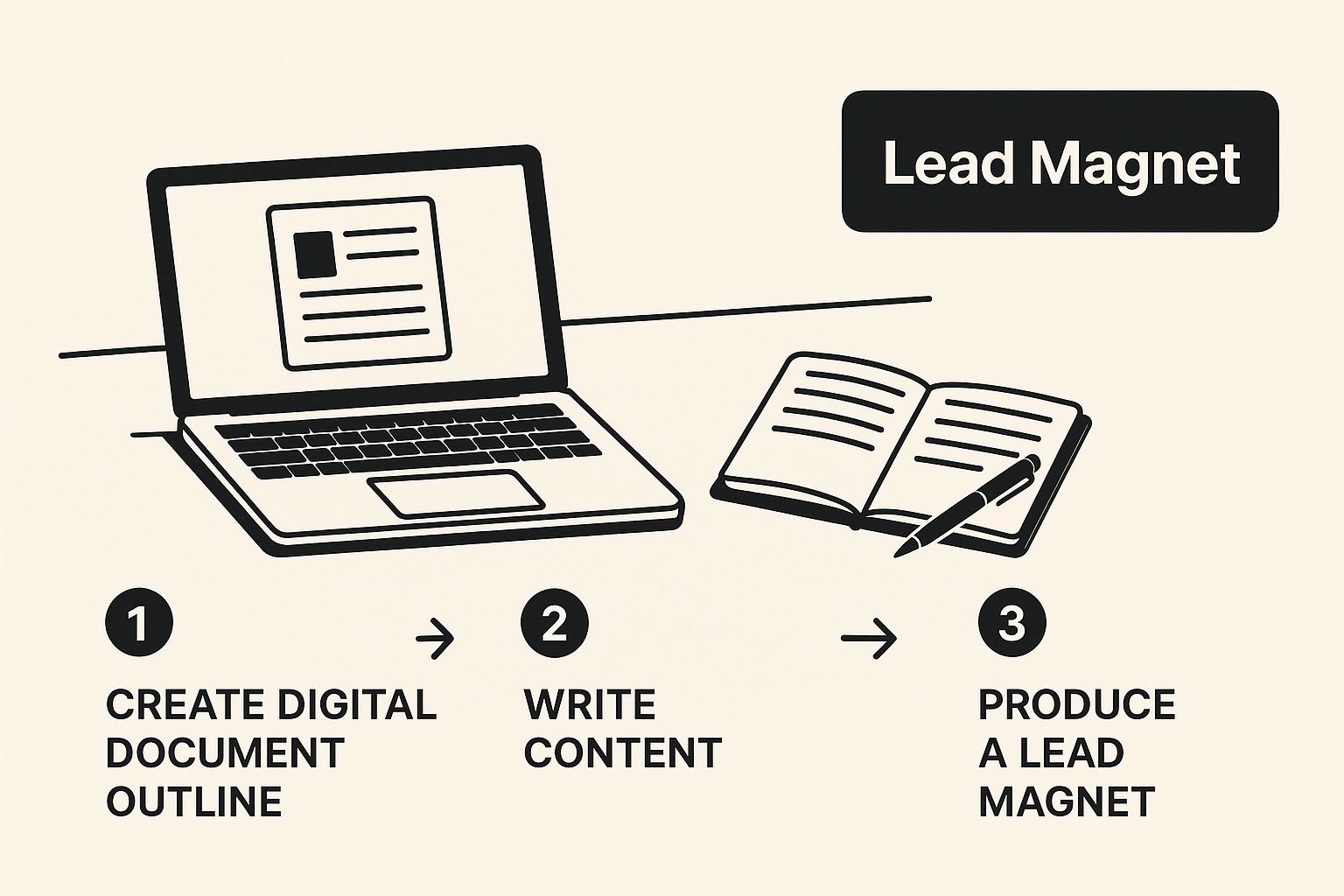
As you can see, every piece of the puzzle relies on having the right tools in place and working together smoothly.
What to Look for in an ESP
When you're starting out, it's easy to get overwhelmed by a million different features. My advice? Ignore the noise and focus on the fundamentals—the things you absolutely need to grow your list.
Here are the non-negotiables:
- Easy-to-Use Form Builders: How simple is it to create and pop a clean-looking sign-up form onto your website? This is your primary way of capturing leads, so it can't be clunky.
- Basic Automation: You must be able to set up a "welcome sequence." This is just an automated email (or series of emails) that goes out to every new person who signs up, delivering their freebie and introducing them to your brand.
- Audience Segmentation: As your list grows, you won't want to send the same email to everyone. Look for the ability to "tag" subscribers based on what they're interested in or which form they used to sign up.
The best ESP is the one you'll actually use. If the interface feels like you need an engineering degree to navigate it, you'll avoid it. Start with a tool that feels intuitive and lets you focus on your marketing, not on wrestling with software.
A Quick Look at Your ESP Options
Choosing an ESP often comes down to your current stage and budget. A beginner doesn't need the same horsepower as a large company, and a growing business will quickly outgrow a free plan's limitations. Here's a simple breakdown to help you see where different platforms fit.
Email Service Provider Feature Comparison
| Feature | Beginner-Friendly (e.g., Mailchimp) | Growth-Focused (e.g., ConvertKit) | Advanced/Enterprise (e.g., HubSpot) |
|---|---|---|---|
| Primary Focus | Simple newsletters, basic list management. Great for starting out. | Built for creators and marketers. Focus on automation and segmentation. | All-in-one marketing, sales, and CRM platform. |
| Ease of Use | Very intuitive drag-and-drop editor. Easiest to learn. | Clean interface, but with a steeper learning curve for advanced automation. | Can be complex due to the sheer number of features. Requires training. |
| Automation | Basic single-step automations on free/lower tiers. | Powerful visual automation builder. A key strength. | Extremely sophisticated workflow automation tied to the full CRM. |
| Segmentation | Basic list- and tag-based segmentation. | Flexible tagging system is core to the platform. | Deep segmentation based on user behavior across website, sales, etc. |
| Pricing Model | Free tier available. Pricing is subscriber- and send-based. | Premium-priced. Primarily subscriber-based pricing. | Expensive. Tiered pricing based on contacts and feature sets. |
This table isn't exhaustive, but it should give you a good sense of how the market is tiered. Don't overbuy for your current needs, but do think about where you'll be in a year or two.
Beyond the ESP: Your Supporting Tools
While your email provider does the heavy lifting, a few other tools can seriously amplify your results. You don't need them from day one, but they're worth knowing about.
A dedicated landing page builder like Leadpages or Instapage can be a total game-changer. These tools let you build simple, laser-focused pages with one goal: getting someone to sign up. By removing all the usual website distractions (like navigation menus and sidebars), they can boost your conversion rates significantly.
You might also look into tools for creating pop-ups and slide-in forms. I know, I know—pop-ups can be annoying. But when used thoughtfully, they can grab a visitor's attention right before they leave, giving you one last chance to get them on your list.
The goal isn't to buy the most expensive software. It’s about building a practical toolkit that makes it as easy as possible for people to say "yes" to joining your email list.
Creating Lead Magnets People Actually Want
Let's be honest: an email address is personal. People don't just hand it out to anyone. To get someone to trust you with their inbox, you've got to offer something genuinely valuable in return. This is where your lead magnet comes in—it’s that can't-miss freebie that convinces a casual visitor to become a subscriber.
But forget the tired advice about offering a generic "free ebook." A great lead magnet isn't about the format. It's about solving a real, nagging problem for your ideal customer. It needs to give them a quick, tangible win that leaves them thinking, "Wow, if this is what they give away for free, their paid stuff must be incredible."
This simple value exchange is the foundation of building an email list full of actual potential customers, not just people hunting for freebies. Your offer needs to feel like a generous gift, not some sneaky marketing trick.
Figure Out What People Are Struggling With
Before you even think about creating something, you need to get inside your audience's head. What problem are they trying to solve right now? A lead magnet that hits the mark zeroes in on a specific roadblock and offers a clear, immediate solution. Don’t guess. Do your homework.
Here are a few ways I uncover these pain points:
- Snoop around your own comments. Look at your blog comments and social media DMs. What questions keep popping up over and over again? That's your goldmine.
- See what's already popular. Check your analytics. If a blog post on a specific topic is getting all the traffic, that's a huge clue. A lead magnet that goes deeper on that same topic is a pretty safe bet.
- Just ask them! You'd be surprised what you can learn from a simple one-question poll on Instagram Stories or in a survey to your existing customers.
For example, imagine a marketing agency sees that their blog post on "Instagram Reel Ideas" is their most popular piece of content. Instead of making a generic "marketing guide," they could create a "30-Day Instagram Reel Content Calendar" template. See the difference? It's specific, actionable, and directly solves a problem their audience has already told them they have.
A successful lead magnet promises one small transformation. It doesn't need to solve every problem they have—just one problem, and solve it really, really well.
Pick a Format That Delivers a Quick Win
Once you know the problem, choose a format that gets the solution into their hands fast. People want instant gratification. Your new subscriber should be able to open your lead magnet and get a result in minutes, not days.
I've seen these high-converting formats work time and time again:
- Checklists: These are perfect for turning a complicated process into simple, bite-sized steps. Think something like "The Ultimate Website Launch Checklist."
- Templates: Who doesn't love a good template? You're saving your audience a ton of time by giving them a fill-in-the-blank resource like an email script, a social media graphic template, or a budgeting spreadsheet.
- Quizzes: People love quizzes. They're interactive, fun, and can give you amazing insights while providing your new subscriber with personalized, valuable results. For example: "What's Your Marketing Blind Spot?"
- Resource Guides: You can become a trusted source by simply curating a list of the best tools, articles, or resources on a topic. Something like, "The Top 10 Free Tools for Small Business Owners" is always a winner.
Building out these kinds of resources should be a core part of your content strategy. We actually break down how to create a framework for this in our website content strategy template.
Why This Still Matters So Much
Putting in the effort to create a truly valuable lead magnet is more than worth it. The potential audience is absolutely massive and it's not slowing down. The global email user base is projected to hit 4.6 billion users by 2025, and it’s expected to climb to over 4.8 billion by 2027. This isn't a dying medium; it's a constantly growing opportunity for businesses that take the time to build their email list the right way.
At the end of the day, your lead magnet is the very first promise you make to a new subscriber. Deliver something that provides immediate, undeniable value, and you’ll lay the groundwork for a long and trusting relationship.
Designing Opt-In Forms That Convert
https://www.youtube.com/embed/_6AelCUzS2k
So you've created an amazing lead magnet. That's the hook. But the opt-in form? That’s the gateway. A clunky, confusing, or demanding form will kill your momentum, no matter how good your freebie is.
Think of it like this: your form is the final handshake. It needs to be simple, confident, and make the other person feel like they're making a smart choice. The best ones are almost invisible; they feel like a completely natural next step, not a jarring interruption.
Key Elements of a High-Converting Form
Every great opt-in form, whether it’s a simple box or a full-blown pop-up, nails a few fundamental things. Getting these right is your first and most important job. You’d be surprised how small tweaks here can lead to massive gains in subscribers.
So, what should you focus on?
- A Compelling Headline: Please, don't just say, "Subscribe to Our Newsletter." Yawn. Lead with the benefit! Something like, "Get 10 New Recipe Ideas in Your Inbox Every Friday" instantly tells people what they're getting. It answers the "what's in it for me?" question before they even have to ask.
- Benefit-Driven Copy: Keep the body text short and punchy. A quick sentence or a few bullet points is all you need to sell the value. Don't list features; focus on the outcome your new subscriber will get.
- A Frictionless Call-to-Action (CTA): The text on your button matters more than you think. Generic words like "Submit" or "Download" are boring. Try something that mirrors what the person wants to do, like "Send Me the Checklist!" or "Get Instant Access!" It creates a little spark of excitement.
The single biggest mistake I see is asking for too much information. Every extra field you add—first name, last name, phone number—is another reason for someone to give up. Unless you have an immediate, specific plan for that data, stick to just the email address.
Strategic Placement for Maximum Visibility
Where you put your forms is just as critical as what's on them. The goal is to catch someone's eye at the exact moment they're most interested, without annoying them or getting in their way.
Here are a few high-impact spots I always recommend:
- Embedded Within Relevant Blog Posts: If someone is reading a 2,000-word guide on a topic, they are red-hot leads. Placing a form for a related lead magnet right in the middle of that post is a no-brainer.
- Website Footer: This is standard practice for a reason. It's not intrusive, and anyone who scrolls all the way to the bottom of your page is clearly engaged. It’s the perfect place for a clean, simple sign-up offer.
- Exit-Intent Pop-ups: These only appear when a user's cursor moves toward the back button or to close the tab. It’s your last chance to offer them something valuable before they bounce, and they work surprisingly well without disrupting the initial browsing experience.
If you really want to level up, look into advanced strategies for creating high-converting landing pages. A dedicated page removes all the other distractions and gives your visitor one single action to focus on: subscribing.
At the end of the day, you want signing up to be the easiest, most obvious decision a visitor makes on your site. By pairing a clear, benefit-driven message with smart placement, your forms stop being just boxes and start becoming powerful conversion machines.
Getting the Right People to See Your Offers
You can have the world's best lead magnet and a beautifully designed sign-up form, but they won't do you any good if no one ever sees them. The next real challenge is getting the right kind of traffic to your offers. We're not just looking for a flood of random clicks; we want to attract people who are genuinely interested in what you have to say.
I like to think about traffic generation in two buckets: on-site and off-site. On-site strategies are all about converting the visitors you already have. Off-site tactics, on the other hand, are about bringing fresh, qualified eyes to your content. A truly effective email list-building plan needs a healthy mix of both.
First, Maximize Your Own Website's Traffic
Your quickest and easiest wins are sitting right on your own website. People are already visiting, reading your content, and getting to know you. The key is to make your offer impossible to miss at the exact moment they're most engaged.
-
Go Where Your Readers Are: Dive into your website analytics and pull up your top 5-10 most popular blog posts. These pages are proven traffic magnets. Go back into those articles and strategically place your opt-in form. If you have a popular post on social media tips, an offer for a "Content Calendar Template" is a perfect, no-brainer fit.
-
Create a Resource Library: This is a simple but powerful one. Build a dedicated page on your site that acts as a central hub for all your best freebies. You can link to it from your main navigation menu or your website's footer, giving visitors one clear place to see all the value you’re providing.
These on-site tweaks are foundational. To really take things to the next level, you should explore these https://onenine.com/10-effective-website-optimization-strategies-for-success/ to make sure your entire site is a lead-capturing machine.
Quick tip: Don't sleep on your "About" page. It's often one of the most visited pages on a website. People go there because they want to connect with you. Placing a soft call-to-action to join your email list here can be surprisingly effective.
Find New Audiences Beyond Your Own Site
Once you've optimized your own turf, it’s time to venture out and meet your ideal subscribers where they already hang out. This is all about being helpful and valuable in other communities, not just showing up to spam your links.
Creating great lead magnets is one half of the equation; the other is building a thriving online community where you can consistently introduce potential subscribers to what you offer.
Here are a few off-site tactics that have always worked well for me:
-
Guest Posting: Write a high-value article for another blog in your niche. This puts your expertise right in front of a brand new, highly relevant audience. The key is to make sure your author bio includes a clear call-to-action that links directly to a landing page for your lead magnet.
-
Collaborative Webinars: Team up with a peer who serves a similar audience but isn't a direct competitor. Host a joint webinar where you both teach something valuable. At the end, you can both pitch your email lists. It’s a win-win that delivers incredible value to everyone who attends.
-
Podcast Interviews: Getting booked as a guest on podcasts is a fantastic way to reach an engaged audience that's ready to learn. During the conversation, you can naturally mention your lead magnet as a helpful resource for listeners who want to go deeper on the topic.
This kind of multi-channel approach is what creates a steady, sustainable flow of qualified traffic. It's a consistent effort, but the payoff is huge. When you consider that email still boasts average open rates around 35-42% and a mind-blowing ROI of $42 for every $1 spent, you know it's a channel worth investing in.
Answering Your Top List-Building Questions
Getting started with an email list can feel a bit overwhelming. A few questions always seem to surface right at the beginning, and it's easy to get bogged down in the details, worried you're making a huge mistake.
Let's clear the air on some of the most common hangups so you can start growing your list with confidence.
How Big Does My List Really Need to Be?
This is usually the first question on everyone's mind. The short answer? There's no magic number.
I've seen it time and time again: a small, hyper-engaged list of just 100 people who genuinely love what you do will run circles around a list of 1,000 subscribers who couldn't care less. Those 100 people are the ones who will actually click, reply, and buy.
Forget the vanity metrics. Your focus from day one should be on attracting the right people. Quality is everything.
Is It Ever Okay to Buy an Email List?
This one's a hard no. Simple as that. Never, ever buy an email list.
Think of it this way: these people have no idea who you are and never asked to hear from you. It’s the digital equivalent of cold-calling someone at dinner. Best case, they ignore you. Worst case, they report you as spam.
Buying a list is like trying to build a house on quicksand. It instantly tanks your sender reputation with services like Gmail and Outlook, making it almost impossible to reach the people who actually signed up. The short-term shortcut just isn't worth the long-term damage.
On top of that, you could be running into legal trouble with privacy laws like GDPR. Just don't do it.
How Often Should I Email My List?
Once someone joins your list, how often should you pop into their inbox? The key here is consistency, not just frequency. A solid welcome email (or a short series) is absolutely essential. It's your chance to deliver on your promise and set the tone for your relationship.
After that initial welcome, it’s all about finding a sustainable rhythm.
- Weekly newsletters are fantastic for staying top-of-mind and sharing fresh content.
- Bi-weekly updates work great if you don't have enough to say every week but want to keep the connection warm.
- Monthly roundups can be perfect for recapping your best stuff without cluttering inboxes.
The goal isn't just to show up; it's to deliver value every single time you hit send. This is where great email campaign management is your secret weapon.
Remember, building an email list is a marathon, not a sprint. Focus on creating genuine connections, and you’ll build one of your business's most valuable assets.
At OneNine, we specialize in creating powerful websites that turn visitors into loyal subscribers. If you need a partner to build a strong foundation for your digital marketing, let's talk about how we can help.


