

Why Most Brand Strategies Fail (And How Templates Save You)

Creating a brand strategy without a brand strategy template is like trying to build a house without blueprints. It's possible, but the results are likely to be messy and unstable. A template provides the necessary structure and guidance, ensuring a more solid and effective outcome. It acts as a roadmap, helping you align all your branding efforts with your core values and messaging.
The Dangers of Ad-Hoc Branding
Many businesses make branding decisions on an ad-hoc basis, without a cohesive strategy. This can lead to inconsistent messaging, confusing visuals, and a fragmented brand identity. Imagine a company with different logos on its website and business cards. This kind of inconsistency can damage customer trust and hinder brand recognition. A structured template helps avoid these pitfalls.
Why Templates Are Essential
Brand strategy templates have become indispensable tools for businesses. They provide the framework necessary for a consistent and recognizable brand identity. They also streamline the branding process, saving valuable time and resources. A well-designed template guides you through each step, ensuring you cover all the essential components.
Unleashing Creativity, Not Stifling It
Some believe that templates stifle creativity, but this is a misconception. Templates actually free up creative energy by providing a solid foundation. Think of a musician using sheet music. The notes provide structure, but the musician still has the freedom to interpret and express the music in their own unique way. Similarly, a brand strategy template provides a framework, but it doesn't dictate the specific creative elements. You can still develop compelling messaging and visuals that align with your overall strategy. To see how your brand template fits into a larger SEO strategy, take a look at this article: SEO Strategy Template. In 2025, brand strategy templates are increasingly vital for businesses looking to improve brand recognition and profitability. Consistent branding across all platforms can increase revenue by up to 23%. This demonstrates the importance of a template for maintaining consistent messaging and visual identity. For example, according to Digital Silk's 2025 branding statistics, 64% of consumers say shared values are the main reason they connect with a brand. This highlights how value-driven messaging, facilitated by a template, can boost customer loyalty. A well-defined brand strategy template helps build a stronger, more consistent brand that resonates with your target audience and drives business growth.
The Eight Critical Components Your Brand Template Needs Now

A robust brand strategy template is essential for any business looking to establish a strong brand identity. It provides a framework for maintaining consistency and ensuring all aspects of your brand work together effectively. This section will explore eight crucial components that form the foundation of any successful brand strategy template.
1. Purpose Statement: Why You Exist
Your purpose statement goes beyond simply generating profit. It defines the core reason your brand exists. It answers the fundamental question: Why are we here? A well-defined purpose statement, much like Patagonia's commitment to environmentalism, can deeply resonate with both customers and employees.
This clear sense of purpose acts as an internal compass, guiding decisions and fostering a strong sense of identity within the organization.
2. Mission Statement: What You Do
Your mission statement outlines the actions your brand takes to fulfill its purpose. It's a concise declaration of what you do and for whom you do it. However, it's important to avoid generic, uninspiring mission statements.
Focus instead on concrete actions that showcase your brand's unique approach and commitment to its purpose.
3. Vision Statement: Where You're Going
The vision statement paints a picture of your brand's desired future. It articulates the long-term goals and aspirations you strive to achieve. This forward-looking perspective inspires action and provides a clear destination for your brand's journey.
Consider Tesla's vision of accelerating the world’s transition to sustainable energy. This ambition fuels innovation and sets a bold objective.
4. Target Audience Personas: Who You Serve
Understanding your target audience is paramount. Developing detailed personas that delve deeper than basic demographics is crucial for crafting resonant messaging. These personas should embody the needs, motivations, and behaviors of your ideal customer.
This in-depth understanding enables more effective communication and personalized customer experiences.
5. Brand Positioning Statement: How You Stand Out
A compelling brand positioning statement is key to differentiating your brand in a crowded market. It articulates how your brand uniquely addresses customer needs and sets you apart from competitors. Think of Volvo's focus on safety, a key differentiator in the automotive industry.
This distinct position attracts a specific customer segment seeking that particular value proposition.
6. Brand Values: What You Believe In
Clearly defined brand values form the foundation of your brand's identity. These core principles guide your actions, decisions, and interactions with customers. Values like sustainability, innovation, or community engagement shape your brand culture and influence how customers perceive your brand.
Authentic brand values foster trust and build lasting customer relationships.
7. Competitor Analysis: Understanding the Landscape
Thorough competitor analysis is vital for uncovering opportunities and mitigating potential risks. Understanding your competition's strengths and weaknesses allows you to strategically position your brand.
Analyzing their messaging, target audience, and market share helps identify your unique advantages and informs data-driven marketing strategies.
8. Brand Messaging: How You Communicate
Defining your brand messaging ensures consistent communication across all platforms. This includes the tone, style, and language used in your marketing efforts. Consistent messaging builds brand recognition and ensures your communication effectively reaches your target audience.
Consider the voice and personality you wish to project. Consistent communication across all channels fosters familiarity and reinforces brand identity.
To help you build a solid brand strategy, let's look at the essential components in more detail:
A brand strategy template helps you define and organize your brand's identity, values, and messaging. Here's a breakdown of the essential elements:
Brand Strategy Template Components
| Component | Purpose | Importance (1-5) | Implementation Difficulty (1-5) |
|---|---|---|---|
| Purpose Statement | Defines the core reason for your brand's existence beyond profit. | 5 | 3 |
| Mission Statement | Outlines the actions your brand takes to achieve its purpose. | 4 | 2 |
| Vision Statement | Articulates the long-term goals and aspirations of your brand. | 4 | 3 |
| Target Audience Personas | Represents the needs, motivations, and behaviors of your ideal customer. | 5 | 4 |
| Brand Positioning Statement | Clarifies how your brand uniquely addresses customer needs and stands out from competitors. | 5 | 4 |
| Brand Values | Defines the core principles that guide your brand's actions and decisions. | 5 | 3 |
| Competitor Analysis | Identifies opportunities and potential pitfalls by understanding your competition. | 4 | 3 |
| Brand Messaging | Defines the tone, style, and language used in your brand's communication. | 4 | 2 |
This table provides a clear overview of each component, its importance, and the relative difficulty of implementation. Prioritizing the high-importance components will lay a solid foundation for your brand strategy.
These eight components, when integrated into your brand strategy template, create a powerful framework for building a recognizable and successful brand. They provide a roadmap for consistent messaging, informed decision-making, and ultimately, achieving your brand's long-term goals.
Building Trust Through Strategic Brand Architecture
Trust is fundamental to a brand's success. It's the foundation upon which loyal customers and thriving businesses are built. This section explores how a well-defined brand strategy template can cultivate and reinforce customer trust. This involves selecting the right template components and ensuring they align with your brand's authentic identity.
Trust Signals and Template Elements
A strong brand strategy template includes several key elements that communicate reliability and authenticity to customers. Transparency in your brand's operations and communication is essential. This could involve openly sharing information about sourcing, pricing, or even company challenges and how you've overcome them. Consistency is another vital trust signal. A brand that consistently delivers on its promises, in terms of product quality, customer service, or brand messaging, cultivates reliability and builds customer confidence. Clearly articulating your brand's values allows customers to connect with your brand on a deeper level, fostering a sense of shared purpose and strengthening the bond of trust.
Embedding Trust Throughout Customer Touchpoints
Integrating trust signals within your brand strategy template is just the beginning. The next crucial step is putting those signals into action across all customer touchpoints. For instance, if authenticity is a core value, ensure your marketing reflects genuine stories and experiences instead of polished, impersonal messaging. If customer focus is key, implement systems for gathering and acting on customer feedback. This shows your commitment to improvement and customer satisfaction. This approach reinforces trust at every interaction, turning casual customers into loyal advocates.
Measuring and Adapting Trust-Building Strategies
A key statistical insight into brand strategy templates is their impact on customer trust and engagement. According to 2025 data from DesignRush, 81% of consumers say brand trust is a deciding factor in their purchasing decisions. Brand strategy templates help companies clearly define and communicate core values, directly affecting this trust metric. Furthermore, the same study shows that high-trust brands grow 2.5 times faster than competitors, highlighting how a structured template can fuel business growth. Find more detailed statistics here.
Maintaining and Evolving Trust
While trust may seem intangible, it can and should be measured. Track metrics like customer satisfaction, brand perception, and advocacy. These quantitative measures offer valuable insights into the effectiveness of your trust-building efforts. However, trust isn't static. Market dynamics and consumer expectations change. Your brand strategy template should be a living document, regularly reviewed and updated to reflect these changes. This ensures your brand remains relevant, trustworthy, and positioned for long-term success.
Rebuilding Trust After a Setback
Brands sometimes face situations that erode trust. A product recall, data breach, or communication misstep can damage a brand's reputation. In these cases, strategically revising your brand strategy template is crucial for rebuilding trust. This involves acknowledging mistakes, outlining steps for improvement, and recommitting to core values that resonate with your audience. Brands like Johnson & Johnson, which successfully navigated the Tylenol crisis, demonstrate that rebuilding trust is possible, even after a significant setback. By weaving trust-building strategies into the core of your brand strategy template, you create a foundation for lasting customer relationships, increased loyalty, and sustainable growth.
From Blank Page to Brilliant Brand: Your Step-by-Step Guide
Creating a comprehensive brand strategy template takes time and planning. This roadmap will guide you through each stage, from initial discussions with stakeholders to the final validation and implementation. We'll break down each phase into manageable steps, offering workshop structures, decision-making frameworks, and collaborative techniques to help you avoid common problems like groupthink and founder bias. You'll learn how successful brands navigate internal disagreements about positioning, articulate distinctive value propositions, and turn abstract ideas into actionable guidelines. We'll also provide adaptable templates for various business models, whether you're B2B, B2C, or working in a hybrid environment.
Discovery: Understanding Your Foundation (Month 1)
The first phase focuses on gathering key information and insights. This involves conducting stakeholder interviews to understand their perspectives on the brand. For example, interview executives, marketing team members, and customers for a well-rounded understanding of the brand's current state. A competitive analysis will also help illuminate the market and identify opportunities. This research helps pinpoint your target audience and their needs, informing the next phases of template development.
Development: Building Your Brand Strategy Template (Months 2–3)
This is where your brand strategy template takes shape. You'll translate the information gathered in the Discovery phase into actionable elements. A key activity is crafting a brand positioning statement. This statement should clearly communicate your brand's unique value and resonate with your target audience. You'll also define your brand's personality, voice, and visual identity. These elements create a cohesive brand experience. Establishing clear brand guidelines ensures consistency across all your communication channels.
Launch: Implementing and Measuring Your Success (Month 4)
The final phase focuses on implementation and measurement. This involves rolling out your brand strategy template across the organization and training teams on how to use it. Implementation is an ongoing process that requires monitoring and refinement. Track key metrics to assess your brand strategy's effectiveness. For example, monitor brand awareness, customer engagement, and market share. This helps you identify areas for improvement and adapt to changing market dynamics. This iterative process ensures your brand strategy template stays a dynamic tool for growth and success.
To help visualize the timeline, we've created a table outlining the key phases and activities:
A practical timeline showing the steps, responsibilities, and estimated time requirements for developing a comprehensive brand strategy template.
| Phase | Key Activities | Responsible Parties | Estimated Time | Deliverables |
|---|---|---|---|---|
| Discovery | Stakeholder Interviews, Competitive Analysis, Target Audience Research | Marketing Team, Leadership | 1 Month | Research Reports, Target Audience Profile |
| Development | Brand Positioning Statement, Brand Voice & Personality Definition, Visual Identity Development, Brand Guidelines | Marketing Team, Design Team | 2-3 Months | Brand Strategy Template, Style Guide |
| Launch | Template Rollout, Team Training, Performance Monitoring, Refinement | Marketing Team, All Teams | 1 Month | Implemented Brand Strategy, Performance Reports |
This table provides a clear overview of the process, from initial research to final implementation. Each phase has specific deliverables, ensuring a structured and efficient approach to building your brand strategy.
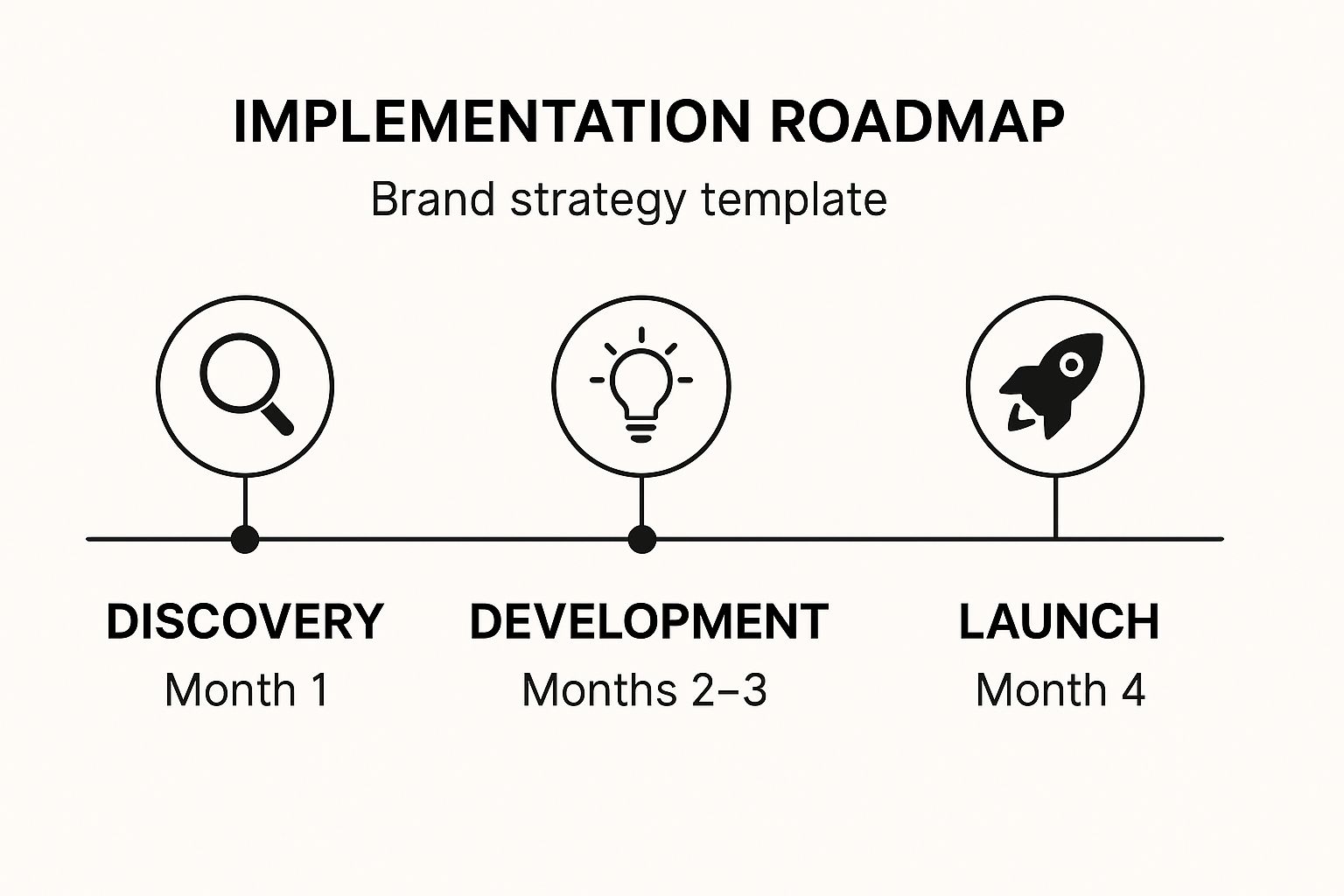
This infographic visualizes the four-month process, from the initial Discovery phase in Month 1 to the final Launch phase in Month 4. This phased approach ensures a thorough and structured process. By following this timeline, you can build a strong brand strategy that resonates with your target audience and drives business growth.
Making Your Brand Template Work Across Your Organization
A well-crafted brand strategy template is essential, but it's only effective if implemented correctly. This means weaving your template into the core of your organization—its culture, workflows, and daily operations. This section explores the practical challenges of integrating your brand strategy template into your business.
Training Your Team For Success
Effective training is crucial. It connects the theoretical framework of the template with its practical use. Your team needs to understand not only what the template contains, but also how to apply it in real-world situations. This goes beyond a simple presentation. Consider interactive workshops demonstrating the template's use in various scenarios.
For instance, customer service representatives could use role-playing exercises with brand-approved language to address common customer complaints. This hands-on approach helps solidify their understanding and practical application of the template.
Establishing Governance and Maintaining Brand Integrity
A clear governance structure ensures consistent branding without hindering individual creativity. This means defining roles and responsibilities for maintaining and updating the brand strategy template. A designated brand manager can oversee compliance. A cross-functional brand council can provide input and ensure the template stays relevant across different departments. This balanced approach helps the brand adapt while preserving its core identity.
Leveraging Technology for Brand Democratization
Technology is key to democratizing access to the brand strategy template while maintaining compliance. A centralized brand portal can house the template, making it accessible to everyone. This portal can also include brand assets, usage guidelines, and FAQs, ensuring consistency across all communications.
Integrating brand guidelines within existing workflow tools, like Mailchimp for email marketing or Hootsuite for social media management, can also streamline content creation. This easy access empowers employees to embody the brand while minimizing inconsistencies. Companies dedicate an average of 12-20% of their marketing budget to branding, demonstrating the recognized value of brand strategy templates. Learn more about marketing budget allocation here.
Navigating Change Management and Overcoming Roadblocks
Implementing a brand strategy template often requires significant organizational change. Effective change management is essential for smooth adoption. This includes clearly communicating the template's benefits, addressing employee concerns, and providing ongoing support. Creating internal brand champions within different teams can further reinforce brand standards organically. These champions serve as resources, answering questions and promoting template adoption within their departments.
Anticipating potential roadblocks is also important. Resistance to change, unclear guidelines, and insufficient resources are common implementation challenges. Proactive communication, clear guidelines, and readily available support can minimize these issues. Addressing potential obstacles upfront allows for a smoother transition and maximizes the brand strategy template’s impact.
Measuring What Matters: Brand Strategy Performance Metrics

Beyond vanity metrics like social media followers, the true impact of your brand strategy template lies in measurable business outcomes. This means focusing on metrics that demonstrate tangible business growth, not just likes and shares. This section helps you develop a performance measurement framework connecting your brand strategy to real-world results. A well-structured brand strategy template provides the foundation for consistent messaging and a cohesive brand identity, positively influencing key performance indicators.
Identifying Key Performance Indicators (KPIs)
The first step in measuring your brand strategy template's success is identifying the right Key Performance Indicators (KPIs). These KPIs should align with your overall business objectives and reflect your brand strategy's specific goals.
For example, if your brand strategy aims to increase customer loyalty, you might track metrics like customer retention rate and customer lifetime value. For B2B businesses, lead generation and conversion rates could be crucial indicators of a successful brand strategy. B2C companies may focus on brand awareness and customer engagement.
Qualitative Vs. Quantitative Metrics
A robust measurement framework incorporates both qualitative and quantitative metrics. Quantitative metrics, like website traffic, conversion rates, and sales figures, provide concrete data points to track progress.
Qualitative metrics, such as customer feedback, brand perception surveys, and social media sentiment analysis, offer valuable insights into customer opinions and brand image. Combining both gives a holistic view of your brand strategy’s performance.
For instance, a rise in sales is a positive quantitative indicator. However, analyzing customer reviews offers valuable qualitative insights into product satisfaction or areas for improvement.
Isolating Brand-Driven Results
One challenge in measuring brand strategy effectiveness is isolating brand-driven results from other business variables. Market changes, competitive activity, or pricing strategies can influence business outcomes.
This requires careful analysis and attribution modeling to assess your brand strategy template's impact accurately. Comparing campaigns with consistent brand messaging to those without can help determine the brand's contribution to conversion rates. This helps demonstrate the tangible value of your brand strategy to stakeholders.
To effectively measure your brand strategy's impact, understand customer support metrics. Tracking the right customer support metrics enhances your understanding of customer satisfaction and support effectiveness, directly impacted by your brand strategy.
Setting Realistic Timelines and Communicating Brand Value
Establish realistic timelines for measuring your brand strategy's impact. Building a strong brand takes time. Expecting immediate results is often unrealistic. Depending on your industry and target audience, it may take months or even years to see significant shifts in brand awareness or customer loyalty.
Effectively communicating brand value to executive stakeholders requires clear and concise reporting. Create dashboards that visualize key metrics and demonstrate the link between brand performance and business outcomes. This ensures everyone is aligned on the value your brand strategy brings to the organization. Regularly reviewing and adapting your brand strategy template based on performance data is essential for long-term success. This iterative approach helps you stay relevant and ensures your brand resonates with your target audience.
Template to Triumph: Real-World Brand Strategy Success Stories
A strong brand strategy template provides the framework for building a successful brand. But how does this translate into real-world success? This section explores inspiring stories showcasing how different organizations leveraged brand strategy templates to transform their market positions. These examples highlight the power of a well-defined brand strategy, showcasing both the process and the positive results.
From Local Favorite to National Brand: The Story of Blue Bottle Coffee
Blue Bottle Coffee started small, operating from a farmer's market in Oakland, California. Their initial challenge? Standing out in a crowded coffee market. They developed a brand strategy template focused on quality, sustainability, and a meticulous approach to coffee making. This wasn't just marketing jargon; it was woven into every aspect of their business, from sourcing beans to brewing methods.
This dedication to detail, reflected in their branding, resonated with coffee lovers. The result? Blue Bottle Coffee grew from a local favorite to a nationally recognized brand with locations across the United States and Japan.
Rebranding for Relevance: How Old Spice Recaptured the Market
Old Spice, a classic American brand, faced the challenge of appealing to a younger demographic while retaining its loyal customer base. Their brand strategy template focused on a much-needed image revitalization. Embracing humor and creating quirky ad campaigns targeting a younger audience helped Old Spice shed its outdated image.
This rebranding effort not only attracted a new generation of customers but also re-engaged existing ones, ultimately driving significant growth.
Building a Global Brand From Scratch: The Rise of Airbnb
Airbnb faced the unique challenge of building trust in a new and unfamiliar type of market. Their brand strategy template emphasized community, authenticity, and unique travel experiences. This resonated with travelers looking for something more than just a hotel room.
Airbnb’s brand, built on trust and transparency, fostered a loyal community of both hosts and guests. This transformed the travel industry and established Airbnb as a global leader.
Small Business, Big Impact: How Warby Parker Disrupted the Eyewear Industry
Warby Parker entered the eyewear industry with a disruptive approach: offering affordable, stylish glasses online. Their brand strategy template focused on value, convenience, and social impact. Their "buy a pair, give a pair" program aligned their business with a social cause.
This resonated with customers seeking both affordability and ethical consumption. Warby Parker’s unique branding, combined with its social mission, fueled rapid growth and established the company as a major player in the eyewear market.
Key Takeaways From These Success Stories
These examples demonstrate that a well-defined brand strategy template can be invaluable for businesses of all sizes. Here are some key takeaways:
- Clarity of Purpose: A strong brand begins with understanding your core purpose and values.
- Authenticity: Be genuine and true to your brand identity. Customers value authenticity.
- Consistency: Maintain consistent messaging and visuals across all platforms.
- Adaptability: Be ready to adapt your brand strategy as your business and the market change. Tracking the right customer support metrics is crucial for measuring the effectiveness of your brand strategy and understanding customer satisfaction.
These success stories illustrate how a thoughtful template and consistent execution can lead to significant results. By applying these key takeaways to your own brand strategy, you can position your business for growth and lasting success. OneNine specializes in crafting compelling brand strategies. Visit OneNine today to learn more.


