

Así que ya estás listo para encontrar un desarrollador que te cree tu sitio web. El primer paso, y el más importante, no tiene nada que ver con entrevistas ni portafolios. Se trata de poner todo en orden.
Antes de siquiera pensar en buscar candidatos, necesitas un plan de proyecto bien definido. Esto es innegociable.
Sentando las bases para un proyecto exitoso
Abordar las entrevistas sin un plan claro es una receta para el desastre. Da lugar a conversaciones vagas, expectativas incoherentes y la temida "corrupción del alcance" que infla los presupuestos y los plazos. La parte más crucial de elegir un desarrollador web ocurre mucho antes de hablar con uno.
Esta fase inicial consiste en crear un resumen del proyecto simple pero eficaz. Considérelo como una hoja de ruta para su sitio web. No tiene por qué ser... 50 páginas documento; unas cuantas páginas bien definidas serán suficientes.
¿Cuáles son sus principales objetivos comerciales?
¿Qué es este sitio web? ¿Para qué? La respuesta no puede ser simplemente "tener presencia en línea". Necesitas ser específico. ¿Intentas...?
- ¿Generar clientes potenciales? Si es así, su sitio necesitará llamadas a la acción claras, formularios de contacto fáciles de usar y tal vez un recurso gratuito atractivo para capturar correos electrónicos.
- ¿Vender productos directamente? Esto significa que estás construyendo una tienda de comercio electrónico completa, que requiere páginas de productos, un carrito de compras y pasarelas de pago seguras.
- ¿Construir una comunidad? Es posible que necesite funciones como un foro, un blog con una sección de comentarios activa o áreas exclusivas para miembros.
- ¿Establecer autoridad de marca? En ese caso, un centro de recursos lleno de estudios de casos, documentos técnicos y un blog de expertos serían sus principales prioridades.
Definir estos objetivos ayuda a un posible promotor a comprender qué significa realmente el éxito para usted. Es la diferencia entre pedir "un coche" y pedir "una SUV familiar con buen consumo de gasolina para viajes largos". Uno es un deseo vago; el otro, una directiva clara.
¿Quién es su audiencia y qué necesita?
A continuación: ¿para quién estás creando este sitio? Dedica un momento a describir a tu cliente ideal. Esta información es valiosa: influye en las decisiones de diseño, la experiencia del usuario y toda la estrategia de contenido. Un sitio web creado para millennials expertos en tecnología se verá y se sentirá completamente diferente a uno dirigido a jubilados.
Una vez que conozca a su público y sus objetivos, enumere las características imprescindibles. Sea contundente y separe las "necesidades" absolutas de las "agradables". Para quienes buscan contratar específicamente a un desarrollador web, comprender los matices de... Dominar la contratación para ingeniería Los roles pueden brindarle una ventaja importante a la hora de encontrar el talento técnico adecuado.
Mis dos centavos: Un resumen del proyecto bien definido es la mejor defensa contra la falta de comunicación. Se convierte en la única fuente de información a la que tanto usted como su desarrollador pueden recurrir durante todo el proyecto, manteniendo a todos alineados y centrados.
Ahora, veamos qué tan rápido puede crecer un proyecto en función de lo que decidas incluir.
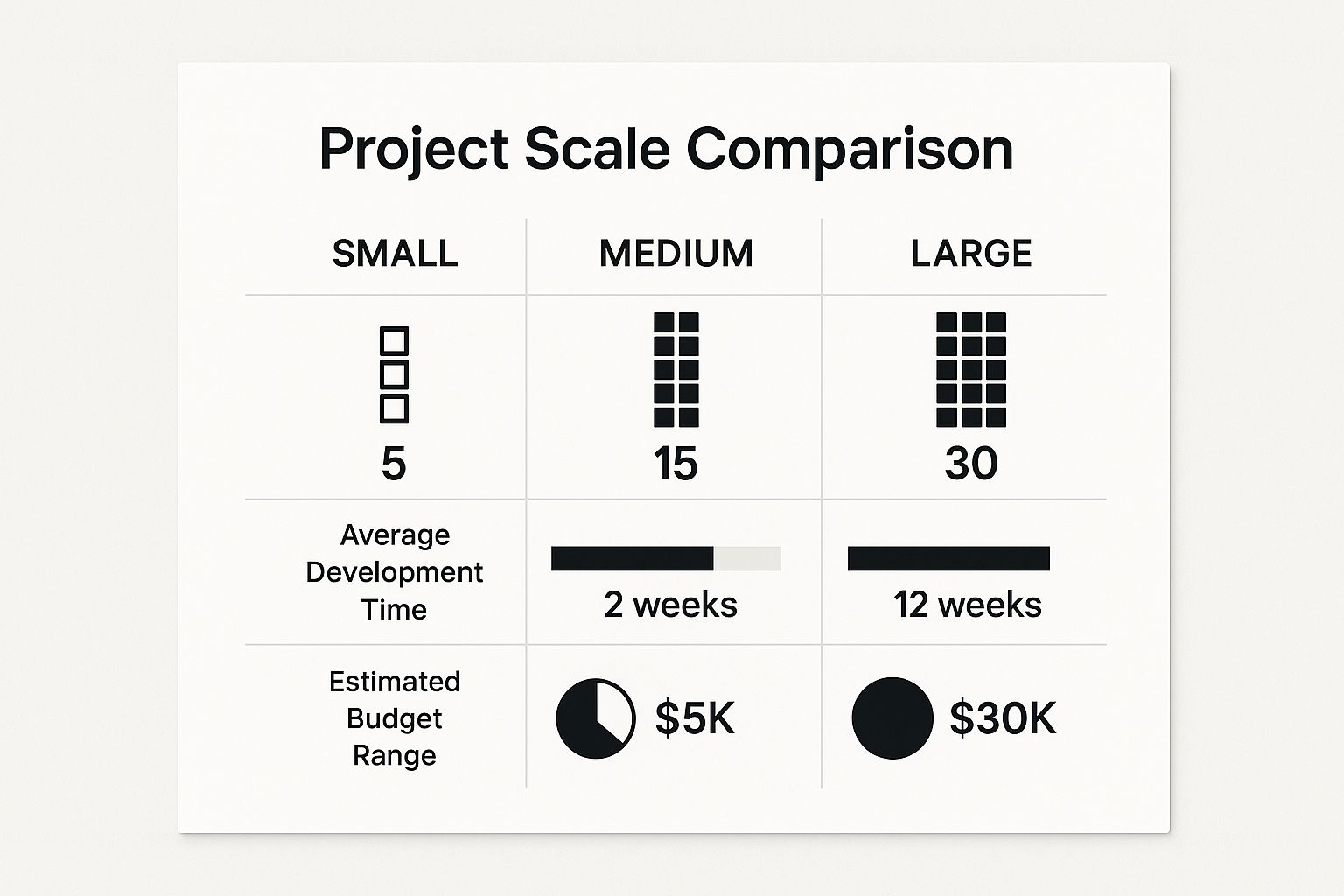
Como puede ver, cuantas más funciones añada, más tiempo y dinero deberá invertir. Es una ecuación simple, pero fácil de olvidar con la emoción de un nuevo proyecto. Tener claros los requisitos imprescindibles desde el principio evita que su proyecto se descontrole.
Analizando la cartera de un desarrollador
El portafolio de un desarrollador es tu primer vistazo real a lo que puede hacer. Es más que una simple galería de imágenes bonitas; es una colección de sitios web dinámicos que muestran sus habilidades en acción. Tu misión es ir más allá de lo superficial e interactuar con su trabajo como lo haría un cliente potencial. No te limites a mirar: haz clic, navega por las páginas y prueba cosas.
Empieza por abrir dos o tres de sus proyectos en vivo en tu teléfono. Esto es fundamental. Con más de 50% De todo el tráfico web proveniente de dispositivos móviles, una experiencia móvil torpe es un factor decisivo. ¿Es fácil de usar la navegación en una pantalla pequeña? ¿Las páginas llaman la atención o hay que esperar a que carguen?

Un portafolio sólido no solo se trata de la apariencia. Es una herramienta comercial funcional. Buscas a alguien que cree sitios web atractivos. y el eficaz: crear una experiencia de usuario fluida que realmente ayude a la empresa a alcanzar sus objetivos.
¿Tienen experiencia en tu mundo?
Aunque cualquier buen desarrollador probablemente pueda familiarizarse con los entresijos de una nueva industria, encontrar a alguien que ya haya creado sitios web para empresas como la suya le da una gran ventaja. Llegará con un conocimiento previo de las expectativas de sus clientes y su comportamiento en línea.
Piénsalo así: un desarrollador que ha creado una docena de sitios web de comercio electrónico para marcas de ropa sabe instintivamente que el proceso de pago debe ser impecable y que las fotos de los productos deben destacar. Por otro lado, alguien que se especializa en sitios web para bufetes de abogados sabe cómo crear un sitio que transmita confianza y autoridad.
Cuando un desarrollador tiene experiencia relevante, aporta mucho más que solo código al proyecto. Puede ofrecer asesoramiento estratégico real, sugiriendo funciones o diseños que han funcionado bien para otros en tu nicho. Este tipo de conocimiento puede ahorrarte mucho tiempo y hacer que tu sitio web sea más efectivo desde el lanzamiento.
No confíe solo en sus palabras: verifique las referencias
¿Encontraste un portafolio prometedor? ¡Genial! Ahora es momento de investigar para asegurarte de que la experiencia de trabajar con ellos sea tan buena como el resultado final. Pídele al desarrollador dos o tres referencias de clientes anteriores, idealmente de proyectos similares al tuyo.
Cuando contactes a estas referencias, ten preparadas algunas preguntas específicas. No preguntes simplemente "¿Quedaste satisfecho con el sitio?". Necesitas comprender la experiencia completa, de principio a fin.
A continuación se indican algunas cuestiones que conviene investigar:
- Comunicación: ¿Fue fácil contactar con el desarrollador? ¿Te mantuvieron al tanto con actualizaciones periódicas o tuviste que buscarlo?
- Oportunidad: ¿Cómo cumplieron con los plazos? Si se retrasaron, ¿cómo lo gestionaron?
- Presupuesto: ¿La factura final coincidió con el presupuesto inicial? ¿Hubo algún coste inesperado durante el proceso?
- Resolución de problemas: ¿Qué sucedió cuando les diste una opinión crítica o surgió un problema técnico? ¿Cómo respondieron?
Este tipo de retroalimentación directa te da la historia completa. Ver un portafolio impecable es una cosa, pero recibir reseñas honestas sobre la comunicación y la confiabilidad es lo que realmente te dice si has encontrado al socio adecuado. Para más consejos al respecto, consulta nuestra guía sobre Cómo elegir una agencia de diseño web Profundiza aún más en la selección del mejor equipo para su proyecto.
Más allá de la cartera: evaluación de las habilidades técnicas y estratégicas
Un portafolio impecable es genial, pero solo te cuenta la mitad de la historia. La verdadera medida del valor de un desarrollador reside en sus conocimientos técnicos y su pensamiento estratégico. La tecnología que elige es la base de tu sitio web: determina su velocidad, su seguridad y si puede escalar con tu negocio en el futuro. No necesitas ser un experto en programación, pero sí debes hacer las preguntas correctas para comprobar si realmente dominan el tema.
Un buen punto de partida es preguntarles sobre su enfoque básico. Un desarrollador verdaderamente hábil no solo crea sitios web, sino que diseña plataformas digitales de alto rendimiento. La confianza con la que puede abordar estos conceptos básicos revela claramente su nivel de experiencia.

Las habilidades técnicas no negociables
Piensa en estos como imprescindibles. Si un desarrollador se muestra impreciso o se retuerce cuando los mencionas, es una gran señal de alerta. Puede que te construyan algo que al principio parezca atractivo, pero es probable que se desmorone bajo presión.
- Diseño móvil primero: No se trata solo de que un sitio web se vea bien en un teléfono. Es una filosofía. Significa que diseñan la experiencia completa para los usuarios móviles. first y luego adaptarlo a computadoras de escritorio. Pídales que expliquen su flujo de trabajo priorizando los dispositivos móviles.
- Optimización de motores de búsqueda (SEO): ¿De qué sirve un sitio web impresionante si nadie lo encuentra? Un buen desarrollador entiende que el SEO está integrado desde el principio, no es una idea de último momento. Deberían hablar de código limpio, una estructura lógica del sitio y tiempos de carga rápidos que Google premia.
- Rendimiento y velocidad: La velocidad del sitio lo es todo. Afecta la paciencia del usuario, las tasas de conversión y el posicionamiento SEO. Pregúntales qué tácticas específicas utilizan para que un sitio web funcione de maravilla. Presta atención a aspectos como la optimización de imágenes, la minimización de código y las estrategias de almacenamiento en caché.
El rol de un desarrollador es más que solo codificar; debe ser su socio estratégico. Su trabajo es explicar por qué una determinada tecnología es la adecuada y cómo le ayuda a alcanzar sus objetivos comerciales, todo en un lenguaje sencillo.
¿Están construyendo para el futuro?
La web avanza a un ritmo vertiginoso, y necesitas un desarrollador que se mantenga al día, no que intente alcanzarlo. Su conocimiento de las herramientas modernas puede darte una gran ventaja. Por ejemplo, las aplicaciones web progresivas (PWA) pueden ver... 68% mayor tasa de participación que los sitios móviles estándar, y los chatbots impulsados por IA pueden mejorar la eficiencia del soporte hasta en un 60%Un desarrollador que domine estas áreas puede ofrecer un resultado mucho más potente.
Más allá del código, un desarrollador también debe comprender el panorama general de la creación de una marca digital. Una sólida comprensión de Mejores prácticas de marca para sitios web Es lo que separa a un técnico de un verdadero estratega digital.
A continuación se presentan algunos temas más avanzados para ver si están pensando en el futuro:
- CMS sin cabeza: ¿Han trabajado con plataformas headless? Esto demuestra que comprenden la necesidad de flexibilidad y rendimiento.
- Integraciones API: ¿Pueden hablar con confianza sobre la conexión de su sitio a sistemas comerciales críticos, como su CRM o plataforma de marketing por correo electrónico?
- Accesibilidad (a11y): ¿Cómo se aseguran de que el sitio web sea accesible para personas con discapacidad? Pregunte sobre su proceso.
En definitiva, buscas a alguien con la combinación perfecta de profundos conocimientos técnicos y una visión estratégica aguda. Al analizar a fondo su enfoque, tanto en los fundamentos como en la tecnología moderna, encontrarás un socio capaz de crear un sitio web que no solo funcione hoy, sino que esté preparado para lo que venga.
Navegando por los costos y contratos de desarrollo web
Hablemos del dinero y el papeleo. Antes de contratar con confianza a un desarrollador, necesitas entender sus tarifas y cómo es un contrato sólido. Acertar con esto desde el principio es clave para administrar tu presupuesto y evitar sorpresas desagradables en el futuro.
El precio final de un sitio web no es solo una cifra que se saca de un sombrero. Es un reflejo directo de la complejidad del proyecto, las funciones que necesita y la experiencia del desarrollador. Un simple folleto de cinco páginas es una cosa; una extensa plataforma de comercio electrónico con pasarelas de pago personalizadas es algo completamente distinto.
Explicación de los modelos de precios comunes
A medida que empieces a recibir presupuestos, verás algunas maneras comunes en que los desarrolladores estructuran sus precios. Cada una tiene sus ventajas y desventajas, y la mejor opción depende de lo bien definido que esté tu proyecto.
-
Proyecto de precio fijo: Este es simple. Se acuerda un precio fijo para un alcance de trabajo muy específico. Es perfecto cuando se tiene un plan claro y se busca seguridad presupuestaria. ¿La principal desventaja? Cualquier cambio o idea nueva —lo que llamamos "expansión del alcance"— casi con seguridad tendrá un costo adicional.
-
Tarifa por hora: Pagas por el tiempo real que el desarrollador o la agencia dedica a tu proyecto. Esto ofrece una gran flexibilidad, especialmente para proyectos que sabes que evolucionarán con el tiempo. El problema es que requiere mucha confianza y una comunicación clara para garantizar que las horas se registren con precisión y que el presupuesto no se descontrole.
-
Retención mensual: Piensa en esto como tener un desarrollador de guardia. Pagas una cuota mensual recurrente por un número determinado de horas o por tareas de mantenimiento continuas. Es una configuración ideal para soporte post-lanzamiento, actualizaciones regulares de contenido y mejoras continuas. La gran ventaja es que obtienes tiempo dedicado de alguien que ya conoce tu sitio web a la perfección.
También cabe destacar que el mercado de los mejores talentos está en auge en este momento. Desde 2023, los salarios de los desarrolladores de nivel medio y sénior han aumentado más de... 40%Si a esto le sumamos la demanda de habilidades en IA, vemos que los costos de desarrollo web aumentan. 10-15% Cada año. Nuevas tecnologías como las aplicaciones web progresivas (PWA) también impulsan esta tendencia. Puedes Descubra más sobre estas tendencias del mercado de desarrollo web y vea cómo podrían afectar su presupuesto.
Leyendo entre líneas un contrato
Cuando recibes una propuesta, el contrato se convierte en tu mejor aliado. Debe ser detallado, claro y no dejar lugar a dudas. Si un contrato resulta vago, es una gran señal de alerta.
Un contrato sólido no solo ofrece protección legal; es una herramienta de comunicación. Garantiza que todos estén de acuerdo sobre los resultados, los plazos y los calendarios de pago, evitando malentendidos antes de que comiencen.
Asegúrese de que el contrato detalle cada servicio incluido, enumere los hitos específicos del proyecto con plazos firmes y establezca un cronograma de pagos claro. También debe especificar quién es el propietario del código final y los recursos del sitio web, y cuál es el proceso para gestionar cualquier desacuerdo que surja.
Para obtener una visión más detallada de lo que puede esperar pagar, consulte nuestra guía completa sobre Comprender los costos de desarrollo de sitios webY, por favor, no dude en hacer preguntas. Un buen socio estará encantado de guiarle en el proceso del contrato hasta que comprenda perfectamente cada línea.
Por qué la comunicación y la colaboración son tan importantes
Las habilidades técnicas son las que construyen un sitio web, pero es la comunicación la que construye un proyecto exitoso. El código es solo la mitad del camino. La verdadera diferencia entre un lanzamiento estresante y retrasado y uno sin contratiempos y exitoso casi siempre reside en la eficacia de la colaboración entre tú y tu desarrollador.
Piense en ellos menos como un agente contratado y más como un socio temporal, pero crucial, en su negocio.
Un desarrollador con excelentes habilidades de programación pero una comunicación deficiente puede convertir tu proyecto en una auténtica pesadilla. Quedarás en la oscuridad, tus comentarios se perderán en la traducción y pequeños problemas se convertirán rápidamente en obstáculos importantes simplemente porque nadie habla. Precisamente por eso, evaluar su estilo colaborativo es tan crucial como revisar su portafolio.

Descubriendo su estilo de trabajo
Durante sus entrevistas, necesita cambiar el enfoque de Lo que Pueden construir hasta cómo De hecho, lo construyen. Tu objetivo principal es tener una idea clara de cómo se sentirá trabajar con esta persona día tras día.
Las preguntas genéricas no te ayudarán. Necesitas profundizar en su proceso con preguntas específicas basadas en escenarios.
Intente preguntar cosas como:
- Actualizaciones de progreso: ¿Cómo me mantendrán al tanto del progreso? ¿Hablamos de llamadas semanales, correos electrónicos diarios o actualizaciones en una herramienta de gestión de proyectos?
- Herramientas de gestión de proyectos: ¿Qué software sueles usar para mantener los proyectos en marcha? Usamos Asana (o Trello, Slack, etc.). ¿Te sientes cómodo usándolo?
- Manejo de retroalimentación: Explícame tu proceso para gestionar los comentarios de los clientes, especialmente si son cruciales o implican realizar cambios importantes.
- Resolución de problemas: Cuéntame sobre alguna ocasión en la que un proyecto se salió de control. ¿Qué sucedió y qué pasos específicos tomaste para retomar el cronograma?
Sus respuestas te dirán todo lo que necesitas saber sobre su proactividad, transparencia y capacidad para manejar la presión. Buscamos procesos claros y confiables, no promesas vagas.
Un buen desarrollador no se queda sentado esperando instrucciones. Se anticipa a las necesidades, sugiere mejores soluciones y señala posibles problemas. antes Se convierten en emergencias. Ese tipo de comunicación proactiva es señal de un verdadero profesional.
Prueba de colaboración en tiempo real
No se limite a escuchar lo que dicen: preste mucha atención a cómo se comunican con usted durante el proceso de contratación.
¿Son sus correos electrónicos claros y profesionales? ¿Te responden en un plazo razonable? Y lo más importante, ¿te hacen preguntas bien pensadas sobre tus objetivos comerciales o solo se centran en una lista de verificación técnica?
Este intercambio inicial es un fantástico anticipo de lo que está por venir. Un desarrollador organizado, receptivo y comunicativo desde el primer correo electrónico probablemente mantendrá ese mismo estándar durante todo el proyecto.
El objetivo no es solo conseguir un sitio web excelente, sino encontrar un socio que haga que todo el proceso sea transparente y manejable. Este espíritu de colaboración también es la base de una estrategia eficaz a largo plazo. Gestión y soporte de sitios web Mucho después de que el sitio web esté disponible. Una colaboración basada en la confianza y la claridad es lo que realmente hace que un proyecto sea un éxito.
Toques finales: Preguntas finales antes de contratar
Ya casi lo tienes. Has acotado las opciones y estás cerca de elegir al desarrollador web adecuado. Antes de tomar la decisión final, hay algunas preguntas comunes que siempre surgen en esta etapa. Resolverlas ahora te ahorrará muchos dolores de cabeza más adelante y te permitirá empezar el proyecto con total confianza.
Aclaremos algunos de los puntos de confusión más frecuentes.
Lo primero es lo primero: diseñador vs. desarrollador
Una de las preguntas más antiguas es: "¿Cuál es la diferencia entre un diseñador web y un desarrollador web?". Con los años, las fronteras se han difuminado, y muchos profesionales hacen un poco de ambas cosas, pero su enfoque principal sigue siendo diferente.
A diseño paginas web Se centra en la apariencia: la experiencia del usuario (UX). Se centran en aspectos como el diseño, la paleta de colores y la atmósfera general del sitio. Se encuentran en herramientas como Figma y el Adobe XD.
A desarrollador webPor otro lado, el desarrollador es el creador. Escribe el código que hace que el sitio web funcione. Es quien construye el motor interno utilizando lenguajes como HTML, CSS, JavaScript y PHP.
He aquí una forma rápida de pensarlo:
| La pregunta | El PRO |
|---|---|
| ¿Cómo debería verse y sentirse? | Diseñador web |
| ¿Cómo funcionará? | Diseñador web |
Podrías encontrar un unicornio que destaque en ambas áreas, pero asegúrate de que su principal fortaleza sea lo que tu proyecto más necesita. Si necesitas una presentación de marca visualmente impactante, opta por un diseñador. Si estás desarrollando una herramienta con funciones complejas, un desarrollador es tu prioridad.
Banderas rojas que deberían hacerte reflexionar
Saber qué buscar es solo la mitad de la batalla. Saber qué buscar evitar Es igual de crucial. Cuando estés en esas conversaciones finales, presta atención a estas señales de advertencia.
Si un candidato es impreciso o no puede darte una respuesta directa, es una gran señal de alerta. Lo que buscas es claridad, no confusión.
¿Otro gran problema? Un portafolio precioso que se desmorona en la vida real. Siempre visita los sitios web en vivo. Si son lentos, tienen errores o se ven rotos en tu teléfono, ese bonito diseño no significa mucho.
Y tenga cuidado con cualquiera que intente imponerle una tecnología específica antes de siquiera comprender sus objetivos comerciales. Un verdadero experto le recomendará una solución que se ajuste a sus necesidades. su necesidades, no sólo lo que hay en su limitada caja de herramientas.
Mis dos centavos: La mayor señal de alerta es la falta de curiosidad. Un buen desarrollador no solo preguntará por tus preferencias de color; profundizará en tus objetivos comerciales, tus clientes y tus desafíos. Primero resuelven problemas, luego programan.
¿Qué sucede después de que el sitio se pone en línea?
Este es un punto importante que la gente suele olvidar. Su sitio web no es un folleto que se imprime una vez y luego se olvida. Es una parte activa de su negocio que requiere cuidado constante.
Entonces, ¿qué pasa después de la fiesta de lanzamiento? Antes de firmar nada, es necesario tener una conversación muy clara sobre el soporte continuo.
Estas son las preguntas que absolutamente debes hacer:
- ¿Ofrecen un plan de mantenimiento mensual? Esto no es negociable para cosas como parches de seguridad, copias de seguridad y actualizaciones de software.
- ¿Cuál es su tarifa por hora para futuros ajustes o la incorporación de nuevas funciones? Necesitas saber esto para elaborar un presupuesto.
- Si algo se rompe, ¿cuál es su tiempo de respuesta típico? Esto establece expectativas claras y le permite saber si lo respaldarán en una emergencia.
Organizar el soporte posterior al lanzamiento antes Al empezar, te ahorras problemas posteriores. Te aseguras de contar con un socio de confianza para que tu sitio web funcione sin problemas a largo plazo.
At Uno nueveNo solo creamos sitios web, sino que también nos dedicamos a forjar alianzas. Si buscas un equipo que te acompañe desde el primer boceto hasta la gestión a largo plazo con total transparencia, deberíamos hablar. Obtenga más información sobre nuestros servicios de gestión y desarrollo de sitios web.


