

Cracking the Website Cost Code: Essential Components
Understanding website costs can be confusing. It's often compared to piecing together a puzzle without all the pieces. This section simplifies the key elements that make up the total cost of website development, providing a clearer understanding of your investment.
Key Cost Drivers: Functionality and Complexity
The functionality of your website is a primary factor influencing cost. A basic website showcasing information will cost less than a complex e-commerce site with integrated payment gateways and user accounts. Think of it like building a house: a small cabin is less expensive than a large, multi-level home. Adding features like interactive maps or membership portals will increase development time, and therefore the cost.
The complexity of the design and development process also significantly impacts the price. A highly customized design with intricate animations requires more specialized skills and time from developers and designers. This leads to a higher cost compared to a website using a pre-existing template. It's similar to choosing between custom-tailored clothing and ready-made options; the tailored approach is more expensive.
Website Type and its Influence
The type of website also affects the cost calculation. A simple website for a small business will have a much different price than a large e-commerce platform or a social networking site. A small business website might cost between $1,000 and $10,000, while a complex custom website could range from $30,000 to over $95,000. Factors driving these costs include the type of website, the technology used, and the location of the developers. Building an e-commerce website could cost around $60,000, while a social media site might reach $120,000. Understanding these factors is key for accurate budgeting. Learn more about website development costs here. Just like cars, different website types have different price points.
Technical Decisions and Their Cascading Effects
Your early technical choices can have a significant impact on the overall cost. Choosing a content management system (CMS) like WordPress or Shopify, or building a custom solution, will influence development time, maintenance, and future scalability. These decisions are like choosing the foundation of your house; a solid base supports future additions more effectively. Maximizing your return on investment is essential; consider applying ROI principles from other marketing areas like influencer marketing ROI.

By understanding these components, you can estimate website costs more effectively and make informed decisions aligned with your budget and goals. This allows you to prioritize features, make strategic technical choices, and ultimately build a website that provides real value.
Website Types Decoded: Finding Your Price Range
Not all websites are the same, and their prices differ significantly. A simple website for a local bakery won't cost the same as a complex e-commerce platform for a national retailer. Understanding these differences is key to figuring out website costs.
Let's explore the various types of websites and their typical price ranges.
Basic Websites: Informational and Brochure Sites
Basic websites act like online brochures, offering essential information about a business. This includes details about products or services and contact information. These sites usually have a few pages and basic functions. Think of a local restaurant’s website with a menu, location, hours, and a contact form. These are generally the most affordable, often costing between $1,000 and $10,000, as resources like this overview on website costs show.
Blogs and Content-Driven Websites: Sharing Your Expertise
Blogs and content-driven sites focus on providing valuable information, building a community, and establishing thought leadership. They need stronger content management systems (CMS) like WordPress and features like search, comments, and social media integration. The cost for these sites typically ranges from $5,000 to $20,000, depending on the design and features.
E-commerce Websites: Selling Products Online
E-commerce websites are more complex because they need product catalogs, shopping carts, payment gateways, and secure transactions. Building a reliable online store requires significant development work. E-commerce sites can cost from $10,000 to $50,000 or more, especially for larger businesses. Factors like the e-commerce platform (Shopify, WooCommerce, etc.) and custom features influence this cost.
Web Portals and Membership Sites: Exclusive Access
Web portals and membership sites offer exclusive content to registered users. They need advanced features, including user logins, membership management, and personalized content. Developing these sites can start at $20,000 and go up, depending on the membership structure and features. Understanding all the cost factors is important. For a comprehensive overview, check out this guide on SMS Marketing Cost.
Custom Web Applications: Tailored to Specific Needs
For businesses needing highly specialized features, custom web applications provide a tailored solution. These projects involve extensive planning, design, and development. Costs vary greatly depending on the project's scope. Custom web application development can range from $50,000 to over $100,000.
Understanding Cost Breakdown
It’s important to understand how website costs are distributed. The infographic below shows the average breakdown, highlighting the portions allocated to development, design, and maintenance.
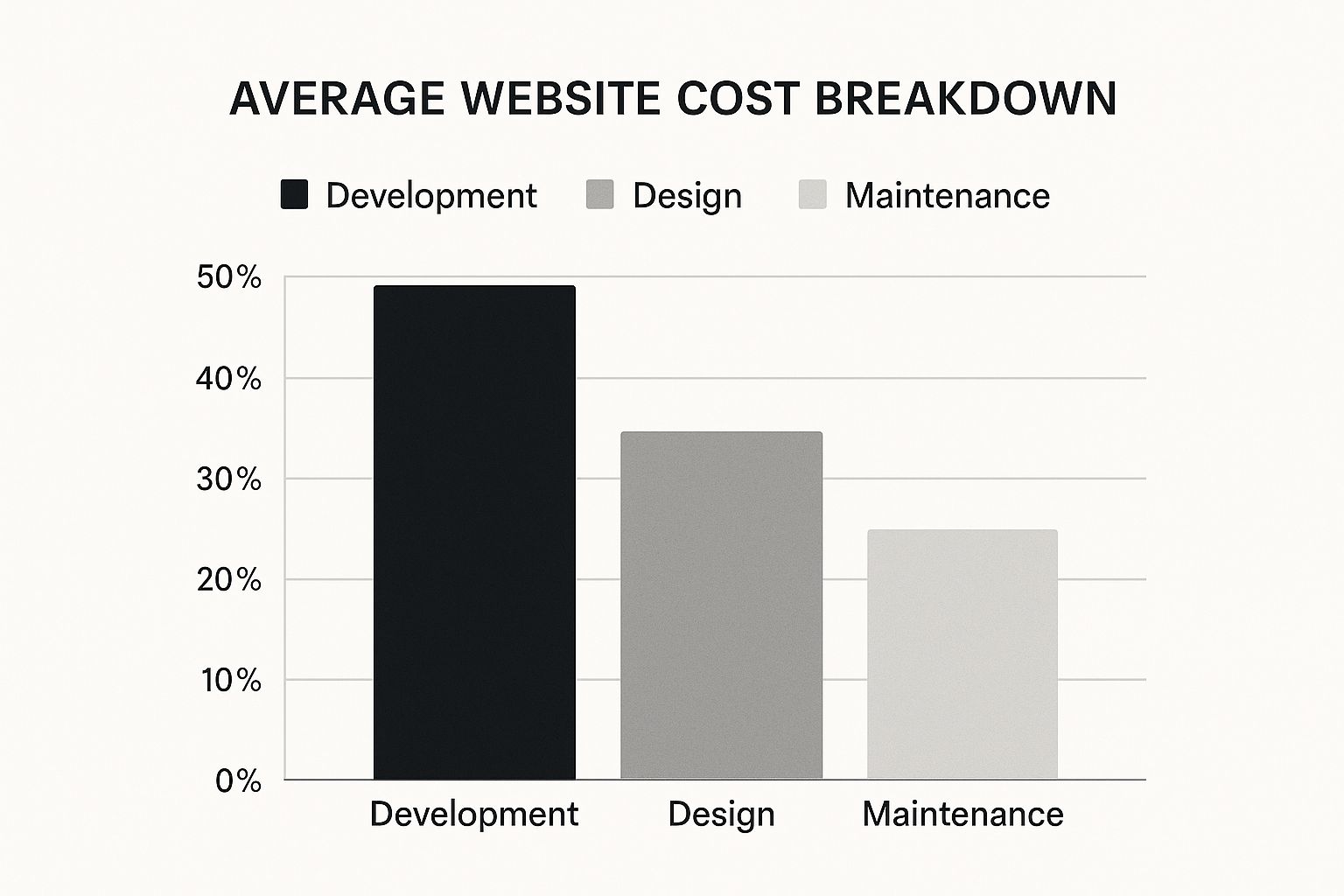
Development often makes up about half the total cost, followed by design and ongoing maintenance. This emphasizes the importance of considering not just the initial build cost but also the ongoing costs to keep your website running smoothly and securely.
To help you compare different website types and their costs, we've put together a helpful table:
Website Type Cost Comparison: A comprehensive breakdown of different website types and their associated cost ranges
| Website Type | Basic Cost Range | Premium Cost Range | Key Feature Requirements | Development Timeframe |
|---|---|---|---|---|
| Basic Website | $1,000 – $10,000 | $10,000+ | Contact form, basic content pages | Few weeks – 2 months |
| Blog/Content-Driven Website | $5,000 – $20,000 | $20,000+ | CMS, blog functionality, search, social media integration | 1 – 3 months |
| E-commerce Website | $10,000 – $50,000 | $50,000+ | Product catalog, shopping cart, payment gateway, secure transactions | 2 – 6 months |
| Web Portal/Membership Site | $20,000+ | $50,000+ | User authentication, membership management, personalized content | 3 – 9+ months |
| Custom Web Application | $50,000+ | $100,000+ | Highly specialized functionality, complex integrations | 6+ months |
This table summarizes the typical cost ranges and key features for different websites. Remember, these are estimates, and the actual cost will depend on your specific needs. Knowing these different website types and their costs is a vital step in planning your website budget. By understanding the factors that influence these costs, you can make informed decisions and choose features that meet your business goals and budget.
DIY vs. Professional Development: The Real Cost Analysis
When calculating website costs, the most obvious factor is the initial price of development. This often leads businesses to consider a Do-It-Yourself (DIY) approach using website builders like Wix or contemplate hiring a freelance developer. Both options might initially seem cheaper than a professional agency. However, a thorough cost analysis requires looking beyond just that upfront expense.
The Allure of DIY: A Closer Look
DIY website builders offer appealing starting prices, sometimes with free trials or low monthly fees. This can be tempting for businesses on a tight budget. However, limitations can arise as your business expands.
These limitations often include restricted design flexibility, a smaller selection of features, and potential scaling issues. As your site grows, handling more traffic and adding complex functionality can become a real headache. For example, integrating specialized e-commerce tools or crafting a truly unique brand experience can be difficult within the confines of a DIY platform.
Freelance vs. Agency: Weighing the Trade-Offs
Hiring a freelance developer may appear to be a cost-effective compromise. While freelancers typically charge less per hour than agencies, managing a freelance project can introduce hidden costs.
These costs might include increased communication overhead, project management challenges, and unexpected delays. If a freelancer runs into problems, it can be difficult to get the project back on track.
Partnering with a professional website development agency like OneNine provides a more structured approach. You'll have a team of specialists with diverse skill sets, efficient project management, and dedicated support. The initial investment may be higher, but long-term benefits like scalability, security, and ongoing maintenance can result in a lower total cost of ownership.
Calculating the True Cost of Website Ownership
Accurately calculating website costs means considering both initial development and ongoing maintenance. Maintenance is a critical factor that's often overlooked, yet it significantly impacts the total expense of having a website.

Annual maintenance can range from $100 to $3,000. This covers things like hosting, security updates, and content changes. Using website builders like Wix or Bluehost can cost between $3 and $159 per month, depending on the features you need. Professional developers might charge anywhere from $1,000 to over $20,000, depending on the project's complexity. Learn more about website costs here.
This includes expenses such as:
- Hosting and Server Costs: Keeping your website online requires a server, and servers cost money.
- Security Updates and Patches: Protecting your site from online threats requires regular security updates.
- Content Updates and Management: Fresh, engaging content keeps visitors coming back, but creating and managing it takes time and effort.
- Technical Support and Troubleshooting: Technical problems are inevitable, so having reliable support is crucial.
Making Informed Decisions: Considering Long-Term Value
Ultimately, calculating website cost isn't about finding the absolute cheapest option. It's about understanding the long-term value and return on investment (ROI). Investing in a robust, scalable, and well-maintained website, whether through an agency or a carefully managed freelance project, is essential for online success.
A professional website isn't just an expense; it's an investment in your brand, online presence, and future growth. Choosing the right approach requires careful consideration of your specific business needs, budget, and long-term goals.
Unveiling the Hidden Costs That Derail Budgets
Calculating website costs accurately goes beyond the initial design and development. Many hidden expenses can pop up later, potentially throwing your budget off track if you haven't planned for them. These often-overlooked costs can be just as significant as your initial investment. Let's explore these frequently unseen expenses and discuss strategies to avoid budgetary surprises.
The Silent Drain of Maintenance
One of the most significant hidden costs is website maintenance. Think of your website like a car – it requires regular upkeep to perform well. This includes things like software updates, security patches, and performance optimization. Ignoring these can lead to security vulnerabilities, slower performance, and ultimately, lost revenue. Annual maintenance can range from $100 to $3,000, depending on the complexity of your site. This covers essential tasks like hosting, security updates, and content changes.
Security: A Necessary Investment
Website security is another crucial hidden cost you can't afford to ignore. Cybersecurity threats are constantly changing, and protecting your site and user data requires ongoing attention. This includes investing in security software, regular vulnerability scans, and possibly incident response services. The cost of a security breach can far exceed the investment in preventative measures. For sensitive data, a secure design includes SSL certificates, security plugins, and robust authentication. Hosting with daily backups typically costs $30-$50 per month, while SSL certificates range from $50 to $500 per year.
Technical Debt: The Cost of Shortcuts
Technical debt refers to the implied cost of having to redo work because you chose an easy solution now instead of a better approach that would have taken longer. This might involve using outdated code or opting for a quick fix instead of a more sustainable solution. While it might seem cost-effective initially, technical debt builds up over time, resulting in higher maintenance costs and potential system instability.
For example, choosing a template-based website might seem cheaper at first, but it could restrict your design and functionality options later, requiring costly redesigns down the line.
Scaling for Growth: Anticipating Future Needs
As your business grows, so must your website. It needs to handle increased traffic and changing needs. This includes upgrading your hosting plan, optimizing your website's performance, and potentially adding new features. Failing to account for scaling costs can lead to performance problems and missed opportunities. Similar to how a small startup eventually outgrows its first office, your website needs room to expand as your business does.
Hidden Cost Breakdown: A Clearer Picture
To better understand these often-missed expenses, let's look at this table summarizing typical annual costs, their performance impact, the risks of ignoring them, and some budget planning tips.
Website Hidden Cost Breakdown: An analysis of commonly overlooked website expenses beyond initial development
| Cost Category | Typical Annual Expense | Impact on Performance | Risk of Neglecting | Budget Planning Tips |
|---|---|---|---|---|
| Maintenance | $100 – $3,000 | Site speed, security, functionality | Security breaches, performance issues, lost revenue | Allocate a percentage of your initial budget for ongoing maintenance. |
| Security | Varies (software, scans, incident response) | User trust, data protection | Data breaches, legal liabilities, reputational damage | Factor in security measures from the outset. |
| Technical Debt | Accumulates over time | Site stability, maintenance costs | Increased development costs, system instability | Prioritize sustainable solutions over quick fixes. |
| Scaling | Varies depending on growth | Site speed, user experience | Lost traffic, decreased conversions | Anticipate future needs and budget for upgrades. |
This table highlights the importance of considering these hidden costs. Planning for these expenses upfront will help you avoid financial surprises and ensure your website continues to perform well as your business grows.
By understanding and accounting for these hidden costs from the start, you can create a more accurate website budget. This proactive approach not only helps you avoid unexpected expenses but also ensures your website remains a valuable asset, driving growth and helping you achieve your business goals. Partnering with a website management and development agency like OneNine can help you navigate these hidden costs effectively, providing expert guidance and support throughout your website's lifecycle.
Market Shifts Transforming How We Calculate Website Cost

Calculating website cost isn't as simple as it used to be. The online world is always changing, and these shifts have a big impact on how businesses should budget for their web presence. Staying up-to-date on the latest trends and technologies is key for making smart decisions about your website investment.
Emerging Technologies and Their Impact on Cost
New technologies like Artificial Intelligence (AI) and Machine Learning (ML) are changing the website development landscape. AI powered tools can automate tasks like writing content and handling customer service, which can lower costs over time. But, adding these technologies to your site can mean a bigger initial investment.
Think of it like buying new machinery for a factory. The upfront cost is higher, but it can lead to lower operating costs down the road. For example, adding AI-powered personalized product recommendations might increase initial development costs. But, it could also result in higher conversion rates and a better return on investment (ROI) over time.
The Rise of Mobile-First and Its Implications
More and more people are using mobile devices to access the internet. This requires a mobile-first approach to website development. This means prioritizing the mobile user experience, which can affect design and development costs.
Responsive design, which ensures your website adapts to different screen sizes, is now essential. It adds complexity to the development process, but ignoring mobile optimization can result in lost traffic and revenue.
Evolving Customer Expectations and the Need for Personalization
Today's customers expect a personalized online experience. This means tailoring website content and features to individual user preferences. This personalization can increase development costs.
Features like personalized product recommendations, targeted advertising, and custom user dashboards require more advanced development and data management. However, these features can also significantly boost customer engagement and loyalty, making the investment worthwhile.
The Influence of Regulatory Changes on Website Costs
Data privacy regulations like GDPR and CCPA introduce new cost considerations. Websites need to comply with strict rules about data handling and user privacy. This often means implementing new features and processes, which can add to development and maintenance costs.
Adding things like cookie consent banners and data management tools can require additional development time and resources. Compliance is mandatory, though, and ignoring these regulations can result in significant fines and damage your reputation.
Automation and Its Potential for Cost Savings
While some technologies add to the cost of a website, automation can actually help you save money. Automated testing tools can streamline development, reducing testing time and costs. Automating tasks like content updates and social media posts can also free up resources and lower long-term operational expenses.
These advancements are changing how we calculate website cost. The global web development market is expected to grow significantly. Estimated at approximately $74.69 billion in 2025, it's projected to reach $104.31 billion by 2030 with a CAGR of 6.91%. This growth suggests increased demand for skilled developers, which could impact costs. You can explore this topic further here.
Future-Proofing Your Website Investment
Technology changes quickly, so planning for the future is crucial. Building a scalable website that can adapt to new technologies and changing customer expectations is essential.
This might mean choosing a flexible Content Management System (CMS) or investing in modular design and development practices. While these choices might increase initial costs, they can save money in the long run by avoiding expensive redesigns and rebuilds later. A forward-thinking approach ensures your website stays a valuable asset for years to come. Partnering with a website management and development agency like OneNine can help you navigate these market shifts and build a website that meets your current and future needs.
Building Your Custom Website Budget Calculator
We've looked at what goes into website costs. Now, let's create a personalized budget calculator. This tool will help you estimate costs effectively and make informed decisions. It’s similar to planning a home renovation: you need to know the cost of materials, labor, and any unexpected costs.
Defining Your Website's Scope and Objectives
First, define the scope and objectives of your website. Ask yourself: What’s the main purpose of this website? What features are essential? Who is your target audience?
For example, an e-commerce site needs a product catalog, shopping cart, and payment gateway. A blog, however, might only need a Content Management System (CMS) and basic design. This clarity helps avoid overspending.
Itemizing Website Components and Associated Costs
After defining your website’s purpose, break down the components and their costs. Use the information we discussed earlier to estimate expenses for things like:
- Design: This includes the overall look and feel, UI (User Interface), and UX (User Experience) design.
- Development: Consider the CMS, programming languages, and any custom development.
- Content Creation: Factor in costs for writing, editing, and optimizing content.
- Maintenance: Account for ongoing costs like hosting, security updates, and technical support.
Creating Flexible Budget Scenarios
Create different budget scenarios to account for variations in cost. This is important because unforeseen expenses happen. Have a baseline budget, a best-case scenario, and a worst-case scenario.
For example, if your baseline design budget is $5,000, your best-case might be $4,000, and your worst-case $6,000. This flexibility helps you prepare for unexpected costs. Agencies like OneNine can help develop these scenarios, ensuring a realistic budget.
Prioritizing Features and Functionality
Not every website feature is equally important. Prioritize features that contribute to your business goals. This ensures you’re investing in features with a positive ROI (Return on Investment). OneNine's experience can be helpful in this process.
A prioritization matrix can be useful. Assign a value to each feature based on its importance and cost. This clarifies where to allocate your budget.
By following these steps, you can create a custom budget calculator that meets your needs and helps you make informed decisions. A well-planned budget is the key to a successful website.
Maximizing ROI: Turning Website Expense Into Investment
Calculating website costs is just the first step. The real challenge lies in ensuring your website generates a measurable return. A website isn't simply an expense; it's a strategic investment. This means viewing your website as a tool for achieving specific business objectives and tracking its performance against those goals.
Establishing Meaningful Performance Metrics
How do you measure the success of your website? The answer depends on your particular business goals. If your goal is lead generation, metrics like conversion rates and cost per lead are key. If your aim is to increase brand awareness, metrics like website traffic and social media engagement become more important. Using the wrong metrics can lead to misleading conclusions.
Optimizing Conversion Pathways
Once you've established the right metrics, the next step is optimizing your website to improve them. This could involve streamlining your website’s navigation, improving your calls-to-action, or personalizing your content to better target your audience. Think of your website as a funnel: a wider top (traffic) and smoother flow means more comes out the bottom (conversions).
Implementing Analytics Systems
You can't improve what you don't measure. Implementing robust analytics systems like Google Analytics is critical to understanding how users interact with your website. These systems provide invaluable data on user behavior, which you can then use to identify areas for improvement and optimize your conversion pathways.
Frameworks for Continuous Improvement
Website optimization isn't a one-time task; it's an ongoing process. Establishing frameworks for continuous improvement is essential for ensuring your website consistently delivers strong ROI. This might involve A/B testing different versions of your website or regularly reviewing your analytics data to identify new opportunities for optimization.
Aligning Website Functionality With Revenue Goals
Every feature on your website should contribute to your overall revenue goals. For an e-commerce store, features like personalized product recommendations and streamlined checkout processes can directly impact sales. If your goal is lead generation, investing in a robust contact form and lead capture system might be more beneficial. Aligning functionality with your revenue goals ensures every dollar spent is working towards your bottom line.
By implementing these strategies, you can transform your website from a simple expense into a powerful engine for growth. A well-optimized website can significantly impact your business, driving revenue, building brand awareness, and establishing lasting customer relationships.
Ready to turn your website into a high-performing asset? Contact OneNine today for expert website management and development services. We help businesses of all sizes maximize their online presence and achieve their digital goals.


